Why Spending Abroad Costs More Than the Sticker Price
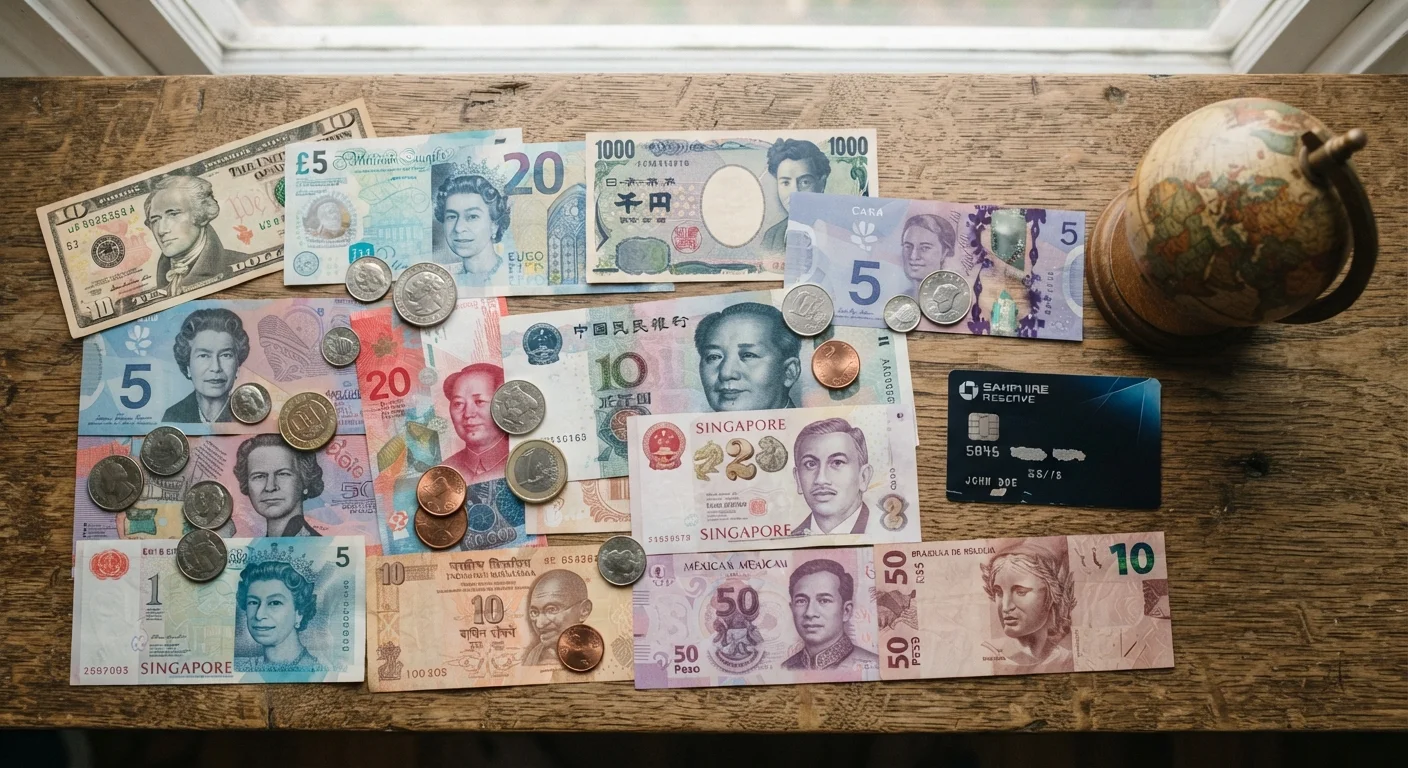
International travel introduces a layer of financial complexity that catches many first-time travelers off guard: the cost of converting money. Every time you pay for something in a foreign currency — a hotel room, a restaurant meal, a museum ticket — a series of fees and rate adjustments quietly affect how much you actually spend in your home currency.
These charges don't appear as a separate line item at the point of sale. Instead, they show up days later on your bank or credit card statement, often bundled into the transaction total in ways that are hard to untangle. Understanding how they work in advance is one of the most practical things you can do before any international trip.
For a broader look at how exchange rates are set and what a fair deal looks like, see how exchange rates actually work. This article focuses specifically on the fees layered on top of those rates.
1%–3%
Typical foreign transaction fee range
Most major card issuers charge between 1% and 3% on foreign currency transactions, applied per transaction on top of the exchange rate conversion.
3%–7%
Dynamic currency conversion markup range
Consumer finance researchers and payment industry analyses consistently find DCC rates fall well above the card network's own conversion rates, often by this margin.
$5–$10
Common flat ATM fee for foreign withdrawals
Many U.S. banks charge a fixed fee per international ATM withdrawal, separate from any percentage-based fee — and before the foreign ATM operator's own charge.
The Three Main Cost Layers When Spending Abroad
Most travelers encounter three overlapping cost sources when using money internationally:
- Exchange rate markup: The difference between the mid-market rate and the rate your bank or card network actually applies. This markup is built into the conversion and often represents 1%–3% of the transaction value, though it varies by institution.
- Foreign transaction fees: A separate percentage fee charged by your card issuer specifically because the transaction involves a foreign currency. This is distinct from the exchange markup and can add another 1%–3%.
- ATM and cash fees: Fixed or percentage-based fees applied when withdrawing cash from a foreign ATM, potentially from both your own bank and the ATM operator.
When these costs stack — as they routinely do — a traveler can pay 4%–6% above the baseline exchange rate on every transaction. On a two-week international trip, that adds up to a meaningful sum. The full breakdown of foreign transaction and ATM fees covers each of these in detail.
Dynamic Currency Conversion: The Fee That Looks Like a Service
One of the most commonly misunderstood situations travelers face is dynamic currency conversion (DCC). When you pay by card at a foreign hotel, restaurant, or ATM, you may be offered the option to complete the transaction in your home currency rather than the local one. The screen might display a reassuring message like "Pay in USD for certainty."
This is DCC in action. The merchant or ATM operator performs the currency conversion themselves — at a rate they set, which typically includes a markup of 3%–7% above the mid-market rate. Your card issuer's rate, while not perfect, is usually better than what DCC providers apply.
Declining DCC and choosing to pay in the local currency means your card network handles the conversion instead. This is almost always the more cost-effective option. For a full explanation of how this works and why it persists, see our guide to dynamic currency conversion.
Always Choose Local Currency at Checkout
Whenever a foreign merchant, ATM, or terminal asks whether you want to pay in your home currency or the local currency, select the local currency. This declines dynamic currency conversion and lets your card network handle the exchange — typically at a better rate. If you've already accepted DCC by mistake, ask the merchant to reverse the transaction and reprocess it in local currency before you leave.
Building These Costs Into Your Travel Budget
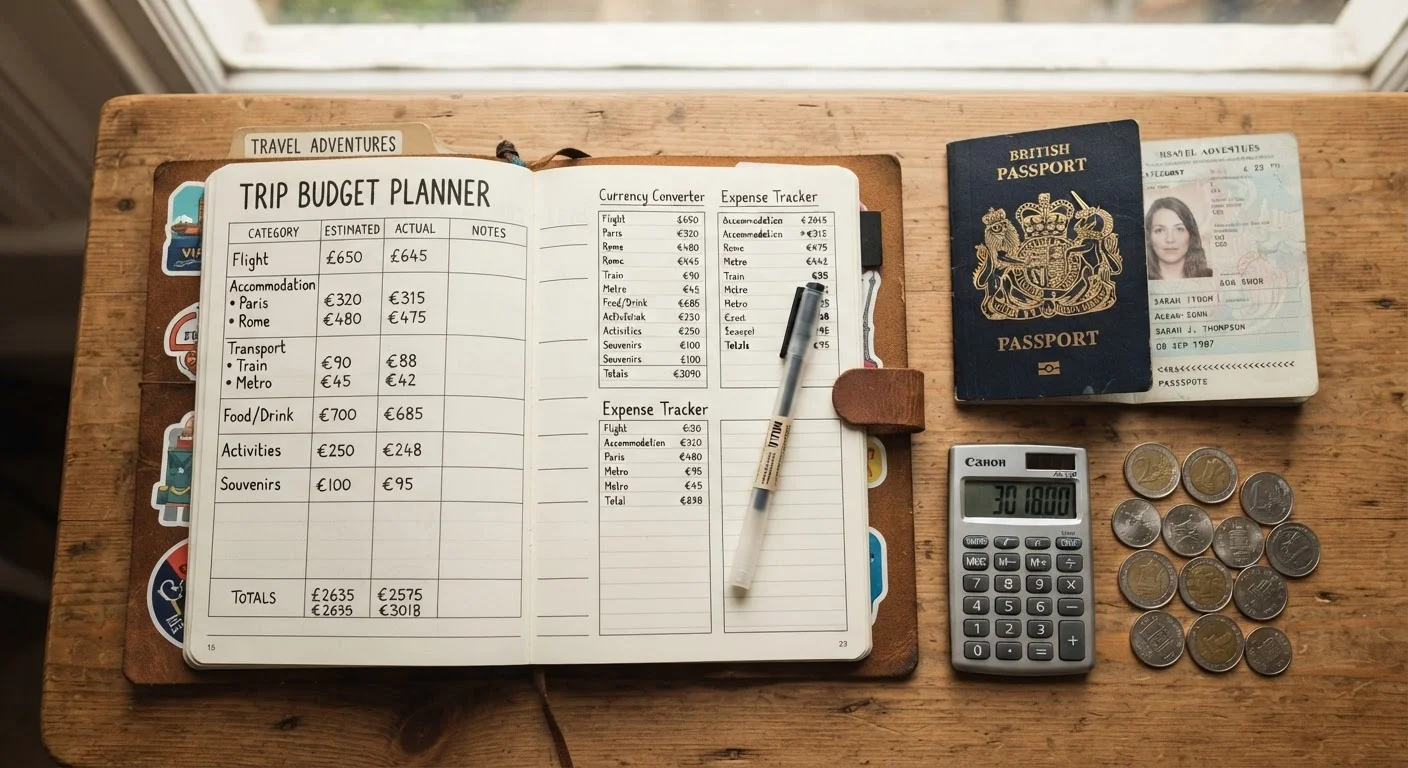
The practical implication for trip planning is straightforward: your stated travel costs are not your actual travel costs until you account for currency-related fees. A hotel room priced at €150 per night may cost you the equivalent of €155–€159 after fees, depending on your card and how the conversion is handled.
A reasonable approach is to add a currency cost buffer of 3%–5% to your total anticipated foreign-currency spending when building your budget. This isn't a precise figure — it depends on which cards and cash sources you use — but it prevents the common experience of arriving home to a statement that's noticeably higher than expected.
Currency exchange costs are just one category of travel expenses that rarely show up in headline prices. The hidden costs of international travel — including resort fees, city taxes, and tipping customs — deserve equal attention in your planning. Similarly, hidden costs that inflate a flight's real price often catch first-time travelers off guard before they've even landed.
For a central resource on managing travel finances, the Travel Money hub brings together guidance across budgeting, fees, and smarter spending abroad.
This article is for general informational purposes only and does not constitute personalized financial advice. Fee structures, exchange rates, and card terms vary by institution and change over time. Verify current terms with your card issuer or bank before traveling.