Why a Daily Spending Estimate Matters
Most first-time travelers calculate a rough total — flights plus hotel — and assume the rest will sort itself out. It rarely does. Daily on-the-ground spending: meals, local transport, entrance fees, and incidentals, typically rivals or exceeds the cost of getting there. Without a realistic daily figure, you're guessing at the most variable part of your budget.
Understanding your likely daily spend also determines how many days you can actually afford. A destination that feels expensive may become viable if you shorten the trip; a place you assumed was cheap can drain funds quickly if you haven't accounted for rising prices or tourist-zone markups. See how budget shapes where you can go for a broader look at how cost of living affects destination choice.
What you will need
How to Research and Calculate Your Daily Travel Spend
Follow these steps in order. The goal isn't a perfect number — it's an informed range you can plan around.
Anchor Your Research in Traveler-Reported Data
Hotel booking sites and tourism boards tend to present aspirational rather than typical costs. Instead, start with platforms where travelers self-report actual spending — travel forums, backpacker communities, and cost-tracking apps. Search for recent trip reports from people with a similar travel style to yours. Look for posts that break costs into specific categories rather than just a single total.
Cost-of-living index sites aggregate crowd-sourced price data for cities worldwide and can quickly show you how a destination compares to somewhere you already know, giving you a useful calibration point.
Estimate Your Nightly Accommodation Cost
Search for accommodation options in your intended style — hostel dorm, private guesthouse room, mid-range hotel — on a booking platform, but don't book yet. Note the realistic mid-range nightly price, not the cheapest outlier. Factor in that some nights may cost more (popular weekends, local festivals, or a transit city before departure).
Divide your total accommodation estimate by your number of nights to get a reliable per-night figure.
Estimate Daily Food Costs by Meal Type
Break food into three tiers and estimate how often you'll use each: street food or supermarket meals, casual sit-down restaurants, and one nicer meal per few days. Research local meal prices specifically — a sit-down lunch in Southeast Asia may cost $3–5 USD; the same in Western Europe may be $18–25 USD. Multiply each tier by its likely frequency, then sum to a daily food total.
Don't forget drinks, snacks, and coffee — these add up faster than most travelers expect.
Add Local Transport Costs
Consider how you'll move around each day: metro, bus, tuk-tuk, rideshare, bicycle rental, or on foot. Research the typical cost of each mode in your destination. Many cities have day passes or tourist travel cards — factor those in if they're relevant to your itinerary.
Also estimate intercity travel costs if you're moving between multiple places, and divide any long-distance fares across the days they affect.
Research Activities and Entrance Fees
List the types of experiences you want — museums, guided tours, national parks, cultural sites, cooking classes — and look up their actual admission or booking costs. Not every day will include a paid activity, so estimate how many paid experiences you plan per week and divide by seven to get a daily average.
Free options (markets, public parks, walking neighborhoods) are worth identifying too, as they can balance days with higher-cost experiences. For related planning considerations, see how to estimate realistic travel time between attractions.
Add a Miscellaneous Daily Allowance
Every trip produces small, unpredictable costs: a bag check at a museum, a SIM card top-up, laundry, a pharmacy purchase, or a spontaneous souvenir. Build a flat daily miscellaneous figure — often $5–20 USD depending on the destination's cost level — to absorb these without disrupting your budget.
This isn't the same as your emergency buffer. Miscellaneous covers predictable-but-unspecified spending; your buffer covers genuine surprises. See the travel money hub for guidance on managing funds on the road.
Putting the Numbers Together
Once you've worked through each cost category, add the daily totals and multiply by your trip length. That gives you a baseline on-the-road cost — not your full trip budget. Pre-departure costs like flights, visas, and travel insurance sit on top of this figure. For a complete picture, see how pre-trip and on-the-road costs compare.
Add a contingency buffer — commonly 10–20% of your daily total — to absorb unexpected costs. What that buffer should look like in practice is covered in how much emergency buffer a travel budget should include. Once your estimate is complete, you're ready to move into full budget construction using a step-by-step budget-building framework.
Test Your Estimate Against a Tracking App
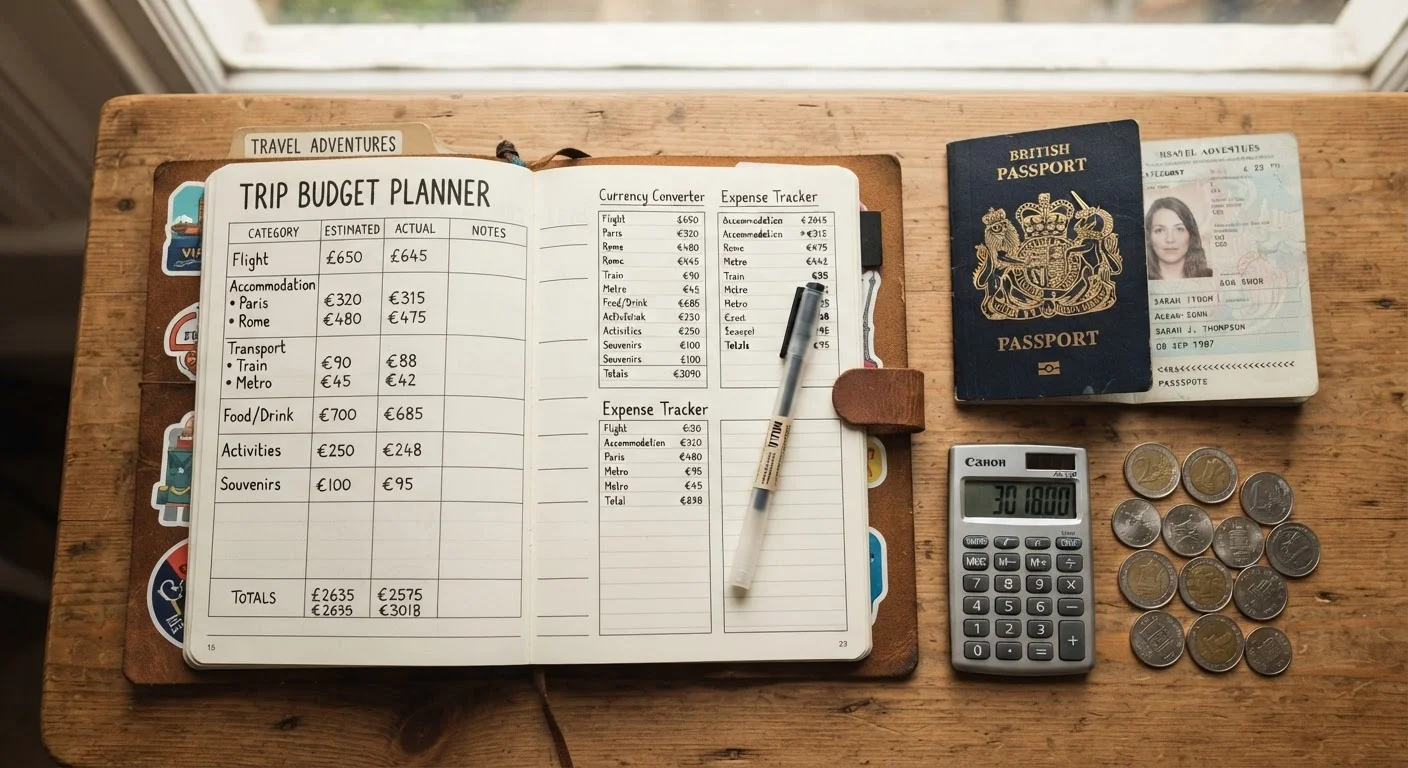
Once you're on the road, log expenses daily — even roughly. Comparing real spending to your pre-trip estimate reveals where your research was accurate and where you need to adjust. Practical approaches to tracking spending while traveling can make this habit easy to sustain across an entire trip.
This article provides general financial information for trip planning purposes. It is not personalized financial advice. For decisions about your own finances, consult a qualified financial professional.