Why These Fees Catch Travelers Off Guard
Most travel budgets account for flights, hotels, and food — but a separate category of charges accumulates quietly in the background every time a card is swiped or cash is withdrawn abroad. These fees don't appear at the point of sale. They surface days later on a bank statement, often without a clear label, and by then the trip is over.
Understanding the fee types — what triggers them, what they're called, and roughly how much they cost — is a foundational step in building a realistic travel budget. See the Trip Budget hub for a broader framework on estimating total travel costs.
| Typical foreign transaction fee range | 1% – 3% per transaction (Common range across major U.S. card issuers) |
| Typical ATM operator fee (international) | $3 – $7 per withdrawal (General market range; varies by country and ATM network) |
| DCC markup over mid-market rate | 3% – 7% on average (Consumer finance and banking research estimates) |
| Your bank's out-of-network ATM fee | $2.50 – $5 (added on top) (Varies by U.S. bank and account type) |
| Currency exchange bureau spread | 5% – 15% vs. mid-market rate (Typical range at airports and tourist-area kiosks) |
| Cards with no foreign transaction fees | Common among travel-focused cards (Verify your specific card's terms and conditions) |
The Main Fee Categories Explained
There are several distinct charge types that can apply to international spending. They are often conflated, but they operate differently and can stack on top of each other.
Foreign Transaction Fees
This is a percentage-based fee charged by your card issuer on transactions processed outside the U.S. or involving a foreign currency. It typically ranges from 1% to 3% of the transaction amount. Some cards waive it entirely — check your cardholder agreement. The fee is not charged by the merchant; it is applied by your bank or card network after the fact.
ATM Fees
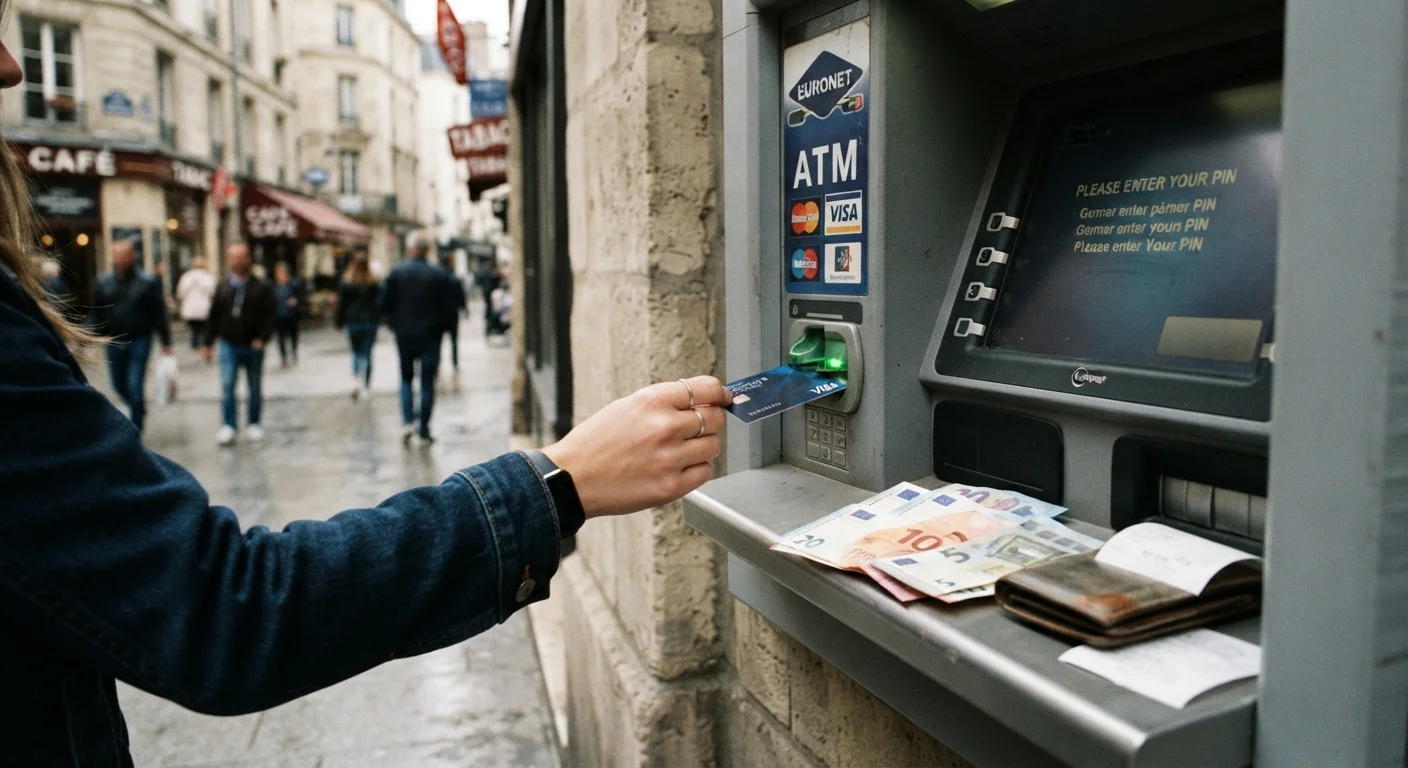
Withdrawing cash internationally can trigger two separate charges simultaneously: a fee from your own bank for using an out-of-network ATM, and a separate operator fee from the ATM's owner. Both can appear on the same statement transaction. Making fewer, larger withdrawals reduces how many times these fees hit.
Dynamic Currency Conversion
At some foreign terminals, a prompt appears offering to complete the transaction in U.S. dollars. This is dynamic currency conversion (DCC). The convenience sounds appealing, but the exchange rate embedded in DCC transactions typically includes a markup of 3%–7% above the mid-market rate. Always choose to pay in the local currency when prompted. For more on how exchange rates and conversion fees work together, see how currency conversion fees work.
Currency Exchange Bureau Spreads
Physical exchange kiosks — especially those at airports and major tourist sites — do not always charge explicit fees. Instead, they profit through the spread: the gap between the mid-market rate and the rate they offer you. This spread can range from 5% to 15%, making these among the most expensive ways to get local currency.
Foreign Transaction Fee
A charge — typically 1% to 3% of the purchase amount — added by a card issuer whenever a transaction is processed through a non-U.S. bank or in a foreign currency. It appears as a separate line item on your statement.
Dynamic Currency Conversion (DCC)
A service offered at some foreign payment terminals that converts a transaction into U.S. dollars at the point of sale. The exchange rate used is almost always worse than your card's rate, adding an effective markup of 3%–7%.
ATM Operator Fee
A flat fee charged by the owner of the ATM (not your bank) each time you make a withdrawal. Common internationally, often ranging from $3 to $7 or the local currency equivalent.
Cross-Border Fee
A component of foreign transaction fees charged specifically because the transaction crosses national borders, separate from currency conversion charges. Some banks itemize these separately.
Currency Conversion Fee
A fee applied when a transaction involves converting one currency to another. It is often bundled into the overall foreign transaction fee but may appear separately on some statements.
Spread
The difference between the mid-market exchange rate and the rate actually offered to a customer. Bureaux de change and some banks build profit into this gap rather than charging an explicit fee.
How These Fees Look on a Bank Statement
One reason travelers miss these charges is that they're not always labeled clearly. A foreign transaction fee may appear as a separate line item, or it may be embedded into the total shown for the original purchase with no separate description. ATM operator fees sometimes post as a distinct charge from the cash withdrawal itself.
When reviewing statements after international travel, look for:
- A line item labeled "International Fee," "Foreign Transaction Fee," or "Cross-Border Assessment"
- A small percentage-based charge directly below a purchase from an international merchant
- ATM operator fees that post separately from the withdrawal amount, sometimes a day later
- Conversion amounts that don't match what you expected to pay based on the day's exchange rate
This kind of post-trip review is also useful for catching errors. If an unfamiliar charge appears, contact your card issuer with the transaction date and merchant name. For a broader look at costs that show up throughout a trip — not just on your statement — see every travel expense category explained.
3%
Maximum typical foreign transaction fee per purchase
A 3% fee on $2,000 in card spending abroad adds $60 in charges that many travelers never notice until they review their statement.
$10+
Combined ATM fees per single international withdrawal
When your bank's out-of-network fee ($2.50–$5) is added to the ATM operator's fee ($3–$7), a single cash withdrawal can cost $10 or more.
5%–15%
Extra cost at airport currency kiosks vs. mid-market rate
Airport exchange bureaux typically apply the widest spreads, making them among the most expensive ways to obtain foreign cash.
Practical Context for Budget Planning
These fees are predictable enough to estimate in advance. If you plan to put roughly $2,000 on a card with a 3% foreign transaction fee, budget an additional $60 for that fee alone. If you expect to make four international ATM withdrawals with a combined fee burden of $10 each, add $40. Neither amount is catastrophic, but together they represent money leaving your account that you didn't consciously spend.
A few principles worth knowing before departure:
- Check your card's terms before you travel. Foreign transaction fees vary by card, not by bank brand. The same issuer may offer some cards with the fee and some without.
- Understand your bank's ATM reimbursement policy. Some checking accounts reimburse ATM fees globally; most do not. Knowing which applies to your account lets you plan withdrawal strategy accordingly.
- Decline DCC every time. This single habit can save 3%–7% on every affected transaction with no downside.
- Avoid airport exchange kiosks for large amounts. If you need local currency immediately upon arrival, exchange a small amount to cover transport, then find better rates elsewhere.
These fees also apply to some domestic travel scenarios — for instance, airline card surcharges and booking platform fees, which are covered in the companion piece on hidden costs that inflate a cheap flight's real price. For a full picture of what surprises travelers across all spending categories internationally, see the hidden costs of international travel.
This article provides general financial information for educational purposes and is not personalized financial or banking advice. Fee structures, exchange rates, and card terms change frequently — always verify current terms directly with your card issuer before traveling.