
Why 'Cheap' Flights Are Rarely as Cheap as They Look
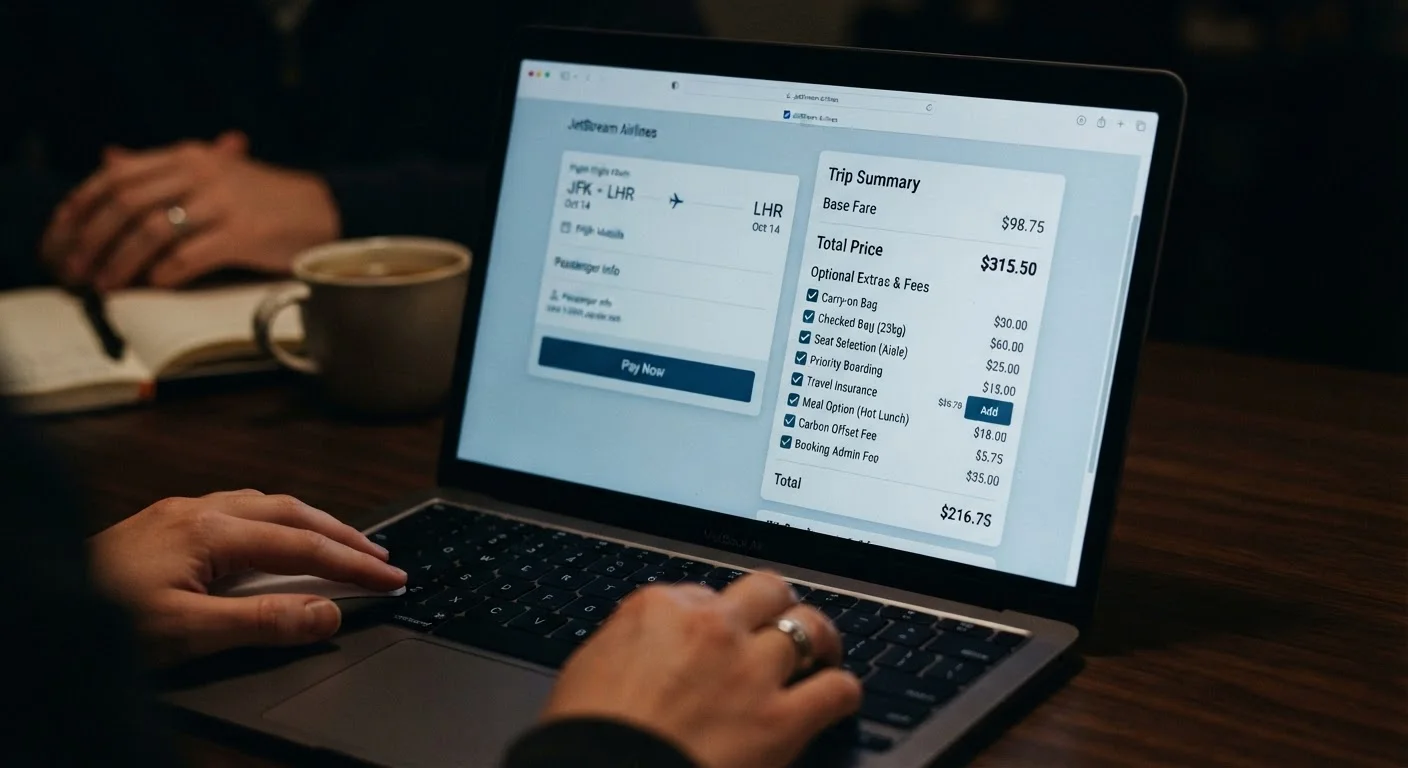
Airline pricing is built around a base fare that reflects only the cost of the seat itself - and sometimes not even that, if taxes are displayed separately. Everything else - getting your luggage on board, picking where you sit, paying by card - is layered on top. Understanding this unbundling model is the first step toward reading a flight price accurately.
This approach became widespread as ultra-low-cost carriers entered the market and began stripping tickets down to their bare minimum. Legacy airlines followed suit with restricted 'basic economy' fare classes. The result: two flights on the same route can look identically priced but cost very different amounts once each traveler adds their specific needs. See also why the same flight can cost wildly different prices for more on how airline pricing works beneath the surface.
The mistakes below are the specific points where first-time flyers most often get caught out - and each one is straightforward to avoid once you know what to look for.
Judging a flight's cost by its advertised base fare alone.
Why it happens: Search engines and comparison sites typically display the lowest possible price, which excludes taxes, fees, and optional services that most travelers actually need.
Assuming a carry-on bag is always included in the ticket price.
Why it happens: Full-service airlines have historically included carry-on luggage, so travelers assume all airlines do the same. Ultra-low-cost carriers often charge separately for overhead bin access, and the distinction isn't obvious at first glance.
Ignoring checked baggage fees when budgeting for a trip.
Why it happens: Travelers focus on the seat price and treat baggage as a secondary detail, often discovering fees only at check-in or during online check-in - when paying is unavoidable.
Paying for a seat assignment without understanding when it's truly necessary.
Why it happens: Airlines present seat selection as an appealing upgrade during booking, and the prompt feels urgent. Many first-time flyers pay the fee not realizing that free seats are often available at check-in.
Paying a card payment surcharge without exploring alternatives.
Why it happens: Card surcharges - sometimes 1-3% of the booking total - are disclosed late in the checkout process, and travelers often don't realize a different payment method would avoid the fee.
Booking connecting flights without accounting for transit costs and risks.
Why it happens: A two-leg itinerary can appear dramatically cheaper in search results, but the price difference often disappears once you add a layover meal, airport transport between terminals, or a replacement flight if you miss the connection.
How to Calculate a Flight's True All-In Cost
Once you know the common fee traps, building an accurate comparison is a matter of habit. Before committing to any fare, run through this checklist:
- Base fare plus taxes: Confirm the displayed price includes all government taxes and airport fees, not just the airline's portion.
- Carry-on bag: Is it included, or does the fare class restrict you to a personal item under the seat?
- Checked baggage: Look up the fee for your specific fare class on the airline's website - not a third-party summary, which may be outdated.
- Seat selection: Decide whether you need a specific seat now or can wait for free assignment at check-in.
- Payment surcharge: Check which payment methods avoid the fee before you reach the final screen.
This same discipline applies across all travel spending. Hidden fees operate similarly in car rentals - airport surcharges and mandatory add-ons follow the same unbundling logic - and in accommodation, where resort fees and destination charges regularly surface after the advertised nightly rate. Building a habit of reading past the headline price across all travel categories will protect your overall trip budget. For a broader view of costs that rarely appear in advertised prices, this guide to hidden international travel costs covers entry fees, city taxes, and tipping expectations that catch many travelers off guard.
Always Compare All-In Prices, Not Base Fares
A fare that looks $80 cheaper can become more expensive once you add one checked bag, a reserved seat, and a card payment fee. Before booking, total every anticipated add-on across all airlines you're comparing. The cheapest headline number is the least reliable figure in the booking process.
Tracking these costs before you book - not after - is what separates a genuinely affordable flight from one that only appeared affordable on a search results page.
$33B+
Annual U.S. airline baggage and change fee revenue
U.S. airlines collectively collected over $33 billion in ancillary fees in recent reported years, according to the U.S. Bureau of Transportation Statistics, illustrating how significant unbundled charges have become.
1-3%
Typical card payment surcharge on flight bookings
Many airlines and booking platforms apply a surcharge of roughly 1-3% for credit card payments, a fee that is often disclosed only at the final checkout stage.