Why Trip Type Is a Budgeting Variable
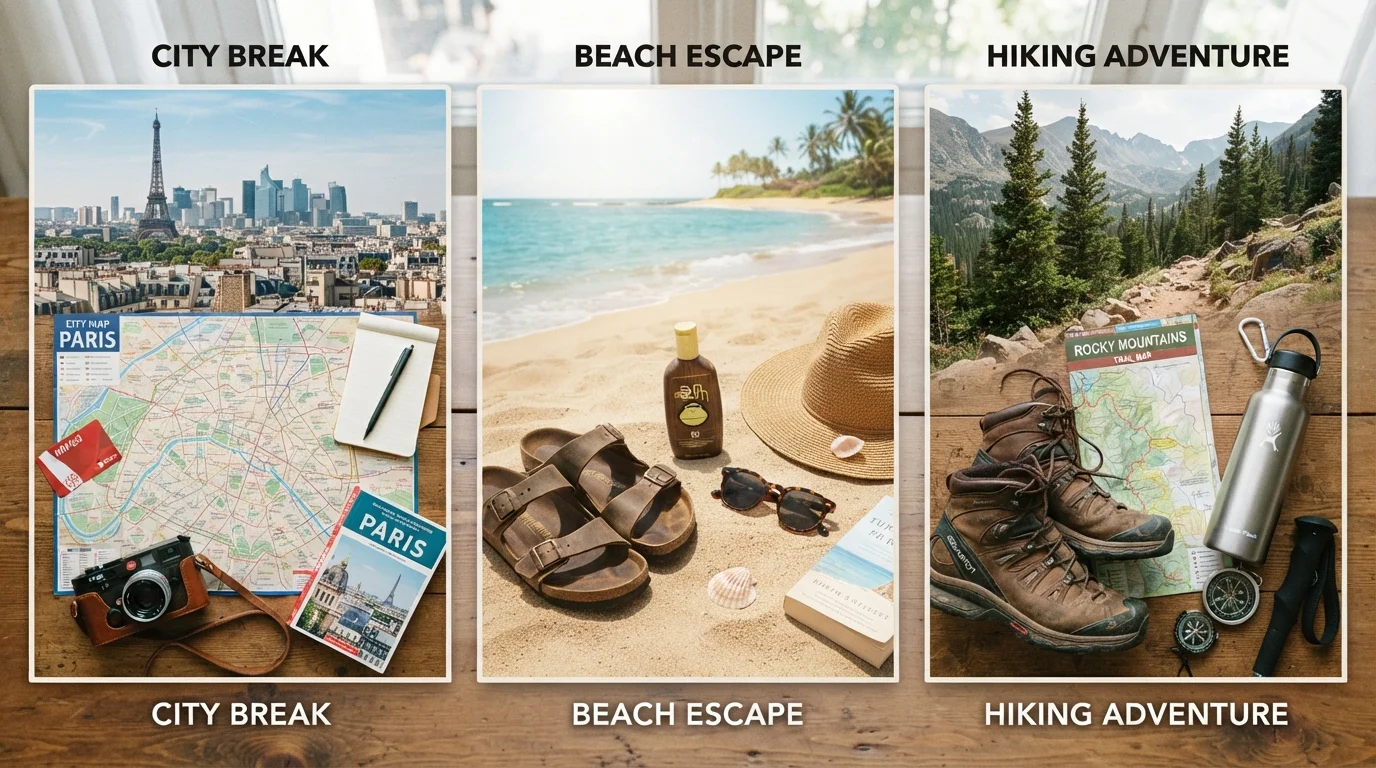
Most first-time travelers build a budget by asking, "How much does a trip cost?" — but that question skips a more useful one: What kind of trip is this? A long weekend in a major European city, a week at a Caribbean resort, and a ten-day trekking expedition all involve flights, accommodation, food, and activities. But the weight of each category shifts dramatically depending on the trip type.
Understanding this before you start planning means you allocate money where it actually goes — not where you assume it goes. See our full breakdown of every expense category for a reference you can use alongside this comparison.
| City Break | Beach Trip | Adventure Travel | |
|---|---|---|---|
| Dominant cost driver | Accommodation & dining | Recurring daily fees | Gear, permits & guides |
| When most money is spent | During the trip | During the trip | Before departure |
| Transportation within destination | Moderate — public transit | Low — resort or beach area | Low to none — on foot/trail |
| Budget flexibility day-to-day | High — many cheap options | Medium — limited choices | Low — costs mostly fixed |
| Biggest hidden cost | Attraction entry fees | Resort & equipment fees | Specialized gear & insurance |
| Typical accommodation style | Hotel or hostel | Resort or rental villa | Guesthouse, lodge, or tent |
| Meal cost variability | High — wide price range | Low in all-inclusive | Low — remote areas cheaper |
City Breaks: Accommodation and Dining Drive the Budget
City trips are defined by density — everything is close, which means your transit costs are manageable, but urban accommodation prices are typically the highest of any trip type. In major cities, a mid-range hotel can absorb 40–50% of a traveler's total trip budget for a short stay.
Dining is the second major variable. City travelers tend to eat out at every meal, and restaurant prices in metropolitan areas add up faster than many first-timers expect. Attractions — museums, performances, guided tours — are often paid individually and can be surprisingly expensive when stacked across several days.
The good news: city trips offer the most flexibility. You can adjust your budget in real time by choosing cheaper restaurants, using public transit passes, or visiting free attractions. For guidance on when a transit pass makes more sense than single tickets, see our transit pass comparison.
City Breaks: Cap Your Activity Spending Early
Before your trip, list every paid attraction or experience you want and add up the entry costs. Many first-time city travelers underestimate this total by 30–40% by only accounting for one or two activities. Knowing the full number lets you make deliberate trade-offs — or discover that a city pass or museum card reduces the total significantly.
Beach Trips: Hidden Costs Beneath a Simple Surface
Beach vacations feel straightforward — sun, sand, a few meals. But they carry a category of costs that catch first-timers off guard: recurring daily expenses that don't exist on city trips. Sun lounger rentals, beach club fees, water sport equipment, and resort amenities all add up across seven or ten days in ways that a two-night city break never would.
Resort-style beach destinations often bundle accommodation with meals, which simplifies budgeting but limits flexibility — you're paying for meals whether or not you use them. Independent beach destinations can be cheaper per night but require you to budget separately for food, transport, and activities.
Flights to beach destinations can also be disproportionately expensive, particularly for popular island locations with limited airline competition. The shape of your itinerary — whether you fly direct, route through a hub, or combine a beach stop with another destination — affects the total cost significantly. Understanding your ticket structure options before you search helps here.
Watch for Resort Fees Added at Check-In
Many beach resorts charge mandatory daily resort fees that are not included in the advertised room rate. These fees — which can range from $20 to $50 or more per night — cover amenities like pool access, Wi-Fi, and fitness facilities regardless of whether you use them. Always check the full nightly rate, including all mandatory charges, before comparing accommodation options.
Adventure Travel: Front-Loaded Costs That Pay Off Over Time
Adventure travel — trekking, mountaineering, expedition-style journeys — has the most unusual cost structure of the three. A large share of the total budget is spent before departure: permits, specialized gear, guide fees, vaccinations, and travel insurance with appropriate activity coverage. Daily on-the-ground spending at the destination can actually be quite low, especially in remote or developing-world destinations.
This front-loading surprises many first-timers who compare the destination's low cost of living with their actual invoice and find a significant gap. Gear is often the largest wildcard — whether you're buying, renting, or borrowing affects total cost considerably. Permits for popular trekking routes can also be limited in availability and fixed in price, making early planning financially essential.
Because so much of the cost is committed before you travel, understanding the distinction between fixed and variable costs is especially useful for adventure travel planning. Our article on fixed vs. variable travel costs explains how to think through this clearly.
Building a Budget That Matches Your Trip Type
Once you know your trip type, you can structure your budget to reflect its real cost drivers rather than applying a generic per-day estimate. A few principles apply across all three:
- Separate pre-trip from on-the-road costs early. Many travelers only think about daily spending and miss substantial pre-departure expenses. Understanding where money actually leaves your account prevents that gap.
- Identify your trip's dominant cost category — accommodation for city breaks, recurring daily fees for beach trips, gear and permits for adventure travel — and budget that category first.
- Build in a contingency buffer. Each trip type has its own version of unexpected costs: a museum that requires timed-entry tickets, a resort fee added at check-in, a permit that requires a licensed guide.
If you're starting your planning from zero, our step-by-step trip budget guide walks through each stage in detail. And if your destination choice is still open, understanding how budget shapes destination options gives useful framing before you fall in love with a place you haven't costed out yet.
40–50%
Budget share consumed by accommodation in city trips
Urban hotel prices in major cities commonly represent the single largest expense for short-stay travelers, according to general travel budgeting frameworks.
30%+
Adventure travel costs spent before departure
Gear purchases, permits, guide fees, and vaccinations mean a significant portion of an adventure travel budget is committed well before the trip begins.