
Why First-Time Travelers Skip Budgeting — and Why That Backfires
Most people find destination research exciting and budgeting tedious, so the budget gets deferred until after a booking is already made. At that point, you are no longer making a free choice — you are managing a commitment. The result is a pattern of underspending on experiences, overspending on unplanned costs, and returning home with a financial hangover that overshadows the trip itself.
A pre-trip budget is not about restricting your travel. It is about knowing what you are actually signing up for, in full, before you hand over a credit card. This guide walks you through building that picture from scratch — no prior experience required.
If you are new to the underlying concepts, Travel Budgeting for Beginners provides a plain-language foundation before you start estimating numbers. This how-to is also one component of the complete travel budget guide, which covers tracking and adjusting your budget through to your return.
Budget First, Book Second
Many first-time travelers lock in flights or hotel reservations before they have a complete cost picture. This creates pressure to cut corners elsewhere — often on safety, comfort, or once-in-a-trip experiences. Complete your budget estimate in full before making any financial commitment. It takes an hour and can save you from weeks of regret.
What You Need Before You Start
You do not need to have everything finalized — but you do need enough of a trip outline to make your estimates meaningful. Gather your starting inputs first.
What you will need
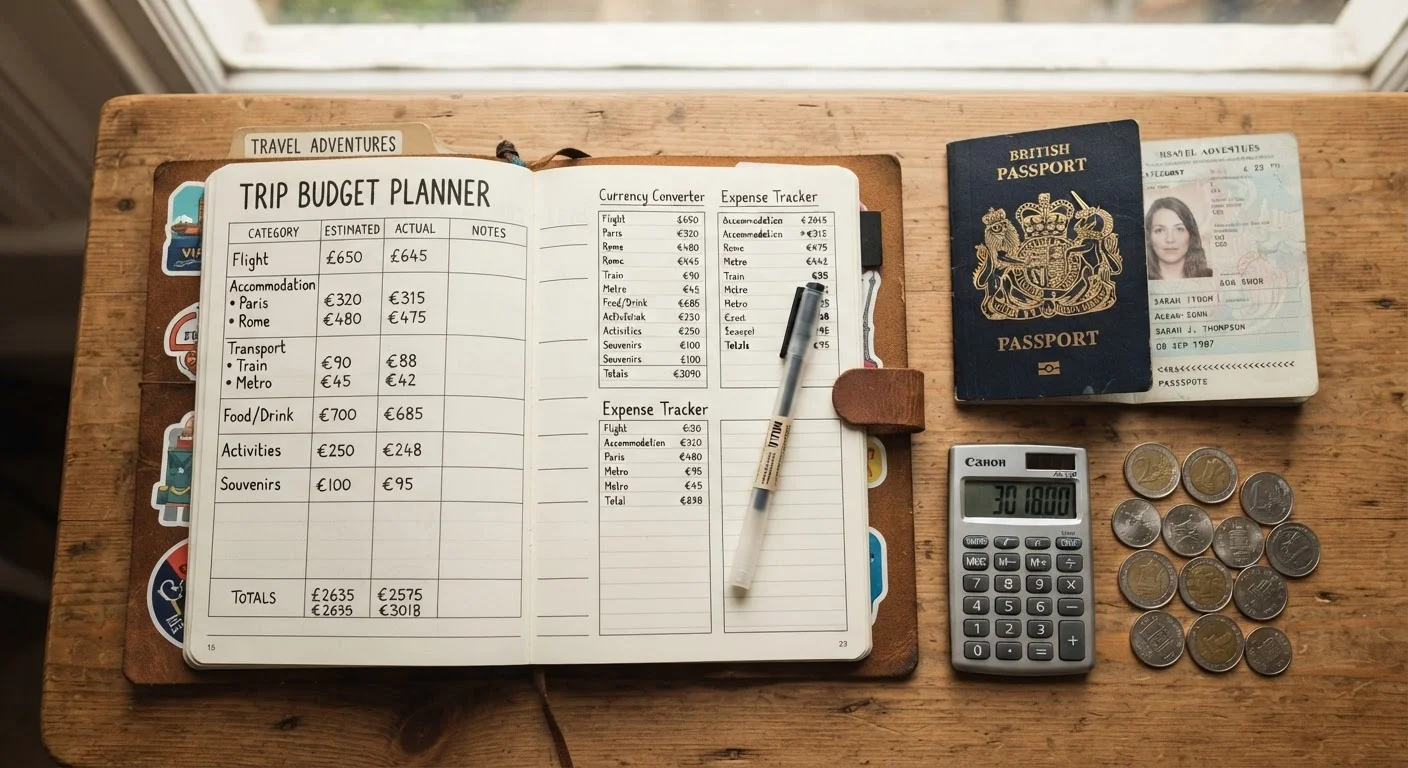
Spreadsheet or budgeting notebook
Records each cost category and calculates your running total as you research.
Flight search tool
Used to look up real fare ranges for your intended route and dates.
Accommodation search tool
Provides real nightly rates for hotels, hostels, or rentals at your destination.
Currency converter
Converts local prices into your home currency so all figures are comparable.
Travel insurance comparison resource
Helps you estimate the cost of coverage — an essential budget line item.
Step-by-Step: Building Your Budget
Work through these steps in order. Each builds on the previous one, so skipping ahead tends to produce gaps that undermine the whole exercise.
Define the scope of your trip
Before you can estimate a single dollar, you need a defined trip shape: a destination (or shortlist), a travel window, and a rough trip length. Vague intentions produce vague — and usually wrong — budgets.
If you are still weighing locations, consider how dramatically destination choice affects every cost category. A domestic vs. international decision alone can double or triple your transportation and entry-requirement costs.
Estimate your transportation costs
Transportation is typically the largest single line item. Look up actual fares for your route and dates — do not rely on remembered prices or rough guesses. Record a high and low figure, then use the midpoint as your working estimate.
Include every leg: flights or train tickets, airport transfers at both ends, and any ground transportation you will need within your destination. If you plan to rent a car, factor in insurance and fuel separately.
Calculate your accommodation total
Multiply a realistic nightly rate by the number of nights you will be staying. Look up real options at your destination — pricing varies enormously by city, season, and neighborhood. Note whether taxes and fees are included in the displayed price, as these can add 15–25% at checkout.
The type of trip you are planning matters here. Cost structures shift significantly between a city break, a beach trip, and adventure travel — a city-center hotel and a beach resort are not interchangeable budget items.
Estimate your daily spending
Daily spending covers meals, local transportation, entry fees, activities, and incidentals. Multiply your estimated daily spend by the number of travel days. Be honest about your habits — someone who eats at sit-down restaurants every day needs a meaningfully different figure than someone comfortable with street food or self-catering.
Research destination-specific costs. Meal prices, transit fares, and museum entry fees vary dramatically by country and city. Check travel forums or destination guides for realistic on-the-ground figures rather than published averages.
Add fixed and one-time costs
Beyond transportation, lodging, and daily spending, most trips carry a layer of fixed costs that are easy to forget. These include travel insurance, visa or entry fees, required vaccinations or health documentation, checked baggage fees, and any pre-booked tours or experiences.
Add each as a separate line item. For guidance on managing money at your destination — including exchange rates and travel cards — the travel money fundamentals guide is a useful companion resource.
Add a contingency buffer
Sum all your categories, then add 10–15% on top as a contingency buffer. This is not pessimism — it is standard practice. Prices shift, itineraries evolve, and unexpected costs arise on virtually every trip. A buffer prevents a minor surprise from derailing your finances.
The total you now have is your working trip budget. Compare it honestly against what you are able and willing to spend. If there is a gap, revisit categories to see where adjustments are realistic rather than cutting the buffer itself.
Use Real Prices, Not Averages
Generic daily-cost estimates found online vary widely and may not reflect current conditions or your travel style. Spend 20 minutes on actual booking platforms to note real accommodation and flight prices for your specific dates. This anchors your budget in fact rather than hope.
What to Do With Your Budget Once You Have It
A completed budget estimate is a decision-making tool, not just a number. Use it to evaluate whether your planned trip is financially sound before committing, and to identify which categories offer real flexibility versus which are essentially fixed.
If your total comes in higher than expected, the realistic travel budget guide covers strategies for identifying where estimates commonly run high. You can also explore how planning every expense in advance compares to a looser approach — both have genuine trade-offs worth understanding before you decide how tightly to manage your trip finances.
For broader travel money management — including how to handle currency exchange and payment methods at your destination — see the travel money hub.
Hidden Costs Add Up Faster Than Expected
Entry fees, gratuities, baggage charges, airport transfers, and travel insurance are frequently left out of first-draft budgets. These line items can collectively add 20–30% to your total. For a thorough list of what people commonly overlook, see what a travel budget actually covers.
This article provides general financial information for trip planning purposes. It is not personalized financial advice. Readers should assess their own financial circumstances and, where appropriate, consult a qualified financial professional before making significant financial decisions.