The Safety Question First-Timers Actually Need to Answer
When new travelers ask whether solo or group travel is safer, they're usually asking the wrong question. The more useful question is: safer under what conditions, for what kind of person, in what destination? Party size is one variable in a much larger equation.
That said, there are real, practical differences between the two approaches that affect your risk exposure — particularly as a first-time traveler who hasn't yet built the instincts that come from experience. Understanding those differences helps you make a clear-eyed choice rather than one driven by either overconfidence or unnecessary fear.
For destination context, see what makes a destination genuinely right for a first trip — because the location you choose interacts directly with how safely you can travel there alone or with others.
| Criterion | Solo Travel | Group Travel |
|---|---|---|
| Decision responsibility | Fully on you | Shared among group |
| Emergency support | Self-reliant; remote contacts only | Immediate on-ground assistance |
| Target visibility for petty crime | Potentially higher when visibly unfamiliar | Generally lower due to group presence |
| Flexibility | Complete flexibility | Limited by group consensus |
| Logistical pressure | High — all planning falls to you | Lower — shared or guided logistics |
| Risk of false security | Low — you stay alert by necessity | Moderate — group dynamics can reduce vigilance |
| Best destination match | Well-touristed, infrastructure-rich locations | Remote, unfamiliar, or complex destinations |
How Solo Travel Changes Your Risk Profile
Traveling alone means every decision — where to eat, which route to take, whether a situation feels off — rests entirely with you. That's empowering when things go smoothly, and genuinely harder when they don't. The practical safety implications break down into a few key areas:
- Visibility: Solo travelers, particularly those who appear unfamiliar with an area, can be more visible targets for petty theft or scams. Appearing confident and purposeful — even when you're not — matters more than it does in a group.
- Medical or emergency situations: If you're alone and something goes wrong — a health issue, a stolen bag, a missed connection — there's no one immediately present to help. This makes pre-trip preparation (travel insurance, shared itinerary with someone at home, digital copies of documents) non-negotiable rather than optional.
- Decision fatigue: Managing all logistics alone on limited sleep and in an unfamiliar environment is tiring. Fatigue increases the likelihood of lapses in judgment — leaving your bag unattended, misjudging a neighborhood at night, accepting an unverified taxi.
None of these are reasons to avoid solo travel — they're reasons to prepare more deliberately. See personal safety fundamentals every first-time traveler should understand for a grounded safety baseline that applies regardless of party size.
What Group Travel Gets Right — and Where It Falls Short
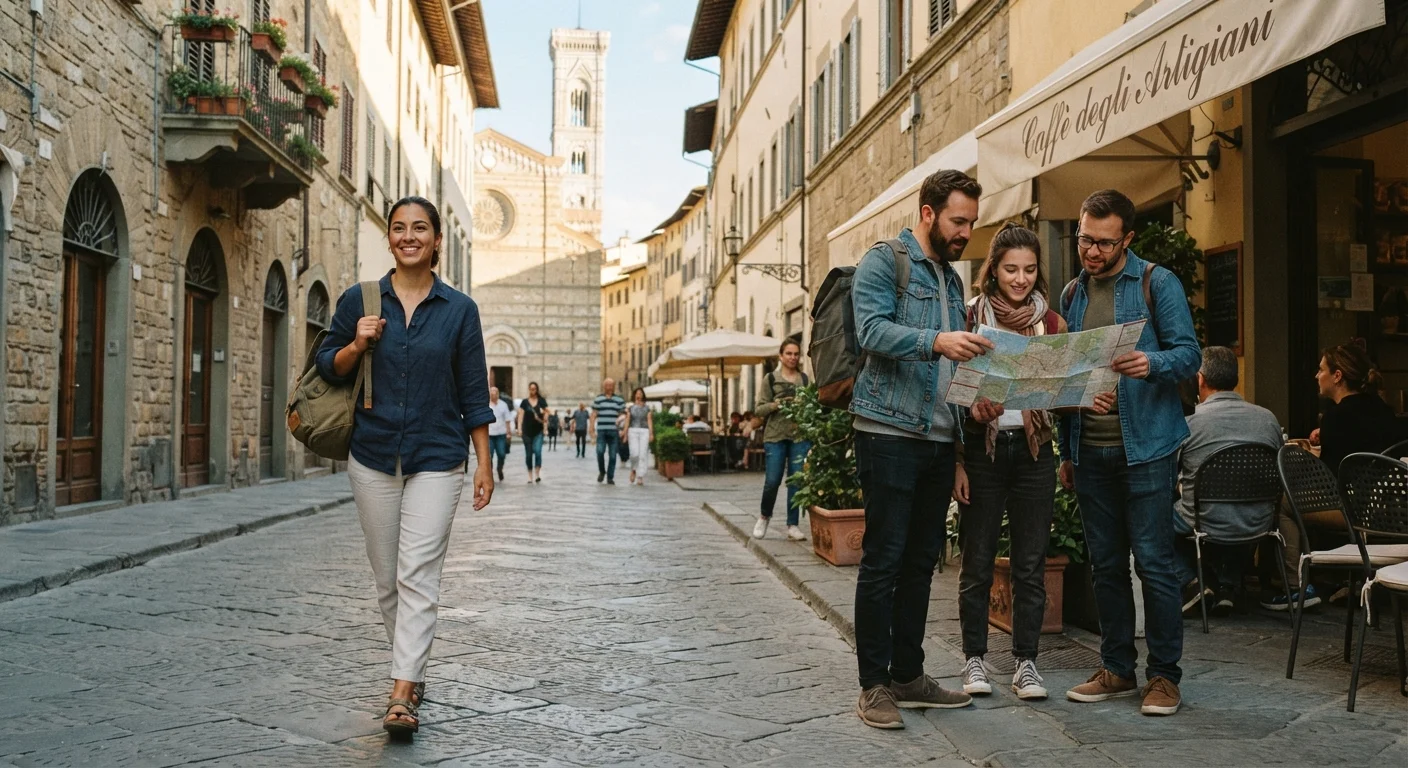
Traveling with others — whether friends, family, or an organized tour group — distributes both responsibility and risk. If one person's bag is lost, others can cover costs temporarily. If someone falls ill, there's immediate support. In unfamiliar urban environments, a group is statistically less likely to be targeted by opportunistic crime simply because of presence and visibility.
Organized group tours add a further layer: experienced guides, pre-vetted accommodations, and established emergency protocols. For a first-time international traveler, that structure can be genuinely valuable rather than limiting. Popular destinations offer predictable infrastructure; group tours to those destinations reduce logistical complexity even further.
The risks of group travel are different in nature. A false sense of collective security can lead individuals to relax precautions they'd maintain alone — leaving valuables less guarded, or following the group into situations they'd assess more carefully on their own. Group dynamics also mean compromised flexibility: if the group moves into a situation that doesn't feel right to you, social pressure can override personal judgment.
Organized Tours vs. Traveling with Friends
Group travel isn't one thing. Traveling with friends involves shared decision-making but no professional support structure. Organized tours provide guides, vetted logistics, and emergency contacts — a meaningful difference for first-timers. If you're considering a group trip primarily for safety reasons, clarify what kind of group you're actually joining and what support infrastructure exists before assuming you'll be covered.
The bottom line: group travel lowers certain entry-level risks for first-timers, but it doesn't replace individual situational awareness. The two work together, not as substitutes for each other.
Making the Right Call for Your First Trip
For most first-time travelers, the decision comes down to comfort level with uncertainty and logistics. If you're planning a well-touristed destination with strong infrastructure — major European cities, popular Southeast Asian hubs, established US national parks — solo travel is a reasonable choice with proper preparation. Many common fears about solo travel in regions like Southeast Asia are overstated when applied to well-traveled routes.
If you're heading somewhere less familiar, more remote, or with a language barrier that adds complexity, a group — organized or informal — provides a meaningful safety buffer. It's also worth considering how party size should influence destination choice, since the two decisions are closely linked.
Whichever path you choose, these precautions apply universally:
- Share your full itinerary with a trusted contact at home before departure.
- Purchase travel insurance that covers medical evacuation and trip interruption — verify what's actually covered before buying.
- Keep digital copies of your passport, insurance, and emergency contacts accessible offline.
- Research the specific safety considerations of your destination from official government travel advisory sites before you go.
This article is for general informational purposes only. For destination-specific entry requirements, safety advisories, and health guidance, consult your government's official travel advisory service and verify all details with relevant authorities before traveling.