
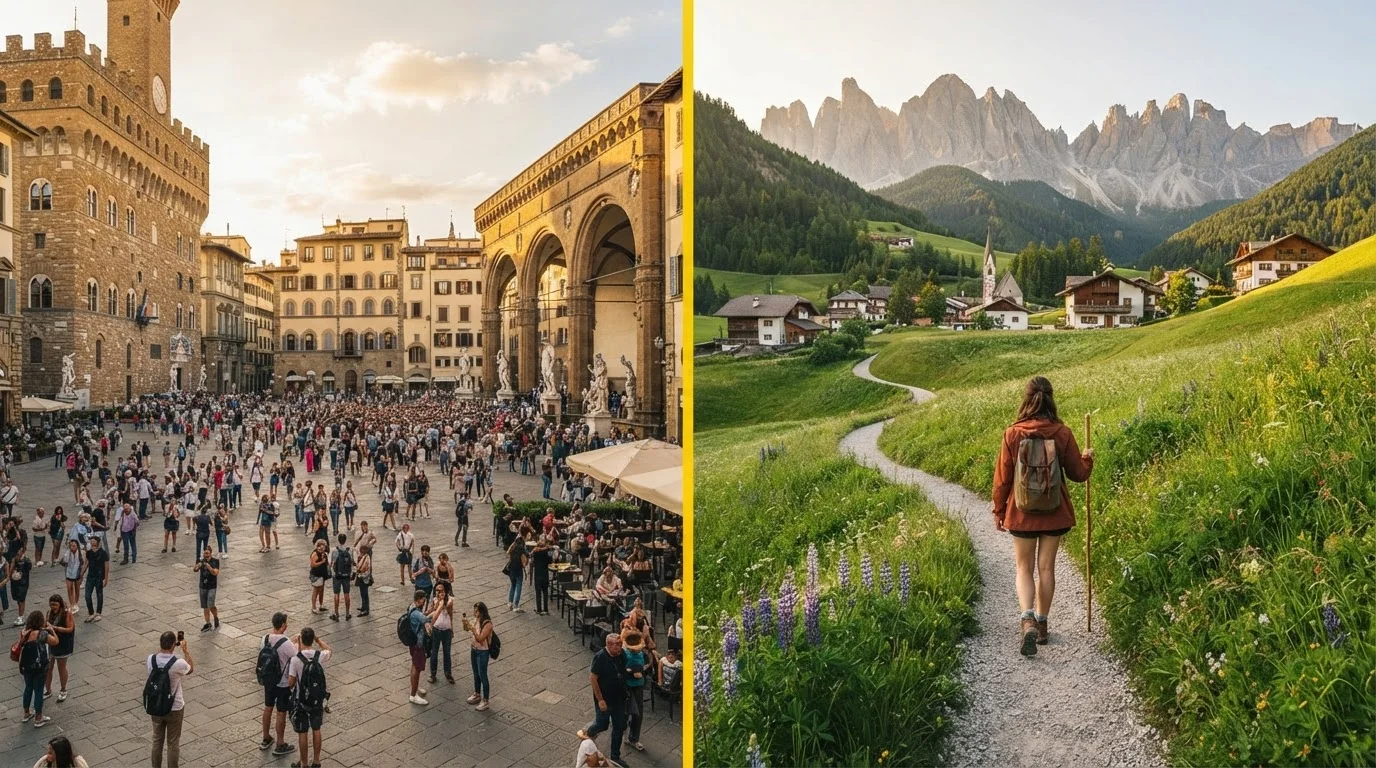
What We Actually Mean by 'Popular' and 'Off-the-Beaten-Path'
These labels get used loosely, so it helps to define them precisely. A popular destination — think Paris, Rome, Tokyo, or New York — is one with a well-developed tourism infrastructure: abundant accommodation options across price ranges, widely available English-language information, multiple flight connections, and established safety resources for visitors. The logistics are largely mapped out before you arrive.
An off-the-beaten-path destination is not necessarily remote or dangerous. It might be a mid-sized city overshadowed by a famous neighbor, a national park that doesn't trend on social media, or a country that simply attracts fewer international visitors. What these places share is thinner infrastructure for tourists: fewer guidebook entries, less English signage, and a planning process that requires more initiative from you. See what actually makes a destination right for a first trip before deciding which category to explore.
The Case for Popular Destinations
Well-developed tourist infrastructure reduces planning complexity
Popular destinations have abundant transport links, established accommodation options, and accessible visitor services — reducing the effort required to arrive prepared.
English-language resources and signage widely available
Navigating airports, transit systems, and attractions is significantly easier when signage and staff communication exist in a language you understand.
Strong traveler review base improves pre-trip verification
High visitor volume means recent, detailed reviews for lodging, restaurants, and neighborhoods are easy to find, helping you validate decisions before booking.
Emergency and consular resources more accessible
Popular tourist destinations typically have established protocols for helping visitors — medical facilities, tourist police, and embassy presence are generally more accessible.
Lower cognitive load frees attention for the experience
When logistics are predictable, mental energy can go toward actually absorbing the destination rather than troubleshooting unexpected gaps.
The practical advantages are real. Established tourist corridors mean airport transit is well-signed, ATMs are plentiful, and if something goes wrong — a lost passport, a medical issue — the local infrastructure for helping visitors is far more developed. Popular destinations also benefit from a density of traveler reviews, so you can verify lodging quality, neighborhood safety, and transport reliability with confidence before you book.
There is also a confidence-building dimension. Completing a first trip without major logistical friction builds the foundational skills — navigating unfamiliar transit, communicating across a language barrier, adapting to jet lag — that make more adventurous travel easier later. Destination familiarity lowers the cognitive load so you can focus on experiencing, not troubleshooting. For a structured approach to evaluating any destination's logistics before committing, a first-timer's complete destination research roadmap walks through the full process.
The Case for Off-the-Beaten-Path Destinations
Crowds at peak season degrade the experience
High-profile attractions in popular destinations can become uncomfortably busy, with long queues and an atmosphere shaped more by tourist volume than local character.
Thinner tourist infrastructure requires more independent research
Off-the-beaten-path destinations have less reliable guidebook coverage and fewer English-language resources, placing a greater research burden on the traveler before and during the trip.
Flight connections may be limited or expensive
Less-visited destinations often lack direct international routes, meaning additional layovers and potentially higher airfare than comparable trips to major hubs.
Less backup when plans go wrong
In low-infrastructure environments, a cancelled bus, a closed guesthouse, or a minor medical issue can escalate quickly when support systems are thin or absent.
Information goes stale faster in less-visited places
Opening hours, transport schedules, and accommodation recommendations for off-the-beaten-path spots are updated less frequently in mainstream sources, increasing the risk of acting on outdated details.
Lesser-known destinations offer something popular spots structurally cannot: a lower density of other tourists. This affects the quality of your experience in concrete ways — shorter queues, more authentic interaction with locals, accommodation that reflects genuine local character rather than a homogenized hospitality product.
Cost is also worth examining honestly. Some off-the-beaten-path destinations have lower overall price levels — accommodation, meals, and local transport may cost less than in heavily touristed cities. However, this is not universal. Flights to less-connected destinations can be more expensive or require awkward layovers, and limited competition in a small market can keep lodging prices high. Common travel myths about cost and accessibility can lead beginners to dismiss or over-romanticize unfamiliar destinations — it's worth examining your assumptions directly.
Key Factors to Weigh Before Deciding
Rather than treating this as a binary choice, use these specific factors to match a destination type to your current situation:
- Language barrier tolerance: Popular destinations frequently have multilingual signage and English-speaking hospitality staff. If navigating without shared language creates significant anxiety, that's useful information, not a flaw.
- Travel companion situation: Solo travelers face different safety considerations than those traveling with a group, and this interacts directly with how much backup you have if plans unravel in an unfamiliar, low-infrastructure setting.
- Itinerary flexibility: Off-the-beaten-path travel rewards travelers who can adapt when a bus doesn't run, a guesthouse is full, or information is outdated. If a disrupted schedule causes real distress, popular destinations with more redundancy are a better fit right now.
- Research willingness: Lesser-known destinations require more digging — forums, local blogs, recent traveler accounts — because guidebook coverage is thinner and information goes stale faster. Focused questions can cut your destination shortlist quickly regardless of which type you're considering.
Safety Research Applies to Both Destination Types
Neither popular nor off-the-beaten-path status reliably predicts safety. Crowded tourist areas can be targets for petty theft; remote destinations may have lower crime but limited medical access. Before any trip, consult your government's official travel advisory for your destination and review the essential safety practices for first-time travelers. Entry requirements, health advisories, and local laws should always be verified through official government and provider sources before you travel.
A Practical Middle Ground
Many first-timers find that a mixed approach works well: base yourself in a well-connected, popular hub and take day trips or short side journeys into quieter areas. This gives you a logistical home base — reliable transport links, accessible emergency resources, tried-and-tested accommodation — while still allowing genuine exploration of less-visited places. Peru, for example, is anchored by a major international hub but contains significant geographic and cultural depth that most first-timers never see; what first-time visitors to Peru commonly overlook illustrates how this dynamic plays out in practice.
The goal is not to push yourself toward maximum novelty on a first trip, nor to default to the most crowded itinerary. It's to make a deliberate, well-informed decision that reflects your actual comfort level — and then build from there.
Top 10
Cities absorb majority of global tourism arrivals
According to the UN World Tourism Organization, a small number of iconic city destinations consistently account for a disproportionate share of international tourist arrivals each year.
~40%
Travelers cite 'overtourism' as a trip-quality concern
Surveys by travel industry researchers have found that a significant share of visitors to popular sites report that crowd levels negatively affected their experience.