Why Most First-Time Travel Budgets Miss the Mark
The most common budgeting mistake isn't reckless spending — it's incomplete planning. Most people estimate flights and hotels, then assume the rest will work itself out. In practice, the costs that sit between those two line items — meals, transport, tickets, fees, tips — routinely add up to as much as the accommodation itself.
A realistic travel budget isn't a single number. It's five connected categories: transportation (to and within the destination), accommodation, food and drink, activities and entrance fees, and a contingency reserve. Every one of these needs its own estimate. This article is part of our broader trip budget planning hub, where you'll find resources covering each of these areas in depth.
What you will need
How to Build Your Budget Step by Step
Follow the steps below in order. Each builds on the previous one, so skipping ahead tends to produce a budget with gaps. Gather your tools before you begin.
Spreadsheet or budgeting app
Organize estimated and actual costs by category throughout the planning and travel phases.
Destination travel forums or government tourism sites
Research current, real-world daily costs from recent travelers or official sources.
Bank or card fee schedule
Identify foreign transaction fees, ATM withdrawal fees, and currency conversion charges before departure.
Currency converter
Convert estimated local costs into your home currency for a unified budget total.
Define your trip's fixed costs first
Start with the numbers you can pin down immediately: round-trip flights or transportation to your destination, and accommodation for each night. These are your anchors. Research current prices rather than estimating from memory — actual fares and hotel rates vary significantly by season and how far in advance you book. Record both a realistic estimate and a slightly higher ceiling figure for each.
Research a realistic daily spending rate
Every destination has a rough daily cost range for food, local transport, and incidentals. Search travel forums and tourism boards for recent figures from travelers with a similar style — budget, mid-range, or comfort. Multiply that daily figure by the number of full days you'll be on the ground. This becomes your on-the-ground daily budget, separate from your fixed costs.
List every fee and cost people typically overlook
This step is where most first-time budgets fall apart. Go line by line through the categories that regularly catch travelers off guard:
- Visa or entry fees
- Travel insurance premiums
- Checked baggage fees on each flight leg
- Resort or destination fees charged by hotels at check-in
- Airport transfers and taxis
- Attraction entry tickets and booking fees
- Tips and gratuities
- ATM withdrawal fees and foreign transaction charges
See our full breakdown of what a travel budget actually covers for a detailed list of commonly missed expenses.
Add a 10–15% contingency buffer
Once you have a subtotal, add 10–15% on top. This buffer covers the costs you genuinely cannot predict: a delayed flight that requires an extra night, a medical expense, a replaced item, or simply spending more than expected on a great day. A contingency fund is not optional — it's the difference between a stressful overage and a manageable one. Do not treat it as spending money; it stays untouched unless something goes wrong.
Set a daily spending limit and track it on the road
Divide your on-the-ground budget by the number of travel days to get a daily limit. Each evening, record what you actually spent. If you go over on one day, you'll know immediately and can adjust the next. This daily check-in habit is the single most effective way to prevent a budget from quietly collapsing over a two-week trip.
For broader guidance on managing your budget from planning through to your return home, the complete guide to managing a travel budget walks through every phase in detail.
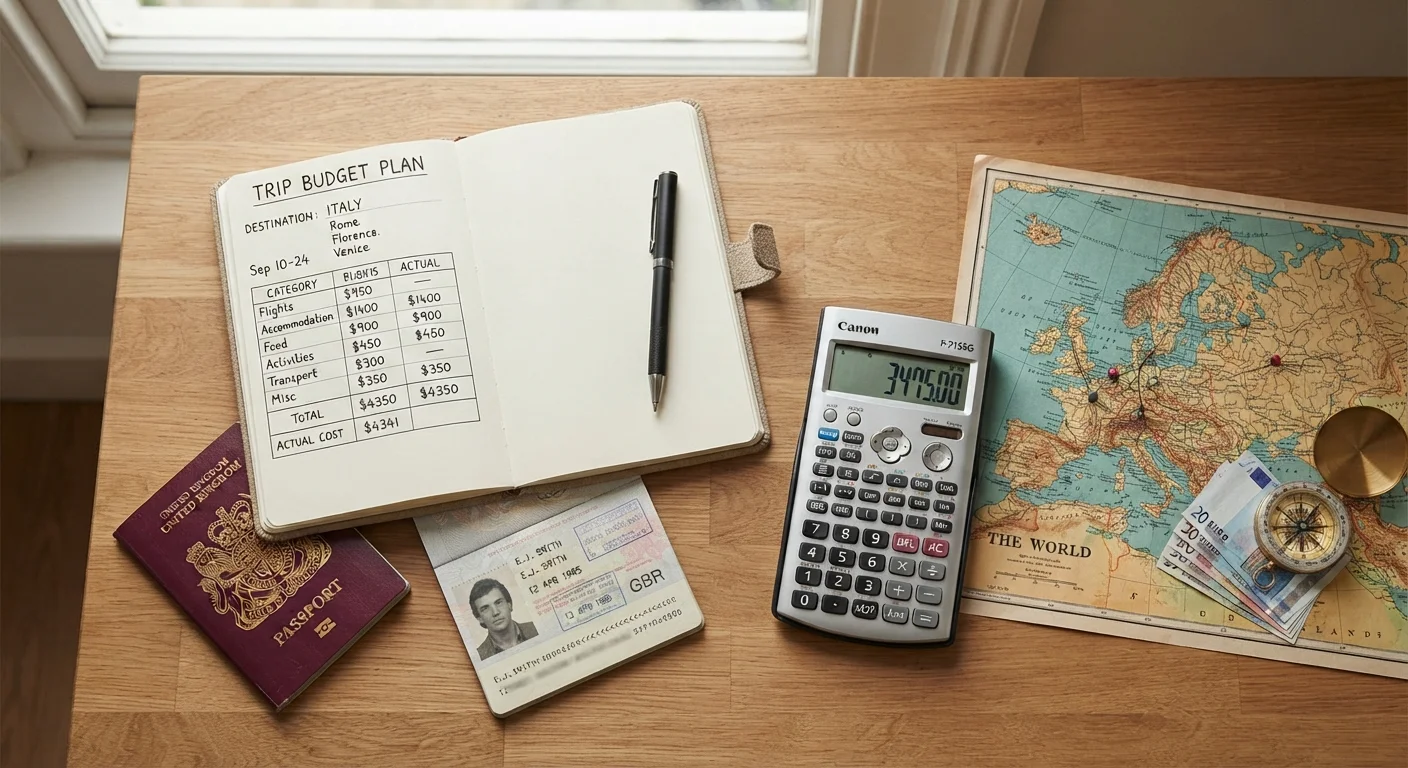
Use a Spreadsheet from Day One
A simple spreadsheet with columns for category, estimated cost, and actual cost makes budget tracking effortless. Update it each evening with the day's spending. Seeing the gap between estimate and reality early gives you time to adjust rather than discovering an overrun at the end of the trip.
Don't Forget Currency Conversion Costs
Dynamic currency conversion at foreign ATMs and card terminals can quietly add 3–5% to every transaction. Always choose to pay or withdraw in the local currency. Check whether your bank or card issuer charges foreign transaction fees before you travel, and factor those costs into your budget.
Your Budget Is Only as Good as Your Research
Generic cost-of-travel estimates vary wildly by destination, season, and travel style. Always look up current accommodation and meal prices for your specific destination before locking in a number. Costs in major tourist zones can be two to three times higher than a city's general average. Treat any figure you find online as a starting point, not a guarantee.
This article provides general financial information for travel planning purposes. It is not personalized financial advice. For guidance specific to your situation, consult a qualified financial professional.
Keeping Your Budget Honest After You Book
A budget written during planning is a hypothesis. What keeps it useful is revisiting it at two key moments: after you've booked your flights and accommodation (update your fixed costs to reflect actual prices paid), and again about two weeks before departure (research any costs that may have changed, and confirm hotel fees or visa requirements).
Once you're traveling, the daily tracking habit from Step 5 does the heavy lifting. If you find yourself consistently over your daily limit, identify which category is driving the overrun — food, transport, or activities — and make a conscious choice about where to adjust rather than letting it drift. For help structuring your days once the budget is in place, our guidance on building your travel itinerary covers practical scheduling from start to finish.