
Why Party Size Is a Destination Variable, Not Just a Logistics Detail
Most first-time travelers treat party size as a background factor — something that affects hotel room selection but not the destination itself. In reality, who you travel with fundamentally changes which destinations suit you.
A solo traveler heading to Lisbon and a group of four heading to Lisbon are having meaningfully different trips. One can slip into a quiet neighborhood café and linger for hours; the other needs a table that accommodates everyone and may struggle with the same spontaneity. This isn't a problem — it's just a planning reality worth acknowledging early.
Before choosing a destination, ask: Does this place reward independent exploration, or does it shine when shared? Does the infrastructure support a single traveler navigating alone, or does it require a car (and splitting that cost) to work at all? These questions narrow your list quickly. See our guide on what makes a destination right for a first trip for a broader framework to apply alongside party size.
How Solo Travel Shapes Destination Choice
Traveling alone gives you something groups rarely have: complete decision-making authority. You can choose a destination built around a single passion — a long-distance hiking route, a coastal town with a strong culinary scene, a city known for its music venues — without negotiating with anyone else's preferences.
This freedom makes solo travel a natural fit for destinations with:
- Strong walkability or transit networks — cities where you don't need a car to get around safely and conveniently.
- Established solo traveler communities — hostels, coworking spaces, walking tours, and other social infrastructure designed for people arriving alone.
- Flexible entry points — places where arriving on a Tuesday instead of a Saturday doesn't diminish the experience.
Solo travel also makes certain destination types more accessible. Remote or niche locations — a small island, a mountain village, a specific cultural festival — can be planned around a single person's schedule without the coordination overhead a group requires.
The key tradeoff: solo travelers absorb all accommodation and transport costs alone. This can price certain destinations out of reach, or require more budget-conscious planning. Matching your lodging type to your solo trip goals is one practical way to manage this.
| Criterion | Solo Travel | Group Travel |
|---|---|---|
| Destination flexibility | High — no consensus needed | Lower — requires compromise |
| Cost per person | Higher — no cost-sharing | Lower — shared expenses |
| Infrastructure needs | Walkability and solo-friendly hubs | Large venues, group transport options |
| Spontaneity | Very easy to pivot | Harder with larger groups |
| Safety support | Relies on personal preparation | Built-in mutual support |
| Best destination types | Cities, niche, off-peak destinations | Resorts, cruises, multi-activity hubs |
How Group Travel Shapes Destination Choice
Group travel introduces a different set of constraints and advantages. The most immediate advantage is cost-sharing: a rental car, a vacation rental, or a multi-room suite becomes proportionally cheaper per person as the group grows. This can unlock destinations that would be difficult to access or afford alone.
But group travel also compresses your destination range in ways solo travel doesn't. Consider:
- Varied budgets within the group — a destination that's comfortable for some travelers may strain others, causing friction.
- Competing interests — beach lovers, city explorers, and museum enthusiasts in the same party may rule out each other's ideal destinations.
- Logistics complexity — larger groups need more rooms, more seats at restaurants, and more flexible scheduling, which favors established tourist infrastructure over off-the-beaten-path options.
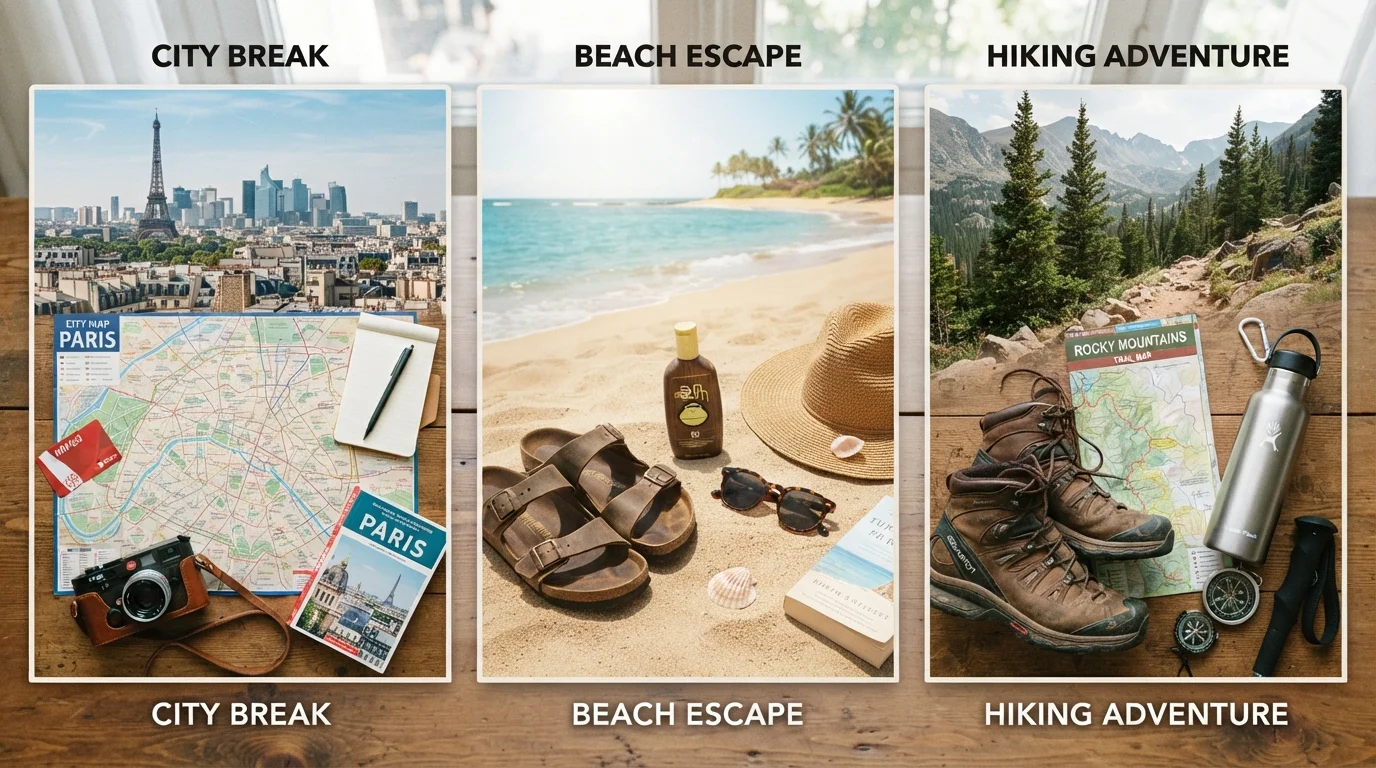
Group travel tends to suit destinations with diverse activity menus — places where different people can pursue different things and reconvene comfortably. Major city destinations, beach resorts, and cruise itineraries work well for this reason. If a cruise is on your radar, our guide to planning a cruise walks through the key decisions involved.
~70%
Solo travelers who are women
Various travel industry surveys have consistently found that the majority of solo leisure travelers identify as women, influencing destination safety considerations.
3–4 people
Typical group size for maximum cost-sharing benefit
Travel researchers and accommodation platforms generally note that groups of three to four people tend to reach the most favorable per-person cost breakpoints for shared lodging and transport.
One underappreciated option: solo travelers joining a structured group tour. This approach captures many group benefits — companionship, logistics support, shared costs — while still starting from a solo booking. Solo cruising is a specific example of this model that has grown considerably in recent years.
Making the Decision: A Practical Framework
Rather than treating solo versus group travel as an abstract preference, ground your decision in three concrete questions:
- What does the destination require to function? Some places are seamless for a solo traveler with a transit pass; others only make sense with a car and a split fuel bill.
- What's the honest budget range across your group? If there's meaningful variation, choose a destination with flexibility — options at different price points for accommodation, dining, and activities.
- Who is making the decisions? The more voices involved, the more the destination needs to be a compromise candidate rather than anyone's first choice.
Comparing destinations honestly across these dimensions — not just based on aesthetics or popularity — is what separates a good trip from an expensive lesson. Our article on domestic vs. international travel is a useful companion when your group or solo status intersects with distance and complexity decisions.
Finally, don't overlook the destination discovery process itself. Exploring top global destinations for first-time travelers can help surface places specifically known for welcoming both solo visitors and small groups.
Party Size Can Change Mid-Trip Planning
It's common for group travel plans to shift as people drop out or join — which can affect your destination choice even after initial research. Build some flexibility into your destination shortlist so that a change in group size doesn't require starting from scratch. Destinations with scalable accommodation options (ranging from shared rooms to private apartments) are particularly resilient to this kind of planning disruption.