Why Deck Plans Feel Confusing at First
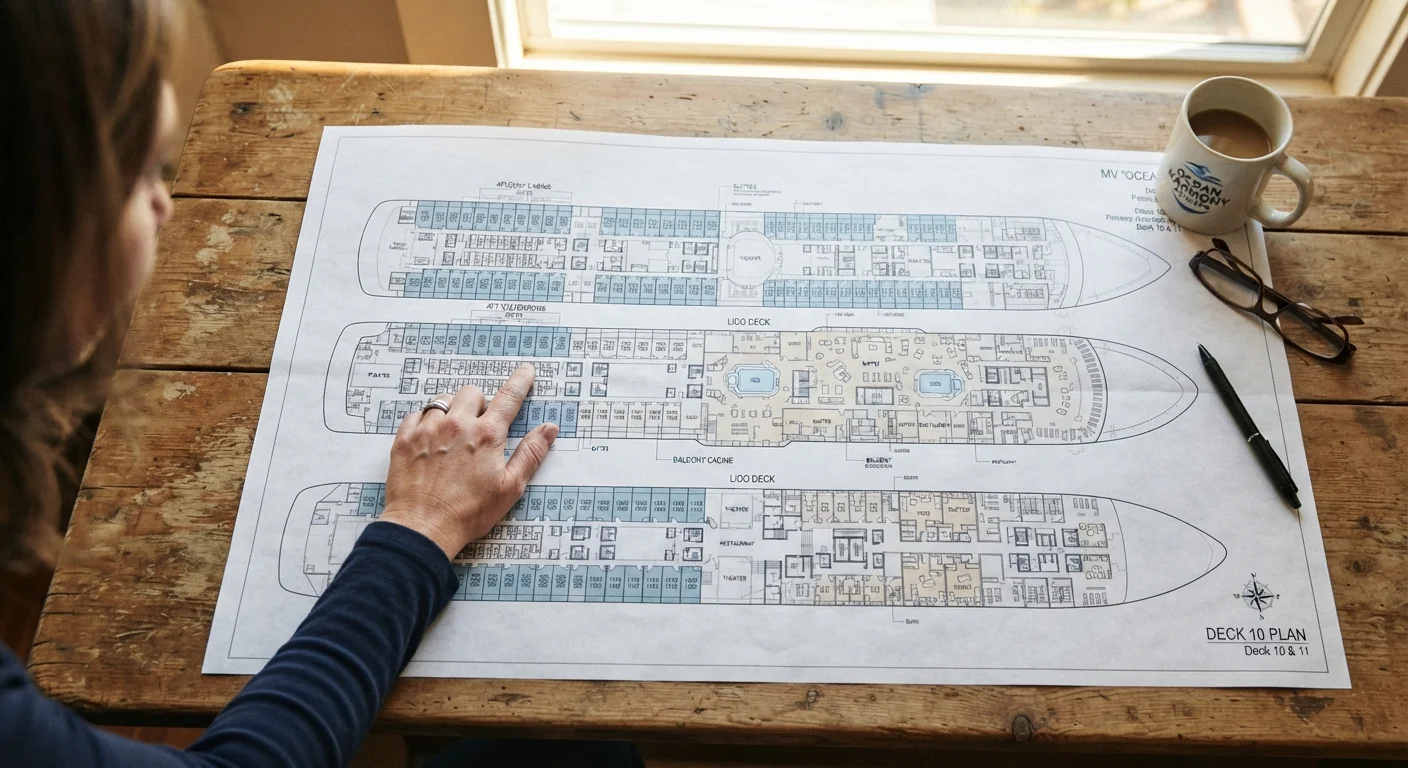
A cruise ship deck plan is essentially a set of architectural floor plans - one diagram per level of the ship - stacked together and color-coded by cabin type. For first-timers, the sheer number of cabins (some ships carry well over 2,000 staterooms) and the dense grid of category codes can look impenetrable. The good news: you do not need to understand every symbol to make a smart cabin choice. You only need to understand the parts that affect your experience.
If you are still building your foundational cruise vocabulary, the Cruise Terminology Decoded glossary will clarify terms like starboard, aft, and lido deck before you dive into the plan. Reading a deck plan is also a key skill within the broader process of choosing a stateroom - something covered in detail in Your First Cruise: A Complete Walkthrough.
What you will need
What the Deck Plan Actually Shows You
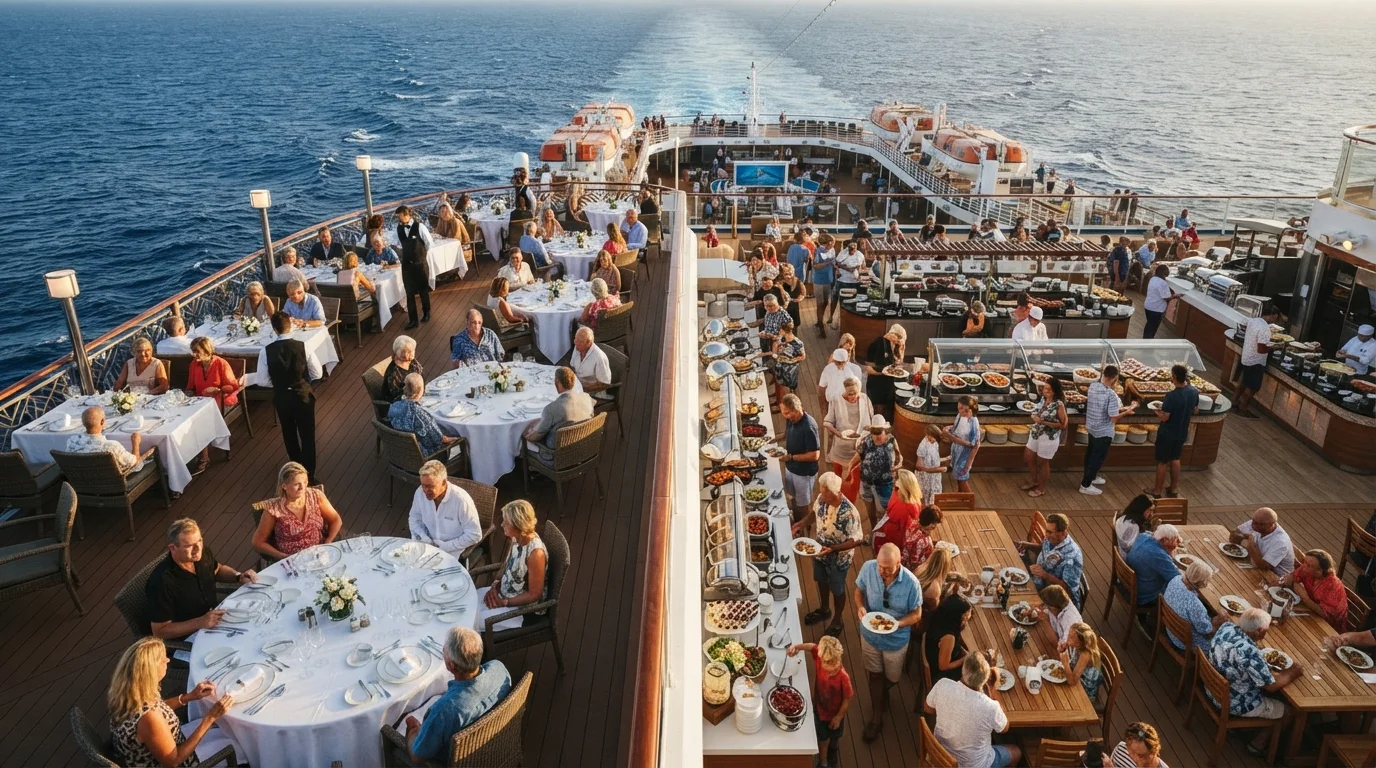
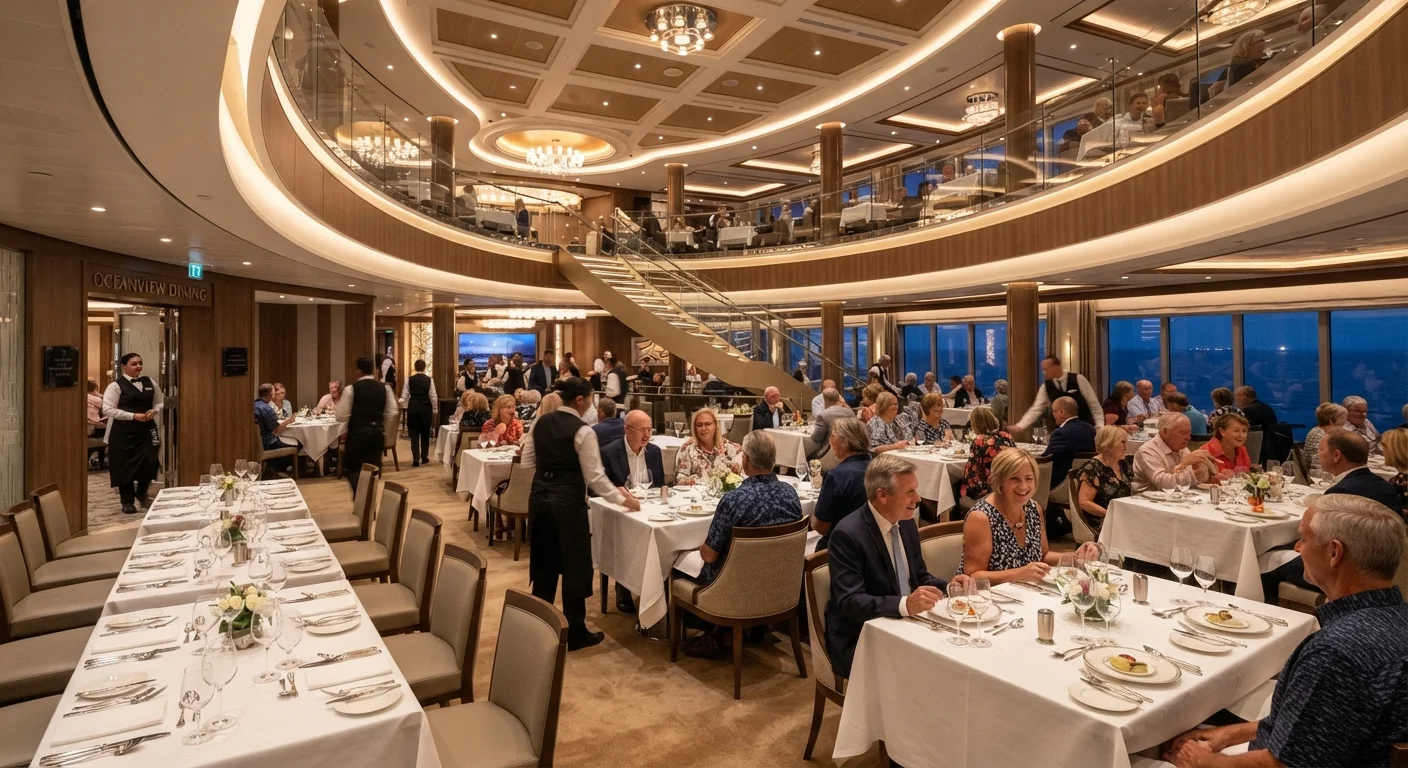
Beyond cabin locations, a deck plan reveals the entire geography of the ship: where you will eat, be entertained, relax, and move between decks. Understanding this geography matters because your cabin's position relative to these venues directly shapes your day-to-day comfort. For context on what those dining venues involve, see our guide to how cruise ship dining is structured.
Cruise Line's Official Deck Plan
The primary source for accurate, ship-specific cabin layouts and venue locations.
Notepad or Spreadsheet
Track cabin numbers you are considering, along with their category codes and location notes.
Cruise Review Sites with Cabin Reviews
Supplement the deck plan with real traveler feedback about specific cabin locations and noise levels.
Deck Plans Change Between Ships
Even ships in the same class from the same cruise line can have different layouts. Always pull the deck plan for your specific vessel and sailing date from the cruise line's official website. Generic images found through search engines are often outdated or misattributed to the wrong ship.
How to Read and Use a Deck Plan
Follow these steps in order when you sit down with a deck plan for the first time. Taking a methodical approach - starting with overall orientation before zooming into individual cabins - prevents the overwhelm that comes from trying to evaluate everything at once.
Use the Interactive Version When Possible
Most cruise lines now offer clickable, zoomable deck plans on their websites. These interactive versions let you click individual cabins to see category, square footage, and sometimes photos. This is far more useful than a static PDF for comparing specific staterooms before committing.
Locate the official deck plan for your specific ship
Go to the cruise line's website, find your sailing, and navigate to the ship profile or stateroom selection section. Look for a link labeled Deck Plan or Ship Map. Download or open the interactive version. Avoid third-party images - they are frequently outdated or for a different vessel in the same fleet.
Understand how decks are numbered
Ships number decks from the bottom up. Deck 1 or 2 is typically near the waterline; the highest numbered decks are at the top of the ship. The plan is usually presented as a stack of horizontal diagrams - one per deck - each showing a bird's-eye view of that level. Orient yourself by identifying the bow (front) and stern (rear) labels, which should appear on each deck diagram.
Decode the cabin category codes
Every cabin on the deck plan is assigned a category code - typically a letter, a number, or a combination (for example, OV for ocean view, IS for inside, BC for balcony, S for suite). The cruise line's legend, usually found on the same page, maps these codes to cabin types and price tiers. Write down the codes that match your budget and preferences before hunting for specific locations.
Identify the key venue locations on each deck
Before evaluating cabins, map out where the ship's main venues sit: the main dining room, buffet, theater, pool deck, casino, spa, and kids' club. These are shown as labeled blocks on the deck plan. Cabins directly above, below, or beside these areas can experience noise, vibration, or foot-traffic at odd hours. Mark these zones so you know which cabin numbers to approach with caution.
Evaluate location trade-offs for your priorities
Use what you've learned to filter cabin positions by your personal needs:
- Motion sensitivity: Choose mid-ship (closer to the center of the vessel lengthwise) and a lower-to-middle deck. These positions experience the least rocking in rough seas.
- Convenience: Cabins near elevators and staircases reduce walking - important if you have mobility considerations - but can be noisier due to foot traffic.
- Quiet: Avoid cabins directly below the pool deck, beside the elevator bank, or adjacent to the theater or nightclub.
- Views: Balcony cabins at the very front or back of the ship (bow and stern) often have dramatic views but can be windier and sometimes carry engine vibration.
Cross-reference specific cabin numbers before booking
Once you have a shortlist of two or three cabin numbers, search those numbers on reputable cruise review platforms where past passengers leave cabin-specific feedback. Common issues - like a porthole partially blocked by a lifeboat, a cabin with a slightly smaller-than-standard footprint, or one that sits beneath the jogging track - are often well-documented by previous guests. This step can prevent an unpleasant surprise on embarkation day.
Connecting Cabin Noise Can Surprise You
Connecting cabins - those with a shared interior door to an adjacent stateroom - can transmit sound between rooms even when the door is locked. On deck plans, these are often marked with a small bracket symbol or noted in the cabin details. If you value quiet, specifically request a non-connecting cabin when booking.
Putting It All Together Before You Book
Reading a deck plan is a skill that gets faster with practice. Your first pass might take twenty minutes; by your second cruise booking, you will likely have a shortlist in under five. The key discipline is always starting with the full picture - deck numbering, venue locations, category codes - before narrowing to specific cabin numbers.
Once your stateroom is sorted, your next planning layer involves the ship's itinerary. Reading a cruise itinerary without getting confused walks you through port days, sea days, and timing in the same structured way. And for an end-to-end view of the planning process, Planning a Cruise From Start to Sail ties every decision together from destination selection through boarding day.