
Choosing Your First Cruise
The sheer volume of cruise options - ship sizes, destinations, voyage lengths, cabin categories - is what stops most first-timers before they even begin. Narrowing your focus to a few variables makes the decision manageable.
Voyage length: A three- to five-night itinerary is widely considered the most accessible entry point. It limits your financial commitment, keeps logistics simple, and gives you a genuine taste of ship life without overcommitting. Seven-night voyages are the most popular overall, but they introduce more planning complexity around flights and budgeting.
Departure port: Choosing a homeport - a port close to where you live - eliminates the need to coordinate a flight with a cruise departure, which is one of the most common sources of first-timer stress. Driving to the terminal and parking is a straightforward alternative.
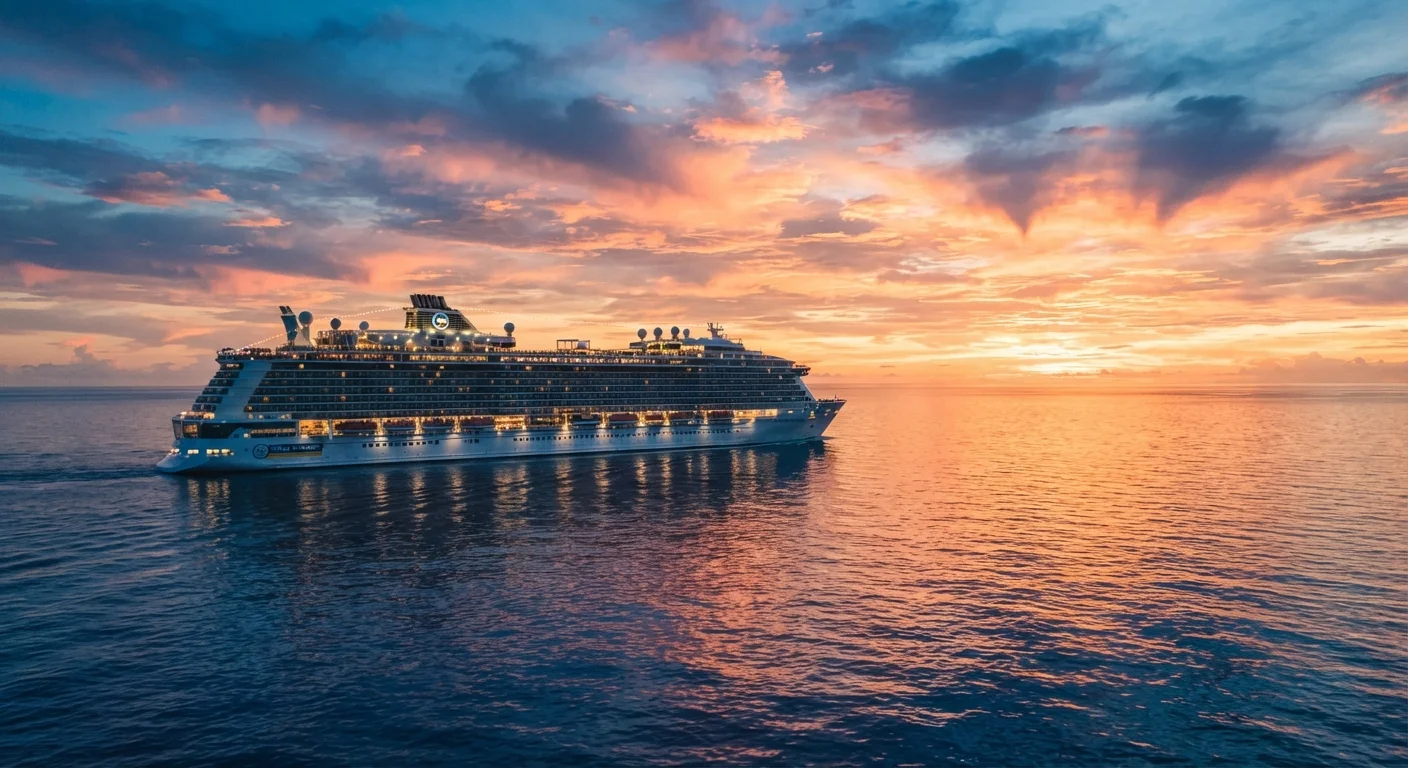
Ship size: Larger ships carry thousands of passengers and offer a wide array of amenities, but they can feel overwhelming at first. Smaller and mid-size ships are easier to navigate and tend to sail to ports that large ships cannot reach. Neither is objectively better - the right choice depends on your comfort with crowds and desired destinations.
For a deeper foundation before you commit, see our complete pre-booking guide, which covers ship types, itinerary categories, and cost structures in full detail.
Embarkation
The process of boarding a cruise ship at the start of your voyage, including check-in, security, and receiving your cruise card.
Disembarkation
The process of leaving the cruise ship at the end of your voyage, including luggage retrieval and clearing customs.
Muster drill
A mandatory safety briefing required by international maritime law where passengers learn the location of their emergency lifeboat station and what to do in an emergency.
Port of call
A destination the cruise ship stops at during the voyage, where passengers can go ashore and explore before the ship continues sailing.
All-aboard time
The deadline by which all passengers must return to the ship at a port of call, before the gangway closes and the ship departs.
Cruise card
A card issued at embarkation that serves as your room key, onboard ID, and payment method for all purchases made on the ship.
Closed-loop cruise
A cruise that departs from and returns to the same U.S. port, which has specific entry document rules for U.S. citizens different from other international itineraries.
Homeport
The departure port nearest to where you live, allowing you to reach the terminal by driving rather than flying.
What to Do After You Book
Booking confirms your cabin and locks in your fare - but a checklist of tasks follows that most first-timers are not expecting.
- Complete online check-in: Your cruise line will open a check-in portal weeks before your sail date. Uploading your passport or ID, selecting a check-in time slot, and entering your payment information here saves significant time at the terminal.
- Review the packing list: Each cruise line publishes a prohibited items policy. Common restrictions include certain types of power strips, irons, and outside alcohol. Pack a small carry-on with essentials - medication, a change of clothes, valuables - since checked luggage may not reach your cabin for several hours after boarding.
- Purchase travel insurance: Cruise itineraries are exposed to weather delays, medical emergencies at sea, and missed ports. Travel insurance with trip cancellation and medical evacuation coverage is worth understanding before you sail. Consult an insurance professional to understand what a policy does and does not cover.
- Book shore excursions early: Popular excursions at popular ports fill up. Reviewing options in advance gives you more choices and time to compare cruise line offerings against independent alternatives.
For a broader planning framework, our step-by-step planning walkthrough covers every decision from itinerary selection through boarding day preparation.
Set a Pre-Cruise Checklist Deadline
Give yourself a firm deadline - at least two weeks before sail date - to complete online check-in, print luggage tags, and confirm any pre-booked excursions. Leaving these tasks to the last few days adds avoidable stress and can mean sold-out excursion slots or slower terminal processing on embarkation day.
Embarkation Day, Step by Step
Embarkation - the process of boarding your ship - follows a predictable sequence, and knowing it in advance removes almost all the anxiety.
- Arrive at the terminal during your check-in window. You selected this time during online check-in. Terminals manage passenger flow by staggering arrival times.
- Check your luggage. Porters outside the terminal accept bags tagged with your cabin number (tags are printed from the online check-in portal). These bags are delivered to your stateroom later. Keep your carry-on with you.
- Clear security and check in at the counter. Present your travel documents and boarding pass. You'll receive a cruise card - your room key, onboard ID, and payment method all in one.
- Board the ship and find your muster station. Signs throughout the ship and information in your cabin direct you to your assigned emergency muster station. Complete any required safety drill steps promptly.
- Explore while your cabin is prepared. Staterooms are typically available by 1:00 p.m. or 2:00 p.m. Use the time to visit the buffet, walk the decks, and orient yourself using the ship map available at guest services.
If this is your first time navigating a new travel experience of this scope, our day-by-day trip planning guide offers a complementary framework for structuring your time from arrival through departure.
Life Onboard During Your Voyage
Once at sea, the ship operates on its own internal rhythm. Understanding that rhythm early helps you stop missing things.
The daily newsletter: Each evening, a printed or digital schedule - sometimes called the Daily Planner or Daily Program - is delivered to your cabin or accessible through the cruise line's app. This lists every activity, entertainment option, dining reservation window, and port arrival time for the following day. Read it every night.
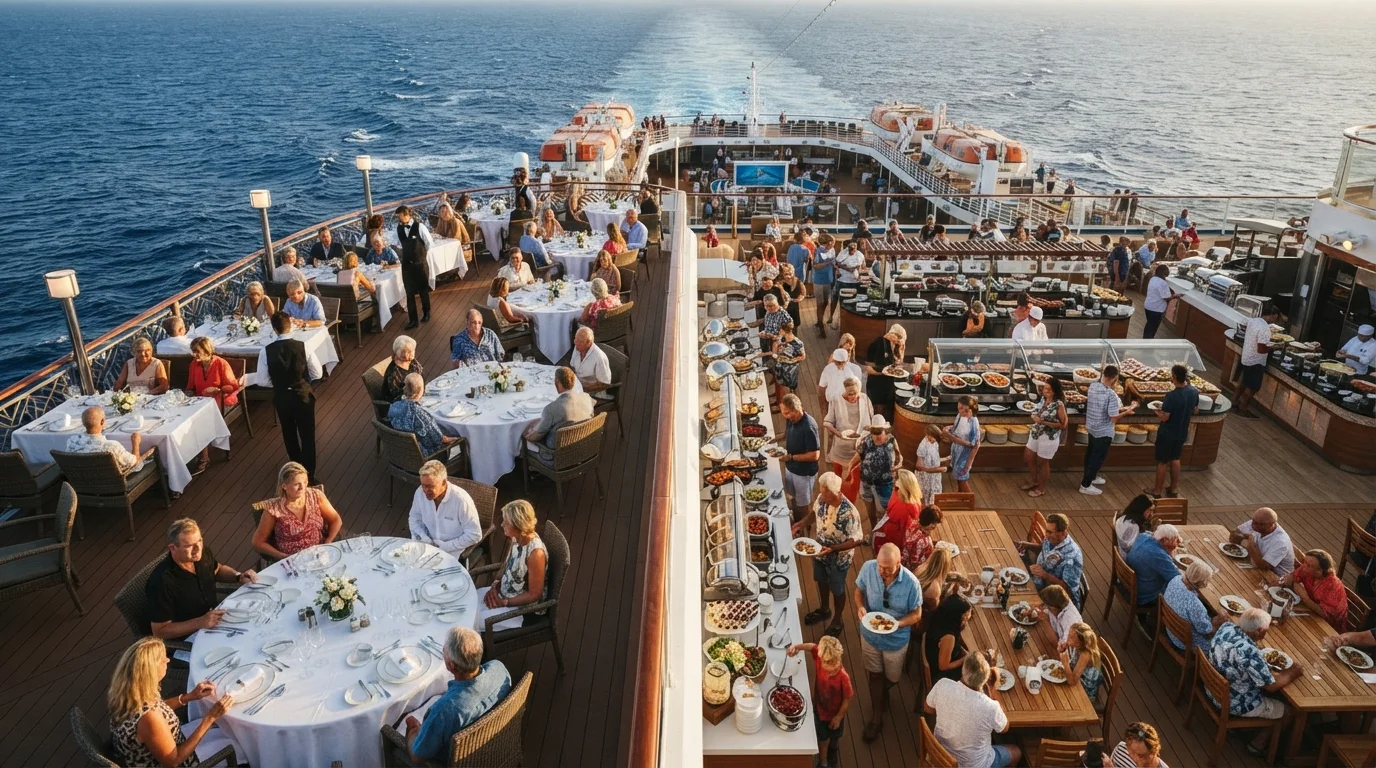
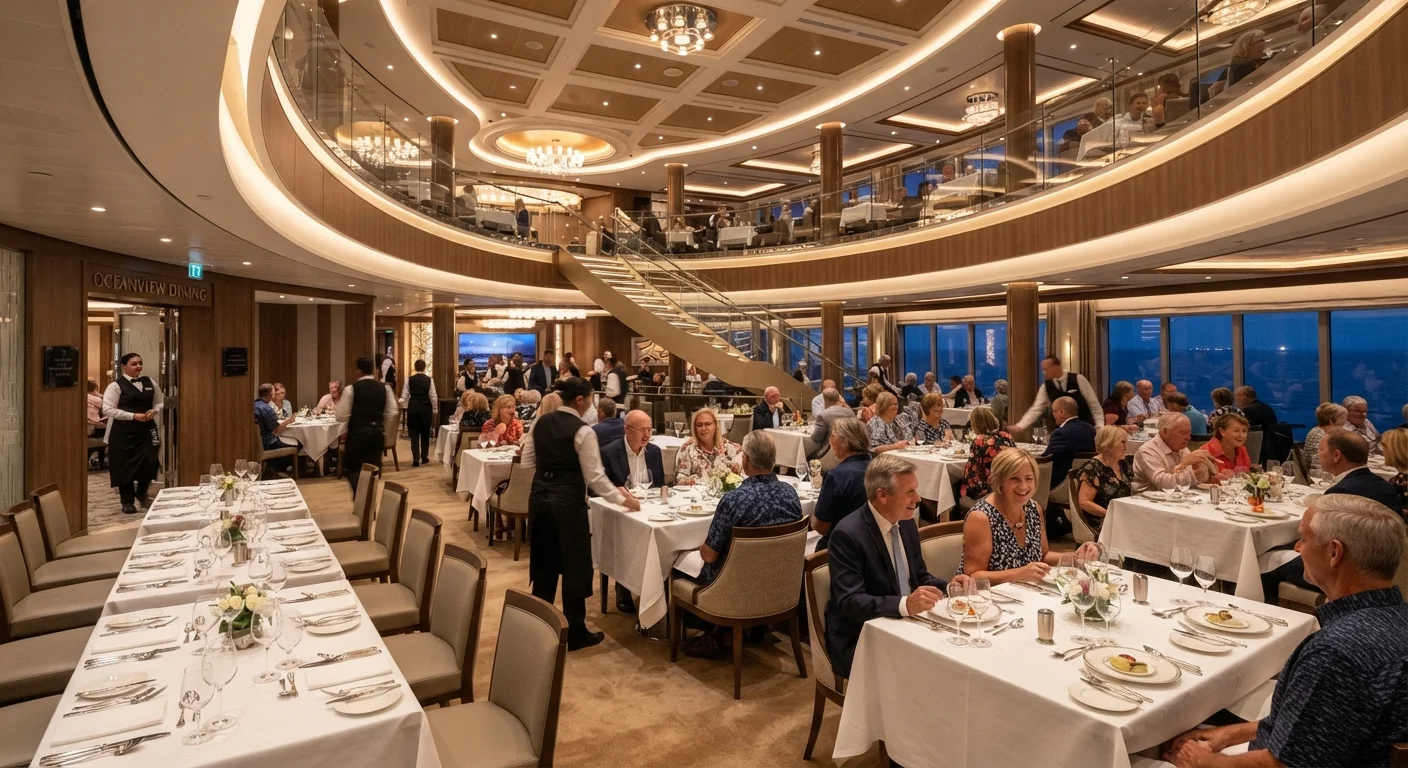
Dining structure: Most ships offer a main dining room with set or flexible seating times, a buffet-style casual venue, and various specialty restaurants that charge an additional fee. If your cruise includes a traditional fixed dining time, you'll be assigned a table and a serving team for the voyage. Flexible dining options let you arrive during a broad window without a reservation.
Managing your onboard account: Every purchase is charged to your room account. You can review your running balance at a kiosk, through the ship's app, or at the guest services desk. Checking it every day or two prevents surprises at checkout.
For a full picture of daily ship life - activities, amenities, etiquette, and more - explore the Onboard Life hub. Unfamiliar terms? Our cruise terminology glossary translates the jargon you'll encounter throughout your voyage.
Gratuities Are Usually Added Automatically
Most cruise lines add a daily automatic gratuity charge per person to your onboard account. This amount varies by cruise line and cabin category. Review your booking confirmation and the ship's FAQ to understand what is included, and factor it into your overall budget before you sail.
Ports of Call: Making the Most of Shore Days
Port days break the voyage into memorable destinations. They also introduce the single most common first-timer mistake: not returning to the ship on time.
Know your all-aboard time. This is the time the gangway closes - typically 30 to 60 minutes before the ship's scheduled departure. It is printed in the Daily Program and posted at the gangway. Missing it means the ship leaves without you, and the cost of catching up falls entirely on you.
Shore excursion options: Cruise line-organized excursions are designed to return you to the ship on time and offer some protection if a delay occurs. Independent tours or self-guided exploration can be more flexible and less expensive, but require more careful time management. Neither approach is universally better - the right choice depends on your comfort with independent navigation and the specific port.
Never Cut the All-Aboard Time Close
The ship's departure schedule is not flexible. Even well-organized shore excursions can be delayed by traffic or unforeseen circumstances. Build a buffer of at least 30 minutes beyond the all-aboard time into any port day plan. If you are running late, contact the port agent - whose number is printed in your Daily Program - immediately.
Currency and connectivity: Most port towns accept U.S. dollars at tourist-facing businesses, but having a small amount of local currency is useful for markets, local transit, and smaller vendors. Cruise line international data packages and local SIM cards are both options for staying connected ashore - compare them before you sail.
Disembarkation: How It Works
Disembarkation - leaving the ship at the end of your voyage - is more organized than it first appears, but it does require preparation the night before.
The night before arrival: Your final onboard account statement is delivered to your cabin. Review it carefully and resolve any discrepancies at guest services that evening, when lines are shorter than the following morning. You'll also receive color-coded luggage tags corresponding to your disembarkation group and time slot.
Luggage handling: Place tagged bags outside your cabin door by the time specified in ship instructions - typically by midnight or early morning. These are offloaded and sorted in the terminal by group. Keep your carry-on for overnight essentials, medication, and valuables.
Leaving the ship: Groups are called in sequence over the ship's PA system, usually starting around 7:30 a.m. and completing by 9:30 a.m. to 10:00 a.m. Self-assist disembarkation - carrying all your own luggage off - is called first and suits travelers with early flights. Once called, proceed to the gangway, clear customs and immigration in the terminal, and retrieve your checked bags from the labeled section of the baggage hall.
Allow ample time between your disembarkation and any onward travel. Flight delays during embarkation day travel are a well-known risk - booking a flight the afternoon of disembarkation day, or the following morning, provides a meaningful buffer. For guidance on coordinating your air travel around a cruise, see our first flight booking guide.