The Three Tiers of Cruise Dining
Cruise ship dining is organized into three broad categories: included venues, specialty restaurants, and casual grab-and-go options. Knowing which tier each venue falls into prevents unwanted surprises on your onboard bill.
Included venues - primarily the main dining room and the buffet - are covered by your fare. You can eat at these as often as you like throughout the voyage. Specialty restaurants are usually sit-down venues with a distinct concept (a steakhouse, Italian trattoria, or sushi bar, for example) and charge either a flat cover fee or à la carte prices on top of your fare. Casual options - poolside grills, pizza stations, sandwich counters - are sometimes included and sometimes not; it depends on the cruise line and the specific item.
As part of a typical day aboard a cruise ship, you'll find yourself moving between these tiers naturally - buffet for a quick breakfast, main dining room for a leisurely dinner, maybe a specialty restaurant for a special occasion night.
3-20+
Dining venues typically found per ship
Smaller ships may offer just a handful of options; mega-ships with 5,000+ passengers can feature over 20 distinct restaurant concepts.
~$30-$60
Typical specialty restaurant cover charge
Per-person cover fees at specialty restaurants vary significantly by cruise line, ship, and concept; always verify current pricing with your cruise line directly.
2
Standard fixed dining sittings offered nightly
Most mainstream cruise lines operating fixed sittings offer an early seating (around 6 p.m.) and a late seating (around 8-8:30 p.m.) in the main dining room.
The Main Dining Room: What to Expect
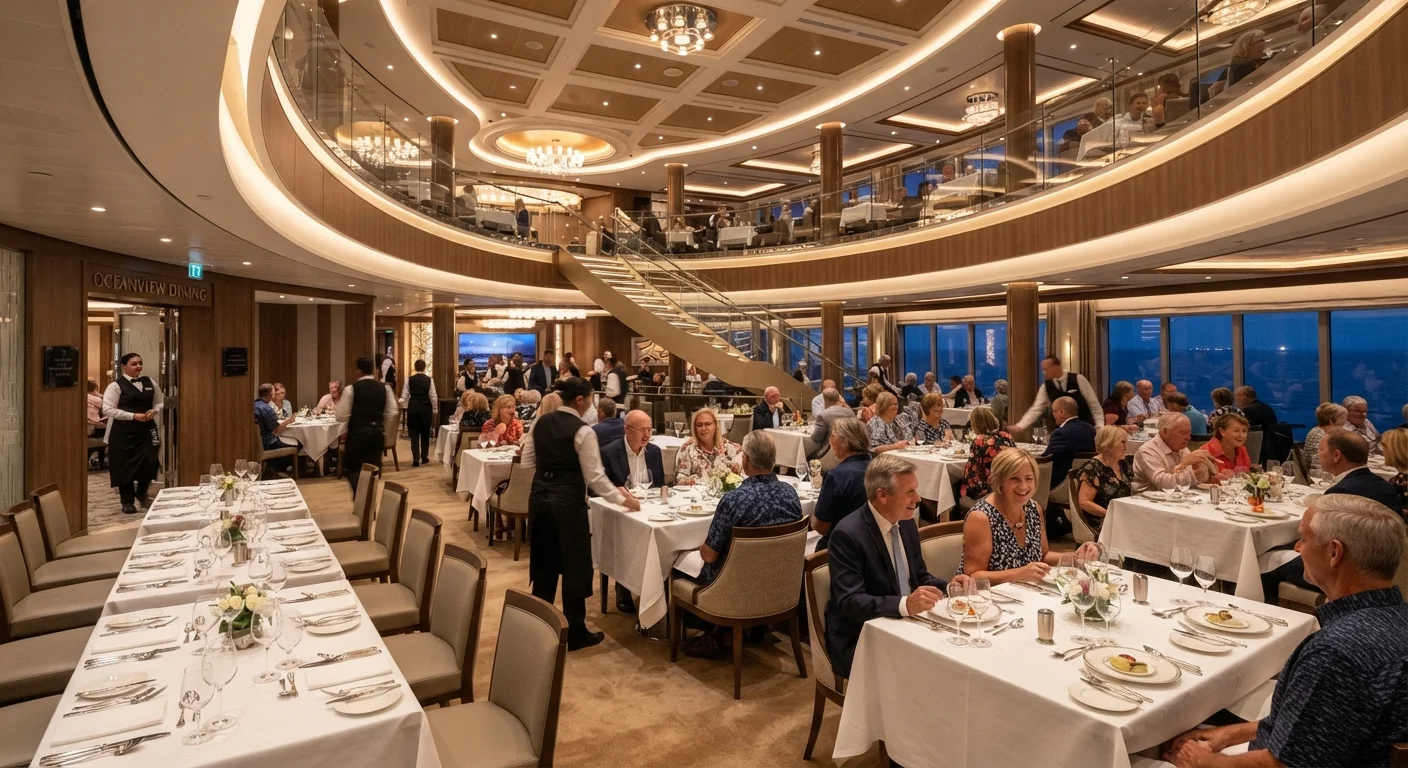
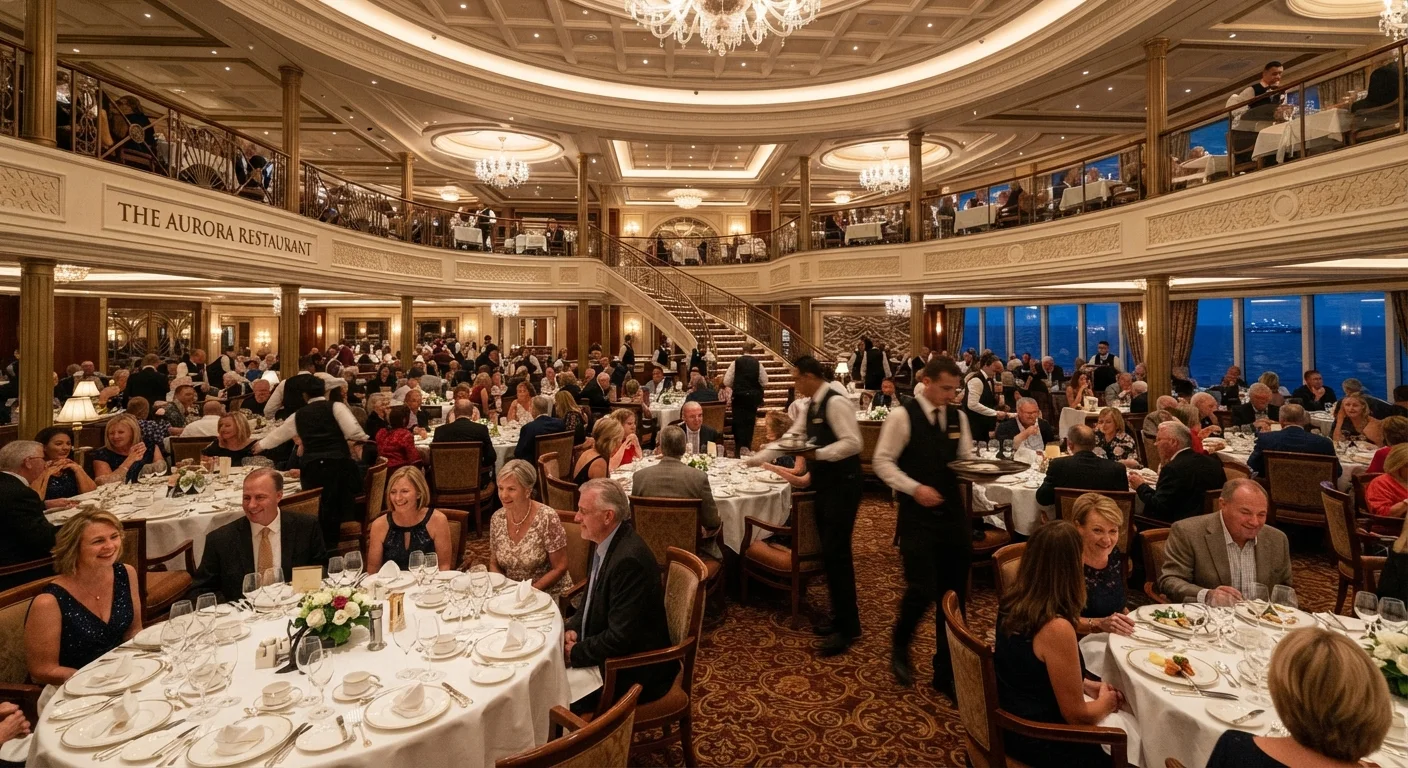
The main dining room (MDR) is the social and culinary centerpiece of most cruise ships. It operates with a rotating menu across the length of the voyage, so you'll rarely see the same dishes two nights running. Menus typically include appetizers, soups, salads, several entrée choices, and desserts - all without extra charge.
Service in the MDR is table-service, meaning a waiter takes your order and brings your courses. On most ships, you'll be assigned to or choose between fixed sittings (an early seating around 6 p.m. or a late seating around 8:30 p.m.) or flexible dining (show up when you're ready within operating hours). Choosing between these two systems is one of the first decisions you'll make during booking, and it affects the rhythm of your entire evening.
Request Dietary Needs Before You Board
Most cruise lines accommodate vegetarian, vegan, gluten-free, and allergen-specific requirements in the main dining room - but advanced notice makes a significant difference. Contact your cruise line or travel agent before sailing to register dietary needs. Waiting until you're onboard can limit your options, particularly for more complex requirements.
Many ships also designate one or two evenings as 'formal nights,' when guests are encouraged to dress up - think cocktail attire rather than black tie, on most mainstream lines. Casual clothing is generally expected at all other times in the MDR.
Buffets, Casual Dining, and 24-Hour Options
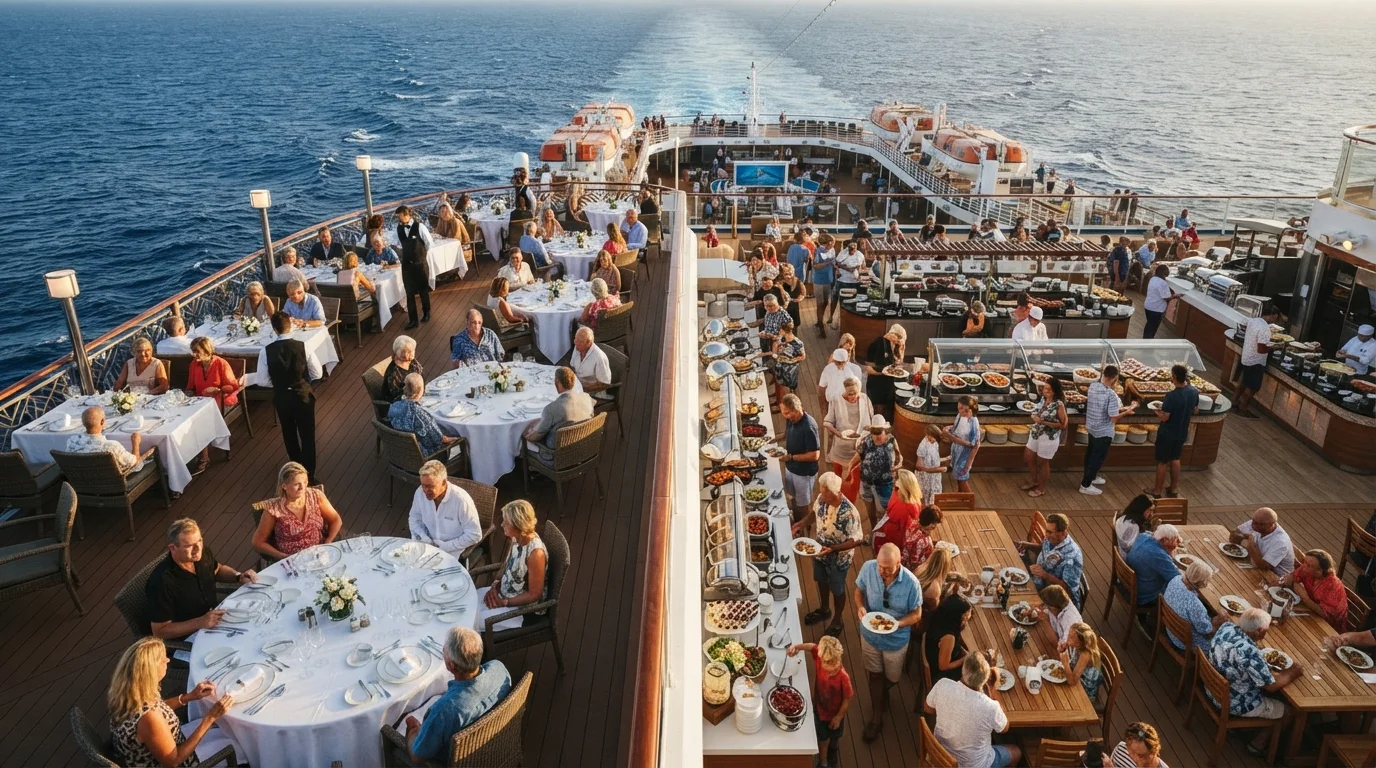
The lido-deck buffet is the most flexible dining option on any ship. It's self-service, open for most meals, and requires no reservation or specific outfit. Expect a wide variety of hot dishes, salads, desserts, and beverages - the range grows substantially on larger ships.
Beyond the buffet, most ships offer additional casual spots: poolside burger grills, taco bars, pizza counters, and café-style venues serving pastries and coffee (note that specialty coffee drinks often carry a fee even when food is included). Some ships maintain a 24-hour or late-night menu - either from room service or a dedicated late-night venue - for passengers returning from evening port excursions or late shows. Activity after midnight on a cruise ship includes far more than most first-timers expect.
Room Service Policies Vary by Line
Room service is available on most cruise ships, but the scope and cost differ considerably. Some lines include basic room service in the fare; others charge a delivery fee or restrict complimentary items to certain cabin categories. Check your cruise line's current policy before assuming room service is free.
Specialty Restaurants and How to Use Them Wisely
Specialty restaurants give you a more immersive dining experience - smaller spaces, more attentive service, and menus focused on a single culinary concept. They're worth considering for a birthday dinner, an anniversary, or simply a night when you want something different from the MDR rotation.
Costs vary widely. Some lines charge a flat cover per person (often $25-$60); others price dishes individually. A few premium and luxury lines include specialty dining in the base fare entirely. Before boarding, check your cruise line's dining packages - pre-purchasing a multi-night specialty restaurant bundle is frequently offered at a lower per-night cost than booking individually onboard, though this is not universal.
Reservations matter. On a mega-ship with thousands of passengers, the best tables at popular restaurants fill quickly. Make reservations as soon as your cruise line's pre-cruise booking window opens. The size of your ship directly influences how many specialty options exist and how competitive reservations will be.
For context on how dining fits into the broader layout of a ship, reading a deck plan before you sail helps you locate each restaurant and understand how far it is from your cabin.