Why Cruise Jargon Trips Up First-Timers
Cruise brochures, booking confirmations, and onboard announcements are packed with specialized vocabulary. Terms like embarkation, tender, and port of call appear constantly - yet rarely get explained. If you've ever read a cruise itinerary and felt like you needed a translator, you're not alone.
This glossary covers the terms you're most likely to encounter before and during your first voyage, organized into two groups: ship geography and sailing operations. Bookmark it as a reference alongside our complete first-cruise walkthrough for end-to-end guidance.
Embarkation
The process of boarding the cruise ship at the start of your voyage, typically at the homeport terminal. It involves check-in, security screening, and receiving your cabin key card.
Disembarkation
Departing the cruise ship at the end of the voyage. Cruise lines typically assign passengers to color- or number-coded disembarkation groups to manage the flow of passengers off the ship.
Port of Call
Any destination the ship stops at during the itinerary, where passengers can go ashore for excursions or independent exploration. Not all ports involve overnight stays.
Homeport
The departure and return city for your cruise. This is where you board at the start and disembark at the end of the voyage.
Sea Day
A day when the ship is sailing between ports and does not stop at a destination. Onboard activities, entertainment, and dining are typically in full swing on sea days.
Tender
A small vessel used to ferry passengers from the cruise ship to shore when a port is too shallow or otherwise inaccessible for the ship to dock directly.
Lido Deck
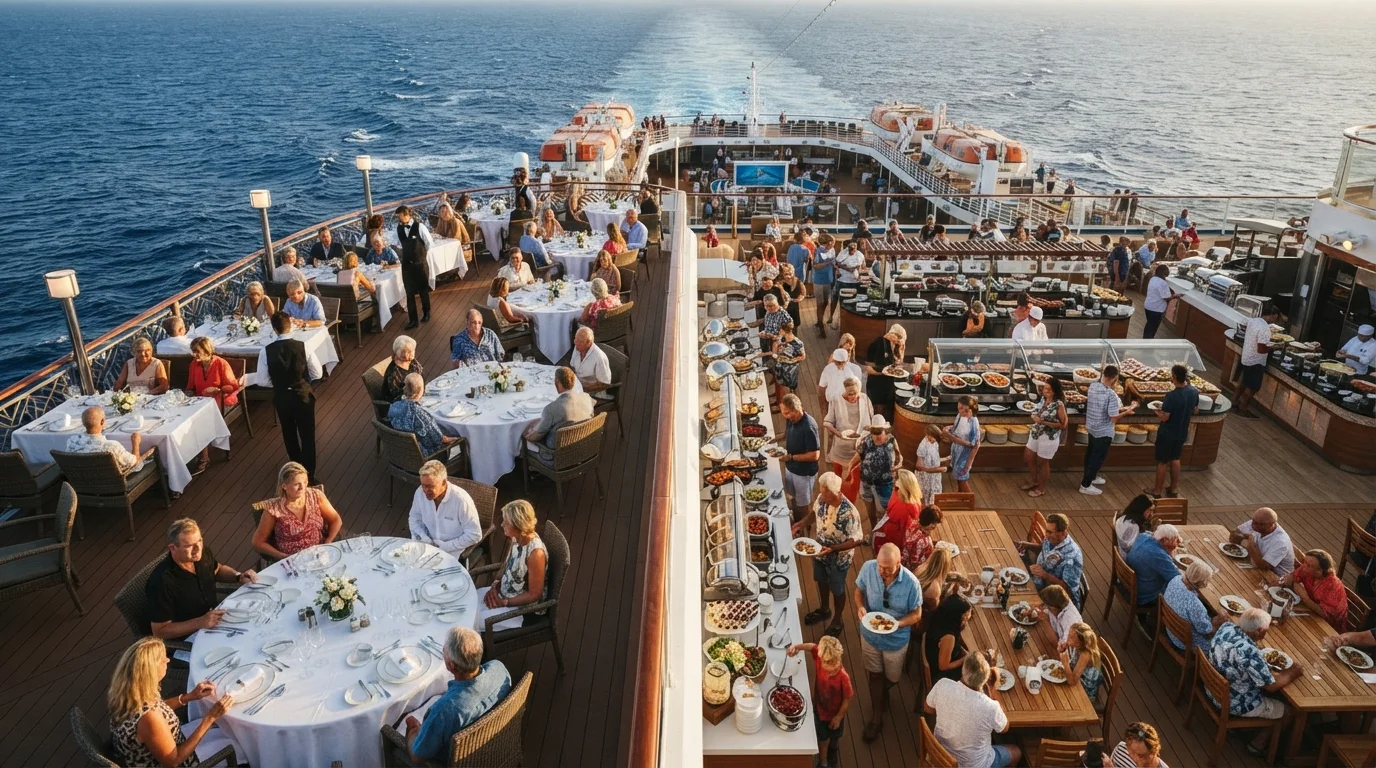
The upper open-air deck of a cruise ship, typically featuring the main pool, hot tubs, and buffet-style dining. The name derives from Italian outdoor leisure culture.
Muster Drill
A mandatory safety briefing required for all passengers before or shortly after the ship departs. It covers emergency procedures and the location of life jackets and muster (assembly) stations.
Bow / Stern
The bow is the forward-facing front of the ship; the stern is the rear. These terms are used in cabin descriptions, deck maps, and onboard directions.
Port / Starboard
Port refers to the left side of the ship when facing forward; starboard is the right side. These terms are fixed relative to the ship's orientation, not the passenger's position.
Midship
The middle section of the ship, roughly equidistant from the bow and stern. Midship cabins are generally considered more stable in rough seas and closer to central amenities.
Gratuity / Service Charge
A fee added to your onboard account to cover tips for cabin stewards, dining staff, and other service crew. Some cruise lines include this in the fare; others add it automatically per day per person.
Key Terms for the Ship Itself
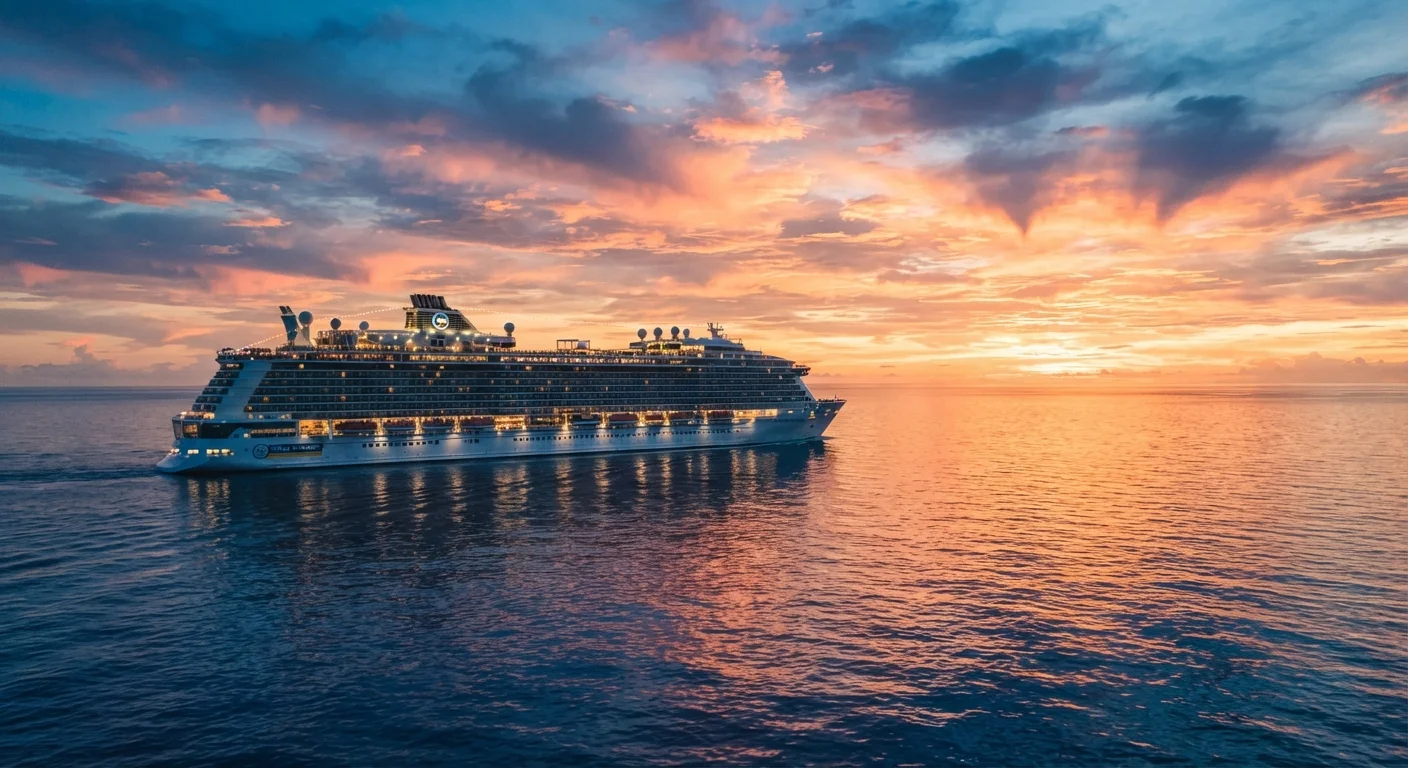
Before you board, it helps to understand how a cruise ship is organized. Crew and staff use directional and spatial terms precisely, and knowing them prevents confusion when you're navigating a 14-deck vessel.
| Bow | Front of the ship |
| Stern | Rear of the ship |
| Port | Left side (facing forward) |
| Starboard | Right side (facing forward) |
| Lido Deck | Main pool and buffet deck, typically near the top |
| Midship | Center of the ship - most stable in rough seas |
Decks and orientation are the foundation. The bow is the front of the ship; the stern is the rear. Port refers to the left side when facing forward; starboard is the right. These terms appear on deck maps, cabin descriptions, and announcements throughout your trip.
Most ships number their decks from the bottom up. The Lido Deck - a term borrowed from Italian beach resorts - typically houses the main pool, buffet, and open-air areas near the top of the ship. The Promenade Deck usually wraps around the outside of the ship and is popular for walking laps.
Your cabin assignment will often include a deck number and a position code indicating whether it's forward, midship, or aft (toward the stern). Midship cabins generally experience less motion in rough seas - worth knowing if you're prone to seasickness.
Terms You'll Hear Before and During Sailing
Beyond the ship's layout, cruising has its own operational vocabulary. These terms come up during booking, embarkation day, and throughout the itinerary.
Embarkation is the process of boarding the ship at the start of your cruise. Disembarkation (or debarkation) is departing at the end. If you've ever felt lost on your first day, our guide on what to expect on embarkation day walks through it step by step.
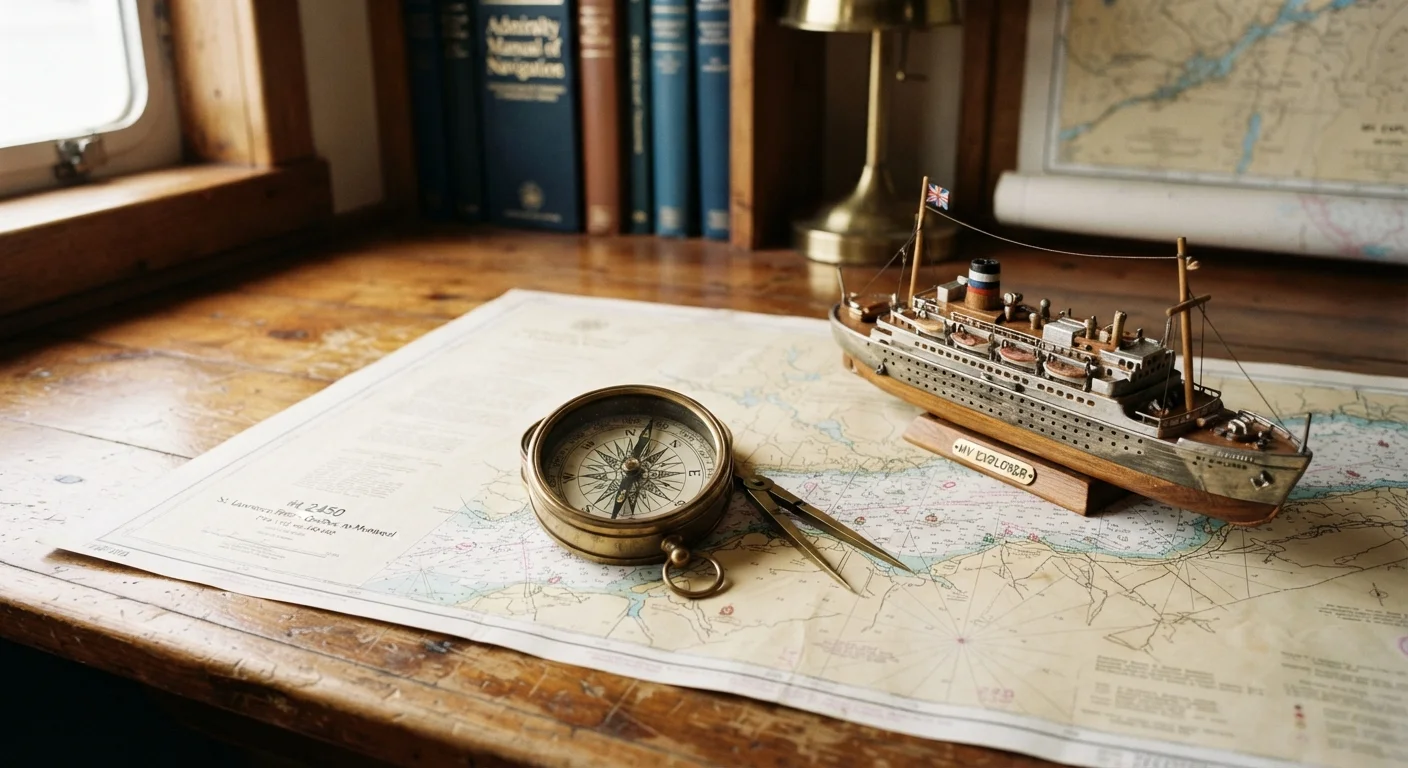
A port of call is any destination the ship visits during the itinerary, as opposed to the homeport - the city where you board and disembark. On days when the ship doesn't visit a port, you'll see sea day on the schedule; these are often the most relaxed days of a cruise.
When a port's waters are too shallow for the ship to dock directly, passengers reach shore via a tender - a small ferry-style boat operated by the cruise line. Tender ports require more time and planning, so it's worth noting them in your itinerary in advance.
The muster drill (also called a safety drill or lifeboat drill) is a mandatory safety briefing held before or shortly after departure. Every passenger is required to participate. Stations are assigned by cabin and marked on your key card.
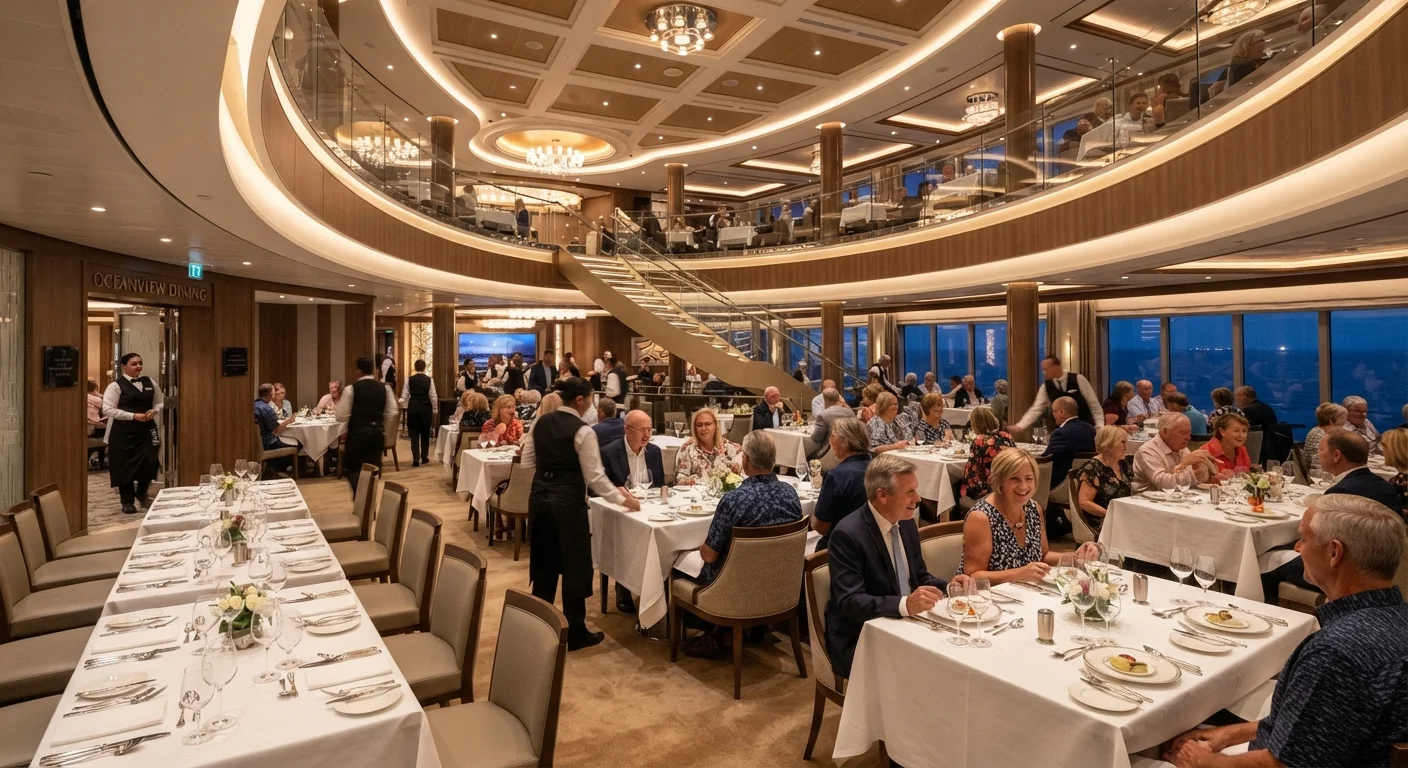
Finally, understand the difference between all-inclusive and à la carte pricing. Most mainstream cruise fares cover the cabin, main dining, and basic amenities - but specialty restaurants, shore excursions, beverages, and gratuities often cost extra. For a closer look at how service charges work, see our breakdown of cruise gratuities and tipping.
For broader planning help - from choosing an itinerary to understanding cabin categories - visit our Plan a Cruise hub.