Why Budgeting Before You Travel Matters
Most financial surprises on a trip are not caused by genuinely unpredictable events. They happen because the traveler never estimated what things would cost in the first place. A travel budget is simply a written plan that maps your expected spending across every part of your trip before money leaves your account.
Without one, you are making dozens of small spending decisions with no reference point — and the cumulative effect often means coming home with a credit card balance you did not expect. With even a basic budget in place, each decision has a context: Is this within what I planned to spend on activities today? That kind of awareness changes behavior without requiring constant mental effort.
This guide introduces the foundational concepts of travel budgeting in plain language. No financial background is needed. By the end, you will understand the categories every travel budget must account for, the difference between fixed and variable costs, and the most common mistakes to avoid. For a deeper walkthrough of the full planning process, see our complete guide to managing a travel budget.
The Five Core Categories of a Travel Budget
Every trip, regardless of destination or duration, involves spending across five broad categories. Understanding these up front gives your budget its structure.
Travel budget
A written estimate of all expected trip costs, organized by category, created before you begin spending. It gives you a reference point for every financial decision during the trip.
Fixed cost
A travel expense with a known, locked-in amount — such as a booked flight or prepaid hotel. You confirm this number at the time of purchase.
Variable cost
A travel expense that changes based on daily choices — such as meals, taxis, or activity tickets. You estimate a daily allowance rather than a precise figure.
Contingency fund
A reserved portion of your budget — typically 10–15% of the total — set aside for unexpected costs. It is not planned spending; it is a financial safety buffer.
Daily allowance
The amount you estimate spending on variable costs each day of your trip. Calculated by dividing your total variable budget by the number of travel days.
Pre-travel costs
Trip expenses that occur before departure, such as visa fees, travel insurance, vaccinations, and luggage. These are real budget items even though they happen at home.
- Transportation: Everything that moves you — flights, trains, buses, taxis, car rentals, airport transfers. This is often the largest single cost and the first you will book.
- Accommodation: Where you sleep each night. This includes hotels, hostels, vacation rentals, or any other lodging. Cost varies enormously by destination and style of travel.
- Food and drink: Three meals a day adds up. Budget separately for sit-down meals, quick lunches, and incidentals like coffee or snacks.
- Activities and experiences: Entry fees, tours, tickets to attractions, and any paid entertainment. Easy to underestimate, especially in cities with many paid museums or organized excursions.
- Contingency fund: A reserved amount — typically 10–15% of your total estimated budget — set aside for unexpected costs. Not a category you plan to spend; a buffer you plan to have.
These five categories apply whether you are booking a week-long international trip or a domestic long weekend. The Travel Money hub expands on how to plan and manage costs within each of these areas.
Fixed vs. Variable Costs: A Critical Distinction
Once you understand the five categories, the next concept to master is the difference between fixed costs and variable costs.
Fixed costs are amounts you lock in at the time of booking. Your round-trip flight, your hotel reservation, and any prepaid tours are fixed — you know exactly what they will cost before you arrive. These are the easiest part of a budget to build because the numbers are precise.
Variable costs are amounts that depend on decisions you make during the trip. What you eat, how many taxis you take, which activities you choose on a given day — these fluctuate. You cannot know them exactly in advance, so you estimate a daily allowance and track against it as you go.
Use a Two-Column Budget Approach
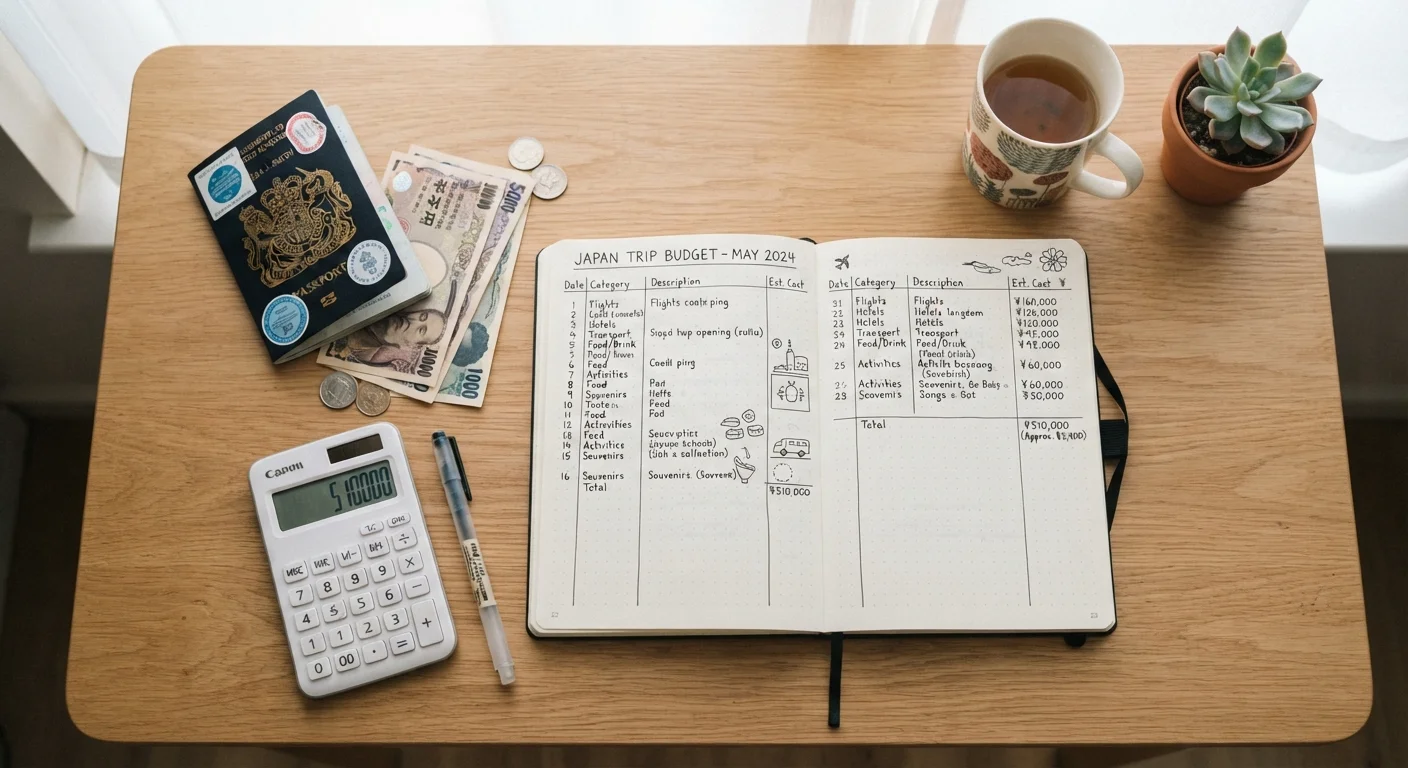
Keep your fixed costs and variable costs in separate columns from the start. Fixed costs go in once you have confirmed bookings; variable costs are tracked daily against your pre-calculated allowance. This separation makes it easy to see at a glance whether you are on track without having to re-add everything each day.
A practical approach is to divide your budget into two columns: a fixed-cost column you fill in before you leave, and a daily variable allowance you calculate by dividing your remaining variable budget by the number of travel days. For example, if you have allocated $600 for food and activities over a ten-day trip, your daily variable budget is $60.
This structure also makes it easier to adjust. If your flights come in under budget, you can reallocate that saving to your variable daily allowance — or keep it as additional contingency.
How to Set a Realistic Total Budget
Setting a total budget starts with research, not with a number you feel comfortable spending. The correct sequence is: find out what things cost at your destination, then decide whether that fits what you have available. Working in the other direction — deciding what you want to spend and hoping it will be enough — frequently leads to underfunding.
Start with your fixed costs. Look up current flight and accommodation prices for your intended dates. Use these real figures, not estimates. Then research variable costs specific to your destination — what does a sit-down meal cost in that city? What do public transit fares look like? Travel forums, government tourism sites, and destination-specific travel guides are useful sources.
Once you have a realistic subtotal, add your contingency buffer of 10–15%. That final number is your working total budget. If it exceeds what you have available, the honest options are to reduce trip length, choose a less expensive destination, adjust your accommodation tier, or delay the trip until you have saved more. Our guide to building a travel budget from zero provides a structured framework for going through this estimation process.
Common Budgeting Mistakes First-Time Travelers Make
Most first-trip budget failures are not caused by catastrophic overspending in one area. They accumulate from a series of small omissions that compound across the length of the trip.
- Forgetting pre-travel costs: Visa fees, travel insurance premiums, vaccinations, and new luggage are all trip costs — they just happen before you leave. Leave them out and your budget is already wrong before departure.
- Ignoring airport-to-accommodation transfers: Getting from the airport to your hotel can cost anywhere from a few dollars to well over $50 depending on the city and transport mode. This is a fixed cost you can research in advance.
- Not accounting for baggage fees: Many carriers charge separately for checked luggage. If your budget assumes a ticket price that does not include bags, you may be underfunding your transportation category.
- Using overly optimistic daily averages: Generic per-day estimates found online often reflect budget backpacker spending. If your travel style differs, base your estimates on actual current prices at your specific destination.
- Treating the contingency fund as spending money: If you have not spent your contingency by the end of the trip, that is a success — not a signal that you budgeted too conservatively.
Don't Mistake Contingency for Spending Money
A common first-trip error is treating the contingency fund as a bonus budget once you are on the road and things seem fine. Reserve it until you are home. Unexpected costs — a missed connection, a health issue, lost luggage — tend to appear late in a trip, not at the beginning. If you have not spent it by the time you return, consider it a successful budget, not an overcautious one.
For travelers heading abroad for the first time, understanding how exchange rates and foreign transaction fees interact with your budget is equally important. Our introduction to travel money covers these financial mechanics in plain language.
Next Steps: From Budget to Full Plan
A travel budget is the financial foundation of your trip plan — but it does not stand alone. Once you have a working budget, the next step is connecting it to a full trip plan that accounts for itinerary, booking timing, and how you will manage money while you are actually traveling.
For a comprehensive end-to-end walkthrough — from initial estimates through tracking spending on the road and reconciling after you return — see our complete planning guide for first-time international travelers.
If you are considering a cruise as your first major trip, note that cruise pricing works differently from standard trip budgeting — many costs are bundled into a single fare, but onboard extras require their own budget line. The cruise basics hub explains how cruise costs are structured.
The goal of every budget is the same: to let you make spending decisions with confidence during your trip, knowing you have planned well and kept a sensible reserve. That confidence — not a perfectly accurate forecast — is what a good travel budget actually delivers.
This article provides general travel budgeting information for educational purposes only. It does not constitute personalised financial advice. Travel costs vary significantly by destination, travel style, and timing. Always verify current prices, entry requirements, and travel conditions with official sources before booking.