Why Travel Money Planning Matters More Than You Think
Financial surprises are the single most common source of stress for first-time international travelers — and almost all of them are preventable. Running out of local currency on a Sunday evening, discovering a 3% foreign transaction fee on every purchase, or realizing your debit card is blocked after too many overseas ATM attempts: these situations feel catastrophic in the moment but are entirely avoidable with a modest amount of preparation.
This guide walks through every stage of travel money management, from building a pre-departure budget to handling a genuine financial emergency overseas. Think of it as the framework your bank, your airline, and your hotel never hand you. For a complete look at how trip budgeting fits into the broader planning picture, see our Trip Budget hub.
3%
Typical foreign transaction fee on standard cards
Many basic US credit and debit cards charge up to 3% on purchases processed in a foreign currency, according to card issuer fee schedules.
10–15%
Recommended contingency buffer for travel budgets
Financial planning guidance consistently suggests setting aside at least 10–15% of your estimated trip cost to absorb unexpected expenses.
$50–$200+
Typical hotel incidentals hold per night
Hotels commonly place temporary authorization holds of this range at check-in, reducing your available card balance until released after checkout.
Building a Realistic Pre-Trip Budget
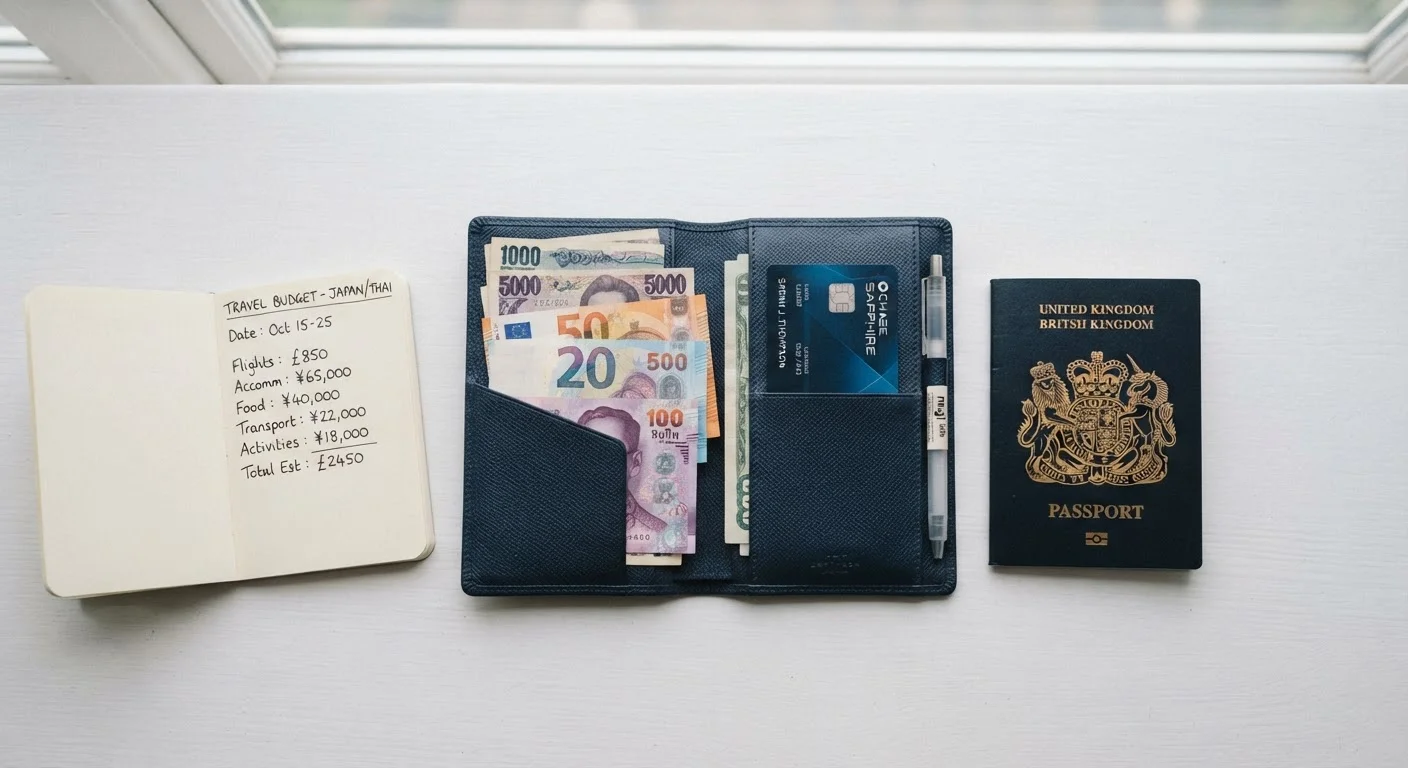
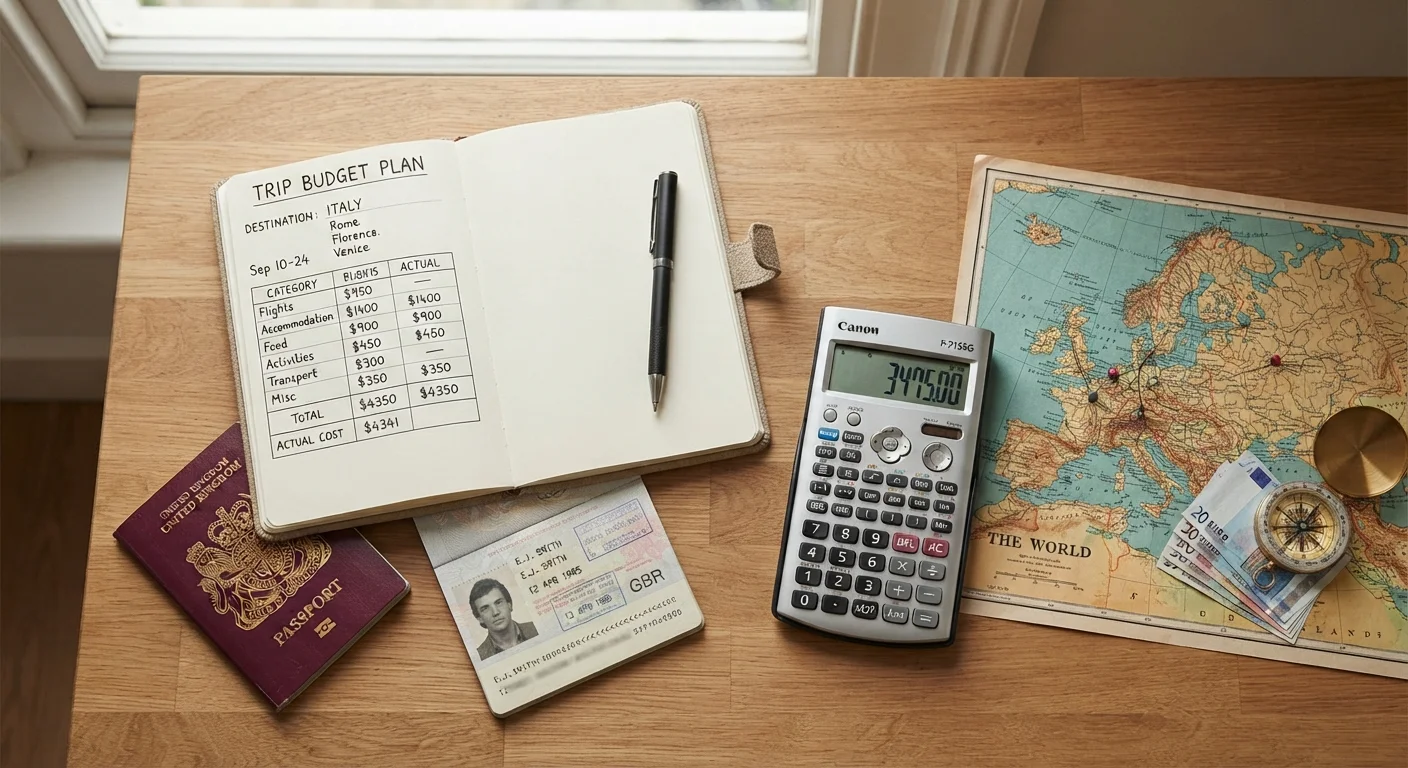
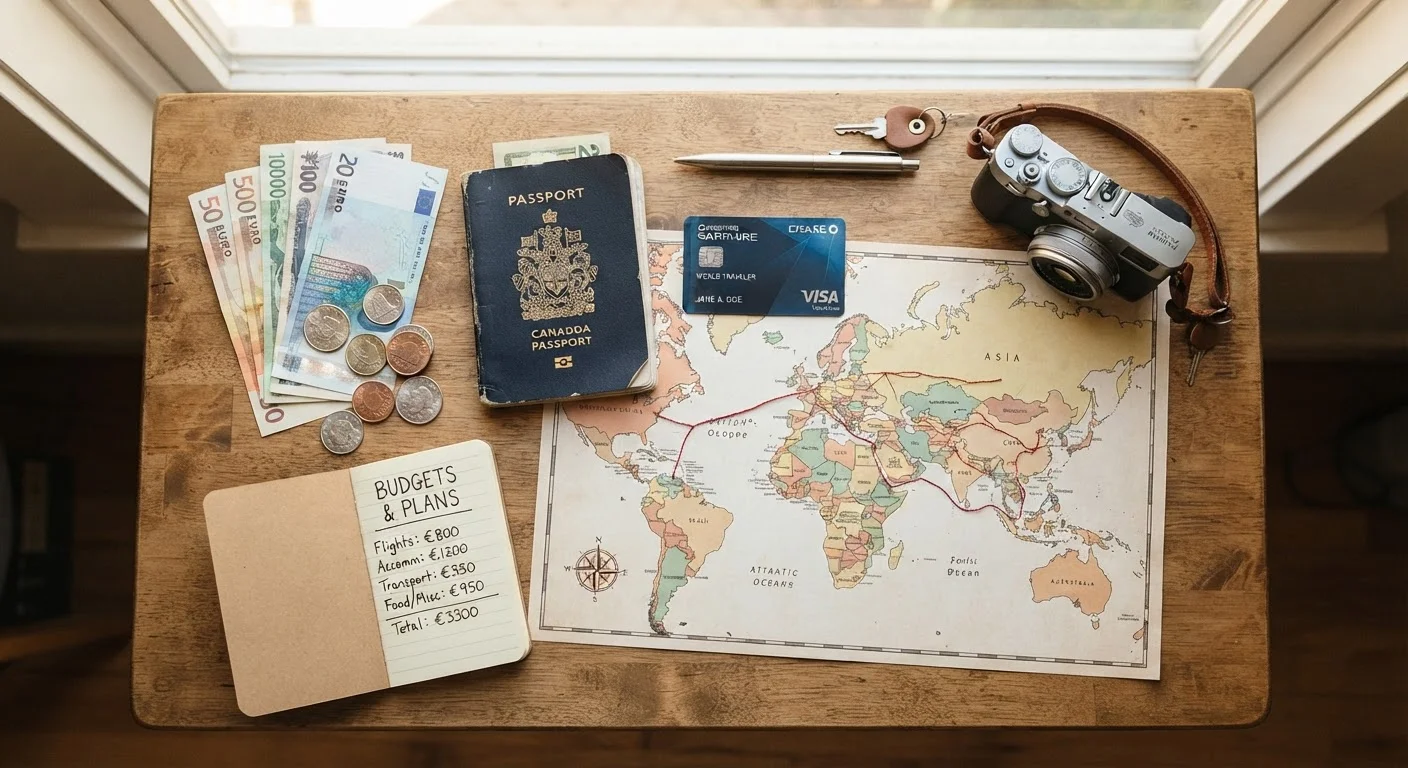
Most first-timers budget for flights and accommodation and then assume spending money will sort itself out. It rarely does. A workable travel budget covers at least six categories:
- Transport — flights, airport transfers, local transit, taxis or rideshare
- Accommodation — nightly rate plus any resort or city tax added at checkout
- Food and drink — a daily estimate based on destination cost-of-living, not home prices
- Activities and entrance fees — museums, tours, national park passes, day trips
- Incidentals — tips, laundry, pharmacy, small souvenirs
- Buffer — typically 10–15% of your total, reserved for the unexpected
When you estimate daily spending, research your specific destination rather than relying on general impressions. A meal in Tokyo and a meal in Bangkok cost very different amounts even though both are popular travel cities. The pre-departure budget checklist is a practical tool for making sure no category gets skipped before you pack.
Research Destination Costs Before You Estimate
Travel forums, recent blog posts dated within the past year, and destination-specific cost indexes can give you realistic daily spending figures for your specific destination. Budget $15–$25 per day for food in Southeast Asia versus $50–$80 in Western Europe as a rough illustration — the difference compounds dramatically over a two-week trip.
Currency, Cards, and Cash: What to Carry
The safest approach is a layered strategy: some local cash, a primary credit card, and a backup card kept separately from the first. Each layer covers the other's failure points.
Local Cash
Arrive with a small amount of local currency — enough for a taxi, a meal, and incidental tips on day one. Exchange rates at airports are almost always worse than those at in-city ATMs or bank branches, so limit your airport exchange to what you genuinely need immediately.
Credit Cards
A credit card with no foreign transaction fee is the most cost-efficient payment method at most international merchants. It also provides purchase protection and a defined dispute process if something goes wrong. Visa and Mastercard are accepted most broadly; American Express coverage varies significantly by destination.
Debit and ATM Access
Use ATMs affiliated with major bank networks rather than standalone machines in tourist areas, which often charge higher fees and may use unfavorable exchange rates. Withdraw a useful amount in one visit rather than making frequent small withdrawals — each transaction may carry a fixed fee from both your home bank and the overseas ATM operator.
Before departure, call each card issuer and confirm the exact international ATM fee — not just the foreign transaction fee. These are two separate charges and both matter.
Many travelers assume they know their card's fees but have never specifically asked about the ATM withdrawal fee, which is often a flat dollar amount per transaction and applies even to fee-free cards.
Set a daily spending alert at a threshold slightly above your planned daily budget, not at your card's limit. You want to catch overspending while you still have days left to adjust.
Real-time alerts at a meaningful threshold give you actionable information mid-trip rather than an unpleasant surprise when you review your statement after returning home.
Fees That First-Time Travelers Consistently Miss
Even well-prepared travelers get caught by fees they did not anticipate. The most common ones to watch for:
- Foreign transaction fees
- Many standard US credit and debit cards charge 1–3% on every purchase made in a foreign currency. On a $3,000 trip that adds up to $30–$90 in fees that provide no value whatsoever.
- Dynamic currency conversion (DCC)
- When an overseas merchant or ATM offers to charge you in US dollars instead of local currency, it is almost always offering you a worse rate and keeping the difference. Always choose to pay in the local currency.
- ATM operator fees
- The overseas ATM's host bank often charges its own fee on top of whatever your home bank charges. These are disclosed on screen before you confirm — read them before accepting.
- Hotel incidentals hold
- Hotels frequently place a temporary authorization hold of $50–$200 or more per night against your card at check-in. This is not a charge, but it reduces your available credit or cash balance until it is released — sometimes several days after checkout.
Always Decline Dynamic Currency Conversion
When an ATM or payment terminal asks if you want to pay in US dollars instead of local currency, decline and choose local currency every time. The merchant's conversion rate is almost always significantly less favorable than your card network's rate, and accepting it means paying a hidden markup with no benefit to you.
For a deeper look at how these costs interact with your overall trip finances, the complete travel budget management guide covers estimation, tracking, and mid-trip adjustments in detail.
Handling Financial Emergencies Abroad
Lost wallet, stolen card, or a card blocked by fraud protection — these situations are stressful but manageable if you have prepared a few basics before departure.
- Write down your card issuer's international collect-call number — the number on the back of your card usually does not work from overseas. Find the international number on your issuer's website and store it somewhere other than your phone.
- Know your emergency cash options — most major US banks can arrange emergency cash pickup at a partner bank abroad, though processing time varies. Wire transfer services can also move money internationally within hours, though fees apply.
- Keep a backup card in a separate location — a card stored in your hotel safe, separate from your wallet, means a stolen bag does not leave you entirely without funds.
- Carry a small amount of USD — US dollars are widely accepted as an emergency fallback in many international destinations, though exchange rates from merchants will not be in your favor.
Notify Your Bank Before You Depart
Many US banks and card issuers will freeze a card that suddenly shows charges from a foreign country, treating it as potential fraud. A blocked card on day one of a trip is a genuine emergency. Call or use your issuer's app to set a travel notice before you leave, specifying your destination and travel dates.
The full pre-departure checklist includes emergency contact preparation alongside other must-do steps before you leave.
Staying Financially Safe While Traveling
Financial safety overlaps directly with personal safety. A few consistent habits significantly reduce your exposure to theft and fraud:
- Use a money belt or hidden pouch for your passport, backup card, and emergency cash in crowded tourist areas.
- Avoid using ATMs at night or in isolated locations; opt for machines inside bank branches or well-lit commercial areas.
- Enable transaction alerts on all your cards so you see unauthorized charges within minutes rather than days.
- Do not enter your PIN where it can be observed — shield the keypad as a habit, not just when you feel watched.
- Be skeptical of anyone who approaches you unsolicited near an ATM or currency exchange.
For a broader overview of personal safety practices that every first-time traveler should internalize, visit our Staying Safe hub.
Managing your money well abroad is ultimately about preparation, not restriction. Build the budget, layer your payment methods, understand the fees, and have a clear plan for the unlikely scenario that something goes wrong. That combination turns financial anxiety into confidence — and lets you focus on the trip itself.
This article is for general informational purposes only and does not constitute personalized financial advice. Fees, exchange rates, and card terms vary by issuer and change over time — verify current details directly with your financial institution before traveling. For decisions specific to your circumstances, consult a licensed financial professional.