
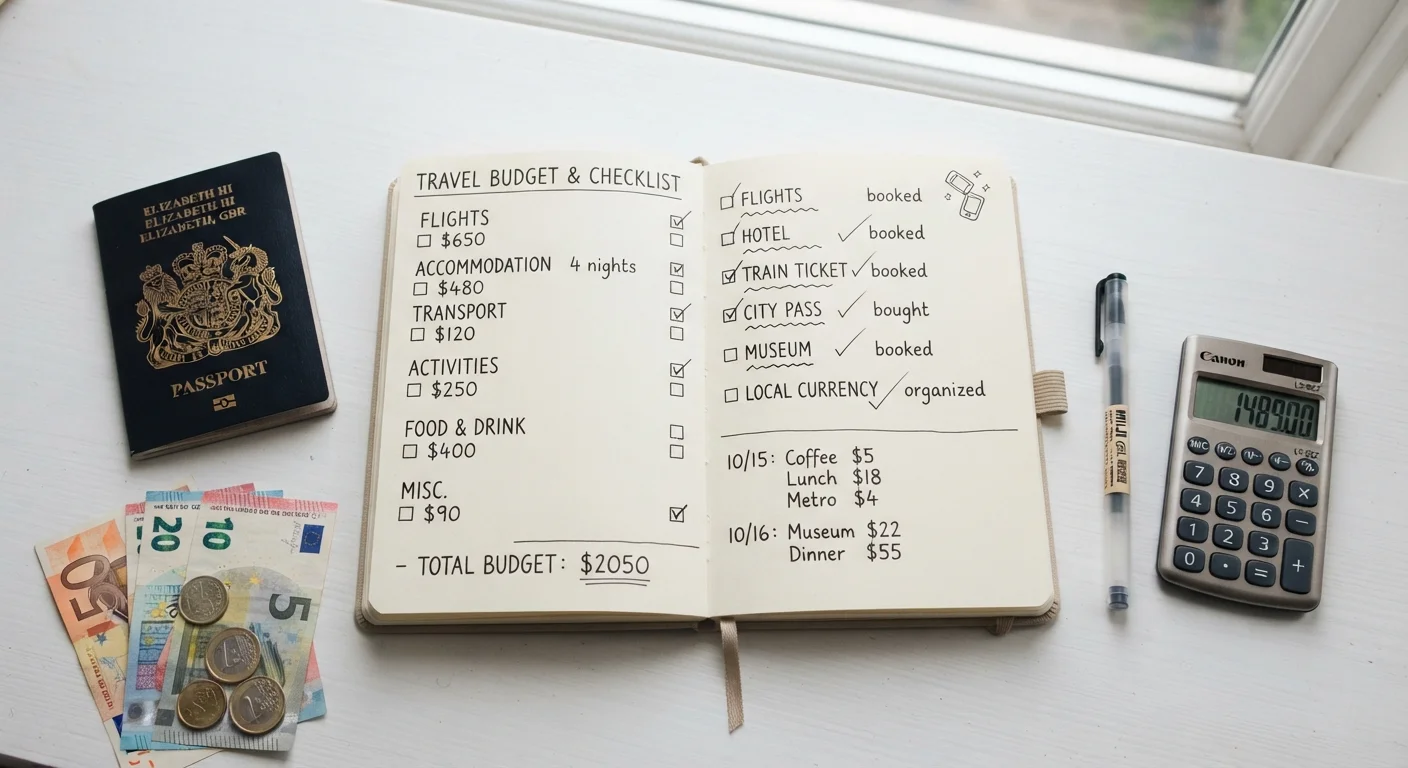
Why a Budget Checklist Matters Before You Leave
Most first-time travelers do a solid job budgeting the obvious expenses — flights, hotels, maybe a tour or two. What catches people off guard are the costs that don't appear on any booking confirmation: the taxi from the airport at midnight, the checked-bag fee nobody mentioned, the restaurant where tipping is expected and you only brought card. These gaps don't just drain your account; they add genuine stress to what should be an exciting trip.
This checklist is designed to catch those gaps before you depart, not mid-trip when your options are limited. Work through it at least one week ahead of your travel date so you have time to make adjustments. For a full walkthrough of how to build your budget from the ground up, see Building Your First Trip Budget from Scratch.
Pair this with the Travel Money Readiness Checklist to make sure your payment methods are equally prepared.
Pre-Booking Cost Audit
On-the-Ground Daily Costs
Fees and Hidden Charges
Insurance and Safety Costs
Contingency and Buffer
Currency and Payment Readiness
Tools and Resources to Run This Checklist
You don't need sophisticated software to complete this review. A spreadsheet or even a notes app works well for tallying costs. What matters more is that you gather the right documents and information before you sit down.
Spreadsheet or budgeting app
Track all cost categories in one place and total your confirmed, estimated, and contingency spending.
All booking confirmation emails
Reference the actual terms, fees, and cancellation policies for every reservation you've made.
Your bank and credit card terms
Identify foreign transaction fees, ATM withdrawal limits, and any travel notification requirements.
Destination cost-of-living reference
Get a realistic baseline for daily food, transport, and activity costs in your specific destination.
Travel insurance policy document
Confirm coverage limits, deductibles, and the claims process before you need to use the policy abroad.
Once you've confirmed your budget is complete and your finances are in order, cross-reference the Pre-Departure Checklist for Your First International Trip to ensure your documents and logistics are equally solid. For a broader view of managing money throughout your trip, the Complete Guide to Managing a Travel Budget covers planning through return.
Verify Entry Requirements Through Official Sources
Visa requirements, entry fees, health documentation, and vaccination requirements change and vary by nationality. Never rely solely on travel blogs or third-party booking sites for this information. Always check the official government website for your destination country and your own country's foreign affairs or state department travel advisories before departing.
After the Checklist: What to Do If Your Numbers Don't Add Up
If running through this checklist reveals a shortfall, that's valuable information — and it's far better to know now than at a departure gate. Consider which cost categories are flexible: activities and dining out tend to have more wiggle room than transport and accommodation already booked.
If your contingency fund feels thin, prioritize building it back up before departure rather than cutting it entirely. Unexpected costs — a medical co-pay, a lost item, a flight delay requiring a hotel night — are not rare events, they are near-certainties over enough trips.
For broader guidance on staying financially safe while traveling, explore the Travel Money hub and the Staying Safe hub. If you still have itinerary gaps, the Itinerary Planning Checklist can help you lock down your schedule before costs shift.
Don't Treat Your Contingency Fund as Spending Money
A contingency buffer only works if you leave it untouched until you genuinely need it. If you dip into it for optional spending early in the trip, you'll have no cushion for a real emergency later. Keep contingency funds in a separate account or a distinct mental category from your discretionary daily budget.
Booking Cheaply Can Create Hidden Costs
A lower headline price doesn't always mean a lower total cost. Budget accommodation might charge for Wi-Fi, towels, or locker use. Budget airlines routinely charge for carry-on bags, seat selection, and printing your boarding pass. Always calculate the all-in cost of a booking before assuming it saves money.
This article provides general financial information for educational purposes only. It is not personalised financial advice. Consult a qualified financial professional for guidance specific to your circumstances.