Why the Pre-Trip vs. On-the-Road Distinction Matters
Most first-time travelers build their budget by imagining themselves already abroad — estimating meals, transport, and sightseeing. That instinct isn't wrong, but it misses a critical phase: the money that leaves your account before you ever pack a bag.
Pre-trip costs and on-the-road costs behave differently, arrive at different times, and require different planning tools. Conflating them into one blurry total is one of the most common reasons travelers feel financially blindsided. The full scope of travel expenses is wider than most people expect, and understanding when each cost hits your account is just as important as knowing what it is.
The practical fix is simple: treat these as two separate budget categories from the start, and track them that way throughout your planning.
What Counts as a Pre-Trip Cost
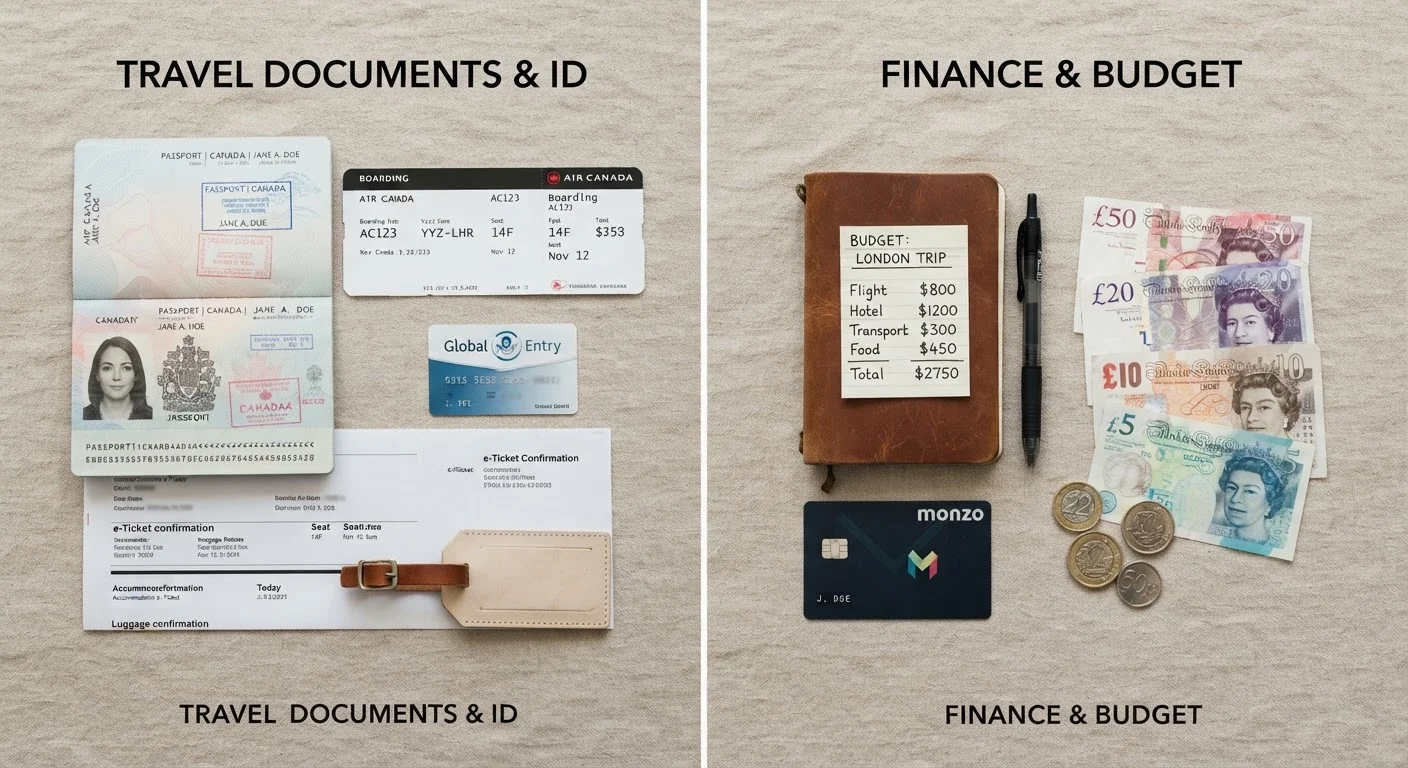
Pre-trip costs are expenses you pay — or commit to paying — before your departure date. They are predominantly fixed, meaning the amount is locked in at the time of booking or purchase.
- Flights and baggage fees: The largest single pre-trip expense for most travelers. Checked baggage fees are often paid separately at check-in or online before departure.
- Accommodation deposits or full prepayments: Many hotels and short-term rentals charge the full amount at booking, especially for non-refundable rates.
- Travel insurance: Purchased before departure, and essential for protecting the upfront costs already committed. The hidden costs of international travel often include insurance gaps travelers discover too late.
- Visa application fees: Required well in advance for many destinations; amounts vary significantly by country and citizenship.
- Vaccination or health documentation fees: Some destinations require proof of vaccination; associated medical appointments carry a cost.
- Airport transfers pre-booked from home: Shuttle or private car services booked ahead of arrival.
Don't Forget Costs Between Booking and Departure
A significant portion of pre-trip spending happens in the weeks leading up to departure: travel-sized toiletries, new luggage, travel adapters, prescription medications, and vaccination fees. These accumulate quietly and are easy to leave out of an initial budget. Build in a miscellaneous pre-departure line item of at least 5–10% of your pre-trip total to cover these gaps.
Understanding which costs are fixed before you depart also connects to a broader concept — see fixed vs. variable travel costs for a deeper breakdown of how cost predictability shapes your planning approach.
What Counts as an On-the-Road Cost
On-the-road costs are expenses incurred during travel itself — the day-to-day spending that begins when you arrive and ends when you return home. These are almost entirely variable, meaning they shift based on your choices, the local price level, and unexpected circumstances.
- Meals and beverages: The most frequent daily expense; costs vary dramatically by destination and dining style.
- Local transportation: Buses, metros, taxis, rideshares, or rental vehicles used to move around at your destination.
- Entry fees and activities: Museum admissions, guided tours, national park fees, and cultural experiences.
- Tipping: Customs vary widely by country; budgeting for gratuities prevents awkward shortfalls. The tipping norms and local charges guide covers what to expect by region.
- Banking and currency fees: ATM withdrawal fees and foreign transaction charges are small individually but compound quickly. See foreign transaction fees and ATM charges for a full breakdown.
- Souvenirs and incidentals: Easy to underestimate; often what derails an otherwise solid daily budget.
Build Two Separate Budget Columns
When setting up your trip budget, create one column for pre-trip fixed costs and a second for estimated daily on-the-road spending. Total them separately first, then combine. This prevents one category from visually 'hiding' inside the other — a common mistake that leaves travelers short of funds mid-trip.
For help estimating realistic daily figures before you travel, daily travel spending estimates by destination offers a structured research approach. Once you're on the road, tracking spending while traveling can keep your budget from quietly unraveling.
Comparing the Two Phases Side by Side
The table below summarizes how pre-trip and on-the-road costs differ across the factors that matter most for budget planning.
| Pre-Trip Costs | On-the-Road Costs | |
|---|---|---|
| When payment occurs | Weeks or months before departure | Daily, throughout the trip |
| Predictability | High — most amounts are fixed at booking | Low — varies by behavior and destination |
| Typical examples | Flights, accommodation deposits, travel insurance, visas | Meals, local transport, activities, souvenirs |
| Refundability if plans change | Often limited; cancellation fees common | Generally not applicable — already spent |
| Easiest to underestimate | Visa fees, insurance, airport transfers | Daily food, tipping, entry fees, ATM charges |
| Planning tool needed | Pre-trip cost checklist or spreadsheet | Daily spending tracker or cash envelope system |
~60%
Of total trip cost often paid before departure
For many international trips, major fixed expenses like flights, hotels, and insurance alone can consume the majority of a traveler's total budget upfront.
3–5
Common pre-trip cost categories travelers forget
Visa application fees, travel vaccinations, airport parking, and checked baggage fees are routinely omitted from first-time traveler budgets.
One important nuance: the balance between these two phases shifts depending on your trip type. A budget-accommodation, activity-heavy trip may front-load less but spend more daily. A package-style international trip may have the reverse profile. The cost structure by trip type guide helps calibrate expectations before you start allocating funds.
Putting It Together: A Two-Phase Budget Approach
The most effective way to use this distinction is to build your budget in two explicit phases rather than as one combined total.
- Phase 1 — Pre-trip tally: List every cost you expect to pay before departure. Lock in actual quotes where possible (visa fee schedules, insurance premiums, flight totals). This total represents money that needs to be available, often weeks or months before you travel.
- Phase 2 — Daily spending estimate: Research realistic daily costs for your destination — accommodation if not prepaid, meals, transport, and activities. Multiply by the number of travel days and add a buffer of 15–20% for unplanned expenses.
Combine both phases to arrive at your true trip cost. If that number exceeds your available funds, it's far easier to adjust pre-trip decisions (travel dates, destination, accommodation tier) than to scramble for money once you're already abroad. The full picture of what a travel budget covers can help you verify you haven't omitted any categories from either phase.
First-time travelers who run out of money before the trip ends often trace the problem back to this planning gap — treating their budget as a single number rather than two distinct, manageable phases.
This article provides general financial information for travel planning purposes and is not personalized financial advice. Travel costs vary significantly by destination, time of year, and individual circumstances. Always verify visa fees, entry requirements, and insurance terms directly with official sources before booking.