The Machu Picchu Problem
For most first-time visitors, Peru means one thing: Machu Picchu. The 15th-century Inca citadel is genuinely extraordinary, and no article will tell you to skip it. But treating Machu Picchu as the entire destination is one of the most common planning mistakes — and it tends to produce a rushed, expensive trip that leaves visitors feeling like they only scratched the surface.
Peru is one of the most geographically and culturally diverse countries in South America. Its territory covers coastal desert, high-altitude Andean plateau, cloud forest, and a significant portion of the Amazon Basin. Collapsing that range into a single archaeological site does the country — and your itinerary — a disservice. The travelers who leave most satisfied are usually the ones who built in time for at least a few of the elements below. For a broader look at how destination myths can steer beginners wrong, see travel myths that steer first-timers toward the wrong destination.
Sequence your itinerary strategically
Start in Lima (sea level), move to the Sacred Valley (lower altitude), then Cusco, then Machu Picchu. This progression eases altitude adjustment and front-loads the food capital when you have the most energy. Reversing the order — arriving directly in Cusco — is the most common itinerary mistake on Peru trips.
What First-Time Visitors Often Overlook
Lima's food culture
Lima has earned a sustained international reputation as one of the world's most compelling food cities. That reputation isn't marketing — it's driven by a genuinely distinctive culinary tradition that fuses Indigenous Andean ingredients with Japanese, Chinese, Spanish, and African influences over centuries. Ceviche, tiradito, lomo saltado, and causa are staples that vary considerably from neighborhood to neighborhood and kitchen to kitchen.
First-timers often fly into Lima, spend one night near the airport, and continue immediately to Cusco. Adding even two nights in the Miraflores or Barranco districts — and eating seriously while there — transforms Lima from a transit hub into a destination. The city's coastal clifftop parks and pre-Inca archaeological sites within the urban area are also worth a morning on their own.
Lima's culinary tradition draws on centuries of cultural fusion — it justifies a dedicated stay on its own.
The Sacred Valley as a destination in itself
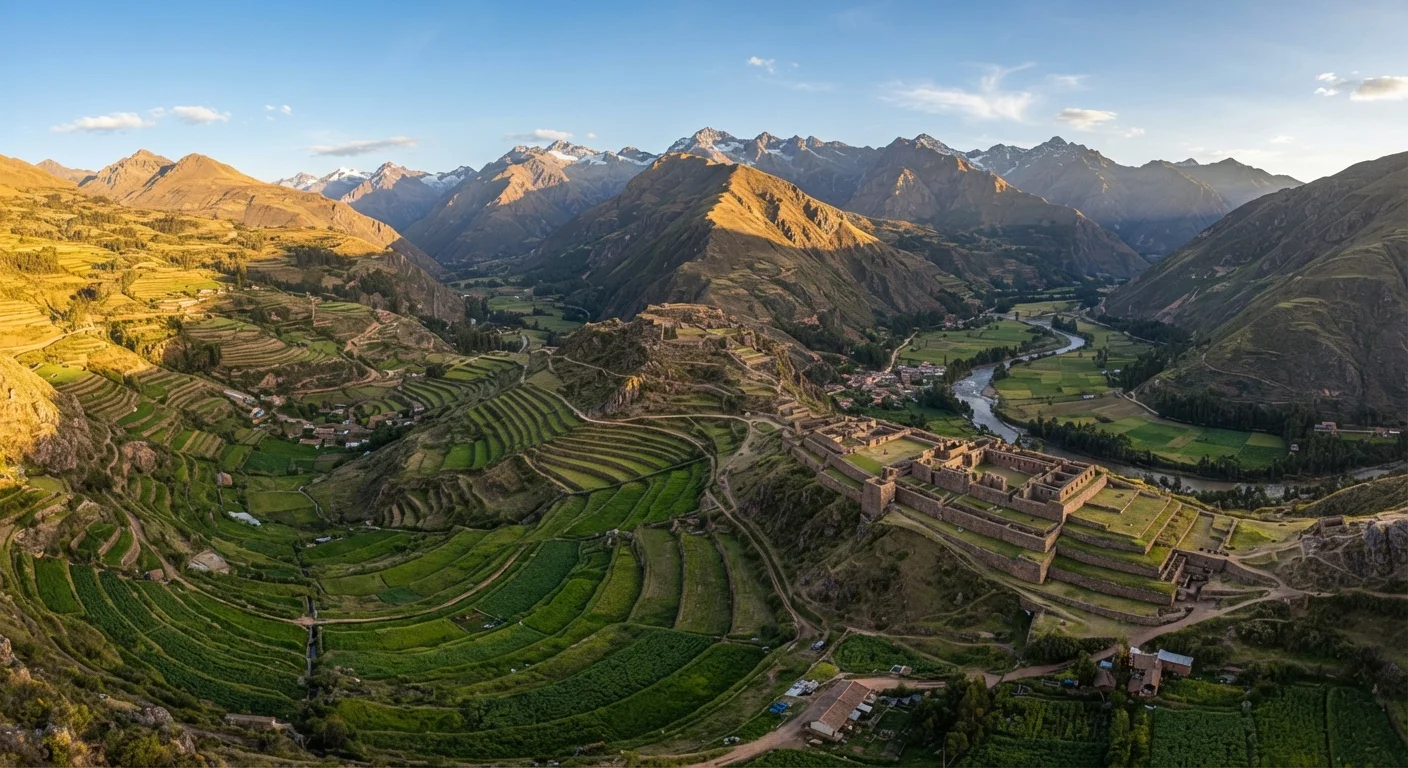
The Sacred Valley — the Urubamba River corridor stretching between Pisac and Ollantaytambo — is typically marketed as a stopover on the way to Machu Picchu. In practice, it's a destination with its own Inca ruins, traditional markets, and Quechua-speaking communities that deserve unhurried attention.
Ollantaytambo's fortress is structurally more complete than many sites visitors travel far to reach. Pisac's market sells crafts produced locally, not imported trinkets. The valley also sits several thousand feet lower than Cusco, making it a practical acclimatization base that reduces altitude sickness risk before the final ascent. Travelers who rush through the valley in half a day consistently report wishing they'd stayed longer.
The Sacred Valley's Inca sites rival Machu Picchu in historical significance — with far smaller crowds.
Altitude sickness is not optional to plan for
Cusco sits at approximately 11,150 feet above sea level. Machu Picchu, at roughly 7,970 feet, is actually lower — which surprises many first-timers who expect the citadel to be the highest point on the itinerary. The real altitude challenge is arriving in Cusco, not reaching the ruins.
Symptoms of acute mountain sickness — headache, nausea, fatigue, disrupted sleep — affect a significant portion of travelers regardless of fitness level. The standard recommendation from travel medicine professionals is to plan two to three rest days in Cusco or the Sacred Valley before attempting strenuous activity. Coca tea is widely consumed locally and anecdotally helps some travelers; its effect varies. Consult a travel medicine physician before your trip, particularly regarding prescription altitude medications, and verify health guidance through official sources.
Altitude affects fit and unfit travelers alike — building in acclimatization time is non-negotiable planning.
The Amazon Basin — Peru's other world
Peru contains a large portion of the Amazon rainforest, and the gateway towns of Puerto Maldonado and Iquitos provide access to lodges within protected reserve areas. This is a completely different Peru from the Andes — lower altitude, humid, ecologically dense, and culturally distinct.
First-timers rarely budget time for an Amazon extension, and it's understandable: logistics require forethought, and yellow fever vaccination is typically required for the region (verify current requirements with official health authorities before travel). But a three-to-four-day wildlife-focused add-on represents one of the more memorable travel experiences in South America. Puerto Maldonado, accessible by short domestic flight from Cusco, is the more practical entry point for first-timers with limited time.
Peru's Amazon region is a fully distinct destination — ecologically and culturally unlike anything in the Andes.
Peruvian archaeology beyond Inca sites
The Inca Empire, though extraordinary, was the last of many sophisticated civilizations in Peru. The Nazca Lines — enormous geoglyphs etched into the southern coastal desert, best viewed from a small aircraft — predate the Inca by roughly a thousand years and remain genuinely unexplained. The Chan Chan adobe city near Trujillo, capital of the Chimu Empire, is one of the largest pre-Columbian cities in the Americas.
These sites require planning separate from the standard Cusco itinerary — they're in different regions and involve domestic flights or long overland journeys. But first-timers who build a slightly longer trip around one additional archaeological stop tend to leave with a far more complete picture of the country's depth. See how popular vs. off-the-beaten-path choices actually trade off for a useful framework when making that call.
Peru's Nazca and Chimu civilizations predate the Inca by centuries — and most first-timers never see them.
Entry requirements and health advisories
US citizens should verify current visa status, vaccination requirements (including yellow fever for Amazon travel), and any regional travel advisories through the US Department of State and the CDC before finalizing plans. Requirements and safety conditions can change, and this article does not substitute for official, up-to-date guidance.
Planning Peru as a Complete Destination
A well-structured Peru itinerary doesn't require more time — it requires better sequencing. Arriving in Lima first gives your body a sea-level head start before ascending to Cusco, which sits above 11,000 feet. Spending two nights in the Sacred Valley before reaching Machu Picchu eases the altitude further and adds depth without adding stress. For first-timers prone to over-scheduling, the same logic explored in itinerary myths that lead first-time travelers astray applies here: trying to see everything usually means experiencing nothing fully.
Before finalizing any plans, verify visa requirements, required vaccinations (including yellow fever for Amazon regions), and current travel advisories through official US government sources. Conditions in specific regions can change, and no article can substitute for up-to-date official guidance. Those pre-departure factors first-timers often forget matter as much in Peru as anywhere.