Why a Contact List Matters More Than You Think
Most first-time travelers assume their smartphone is enough of a safety net. In practice, a dead battery, lost device, or missing international data plan can leave you without access to any contact at the exact moment you need one most. Writing down and physically carrying a short list of key numbers is one of the simplest — and most overlooked — precautions you can take.
This reference covers every category of contact worth saving before you leave. Build your list now, while you have time to look things up calmly, so you are never searching in a panic mid-trip. See our pre-departure safety checklist for the broader set of preparations this fits into.
| U.S. Citizen Emergency Line | +1-888-407-4747 (from the U.S.); +1-202-501-4444 (overseas) (U.S. Department of State) |
| Most Common International Emergency Number | 112 (works in EU, many other countries) (European Emergency Number Association) |
| When to Contact Your Embassy | Arrest, lost passport, medical emergency, natural disaster (U.S. Department of State) |
| STEP Program | Free enrollment lets the U.S. embassy locate and contact you abroad (U.S. Department of State Smart Traveler Enrollment Program) |
| Contacts to Store Before Departure | Embassy, local police, travel insurer, accommodation, home contact (General travel safety guidance) |
The Core Contacts Every Traveler Needs
1. Your Country's Embassy or Consulate
If you are a U.S. citizen, the nearest American embassy or consulate is your most critical emergency resource abroad. They can assist with a lost or stolen passport, an arrest, a serious medical emergency, or evacuation during a civil emergency. The State Department's 24-hour emergency line for Americans overseas is +1-202-501-4444. Look up the specific embassy address and local phone number for each destination you visit — not just the country capital — since consulates in major tourist cities often handle cases faster.
Enroll in the Smart Traveler Enrollment Program (STEP) at travel.state.gov before you depart. It is free, takes minutes, and means the embassy can proactively contact you during a regional crisis.
2. Local Emergency Services
The universal emergency number 112 reaches police, fire, and ambulance in the European Union and many other countries. However, local numbers vary: 999 is standard in the UK, 000 in Australia, and 110 (police) / 119 (ambulance) are common in parts of East Asia. Look up the specific numbers for each destination before arrival — your accommodation can also confirm them on check-in.
3. Travel Insurance 24-Hour Hotline
Your travel insurance policy should include a round-the-clock emergency assistance number — this is separate from the customer service line and is specifically designed for medical emergencies, medical evacuation coordination, and urgent claims. Write your policy number alongside this number. Without it, you may face delays in getting pre-approval for hospital treatment. Health precautions to take before your trip can also help you understand what coverage to prioritize.
Always Verify Before You Go
Embassy phone numbers, local emergency lines, and consular hours can change. Before departure, confirm all contact details directly through the U.S. Department of State's official website (travel.state.gov) and your destination country's official government portal. Do not rely solely on third-party travel sites for emergency contact information.
4. Your Accommodation
Save the front desk number for every hotel, cruise ship passenger services line, or rental property you are staying in. If something goes wrong while you are out — a medical issue, a theft, getting disoriented — your accommodation staff often speak multiple languages and can call local services on your behalf.
5. A Trusted Home Contact
Designate one person at home who holds copies of your passport, travel insurance policy, itinerary, and accommodation details. If your phone and wallet are stolen simultaneously, this person becomes your remote support system. Check in with them at agreed intervals so someone knows your general whereabouts.
Cruise and Package Travel: Extra Contacts to Add
Cruise passengers have an additional layer of contacts to manage. Your cruise line maintains a 24-hour guest services number — find it in your booking confirmation and save it before boarding, since Wi-Fi at sea can be limited or expensive. Shore excursion emergencies may require contacting local port authorities rather than the ship directly, so ask the cruise line what their protocol is for passengers who miss the ship's departure. Learn more about what first-time cruisers should know at our Cruise Basics hub.
For travelers using a travel agency, save your agent's direct number and after-hours emergency line — many agencies provide one for active travelers. If you booked through an online platform, locate the platform's 24-hour customer support number before departure rather than hunting for it during a crisis.
For broader trip preparation, the itinerary planning checklist is a useful companion to this contact reference.
How to Store and Carry Your Contact List
Redundancy is the key principle. Store your contacts in at least three places:
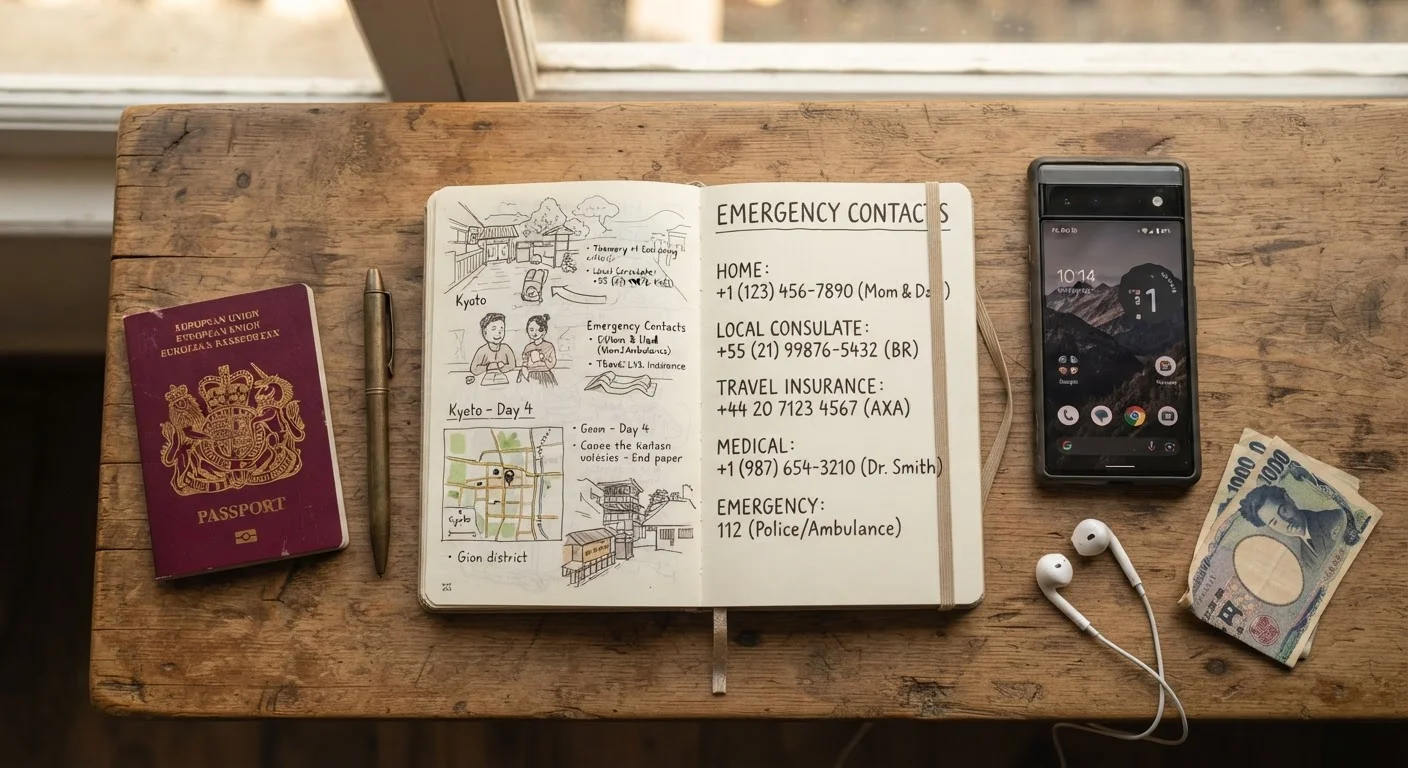
- Written on paper — keep one copy in your wallet and one in your luggage, separate from each other.
- In your phone — add a note or contact entry labeled "EMERGENCY INFO" with all key numbers and your policy details.
- With your home contact — email the full list to the trusted person at home who holds your documents.
A laminated card the size of a credit card is a practical format — some travelers print one from a basic word processor template before departure. See our pre-departure checklist for international travel for a broader look at what to confirm before you fly.
This article provides general travel safety information for educational purposes only. Contact details and emergency numbers change; always verify current information through official government and provider sources before you travel. This is not a substitute for professional legal, medical, or financial advice.