Why Health Prep Deserves a Spot on Your Pre-Trip List
Most first-time travelers spend hours comparing flight prices and hotel reviews, then leave health preparation until the week before departure — sometimes the day before. That timing mismatch is one of the most common and costly mistakes new travelers make. Some vaccines require multiple doses spread over several weeks. Some prescription medications can't be filled abroad. And some destinations carry real health risks that are entirely manageable with the right preparation, but genuinely disruptive if ignored.
This checklist is designed to help you work through the health steps that belong in any serious pre-trip routine, whether you're heading to another country or just far from home. It's organized by timing and priority, so you know what to tackle first and what can wait until closer to departure.
For a broader look at staying safe before and during your trip, see this pre-trip safety preparation checklist, which covers documents, insurance, and emergency planning alongside health.
6–8 Weeks Before Departure
2–4 Weeks Before Departure
1 Week Before Departure
Destination-Specific Considerations
Tools and Resources You'll Need
Working through this checklist doesn't require anything elaborate, but a few resources will make the process smoother and more reliable. Having the right references and contacts in place before your appointment saves time and helps you ask better questions.
Government Travel Advisory Portal
Check official health warnings, entry requirements, and vaccination recommendations specific to your destination.
Travel Medicine Clinic
Provides destination-specific vaccine recommendations and prescriptions for travel-related medications like antimalarials.
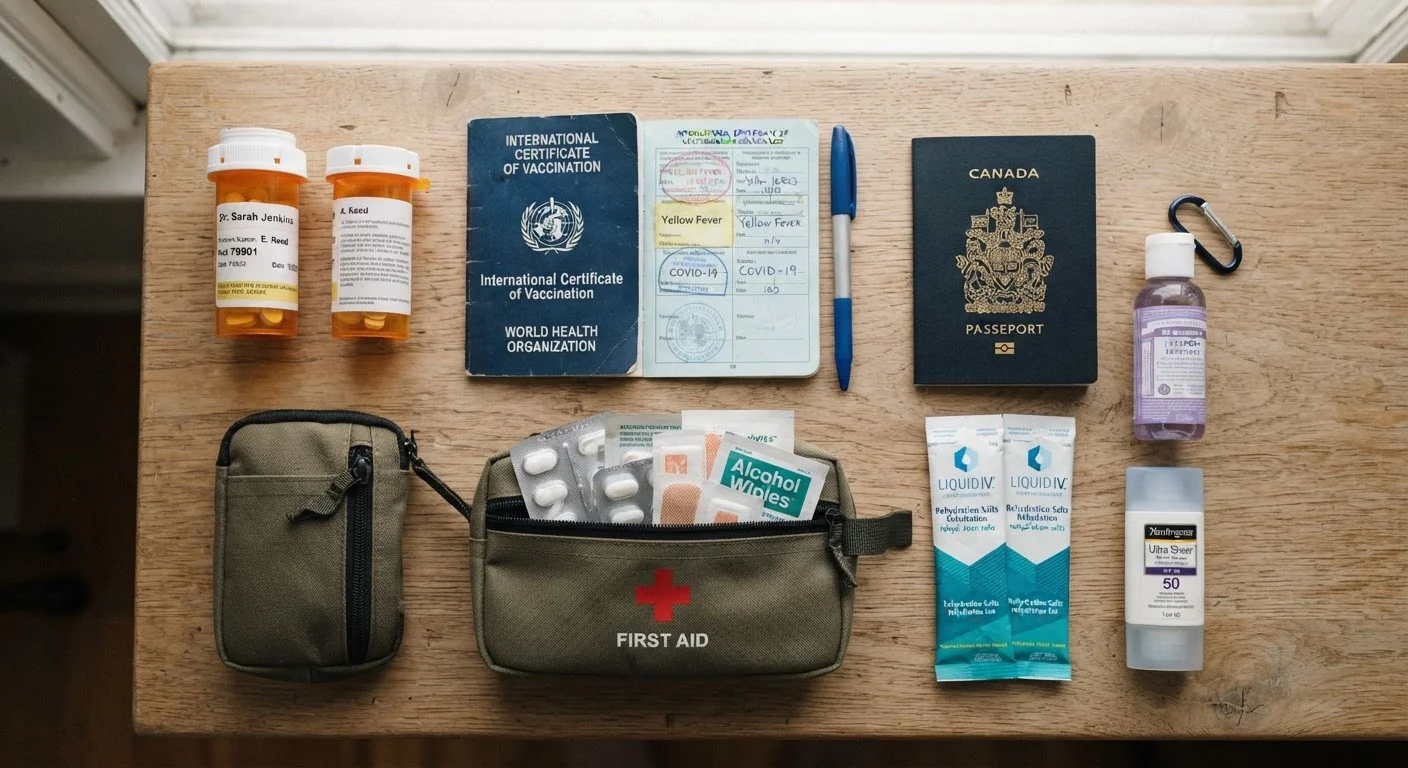
Vaccination Record or Immunization Card
Documents which vaccines you've received and when — some countries require you to present this at the border.
Travel Health Insurance Policy
Covers emergency medical treatment and evacuation costs that standard domestic health insurance often excludes abroad.
Personal Medical Summary Sheet
A one-page document listing your blood type, allergies, medications, and conditions — useful in any medical emergency.
Don't Rely on Airport or Hotel Pharmacies
It's tempting to assume you can pick up any medication you need once you arrive — but many countries have different drug availability, labeling, and regulations. Some medications common in the US are prescription-only or unavailable abroad. Stock up and sort out prescriptions before you leave home, not after you've landed with a problem.
Once you've confirmed your health prep, pair this with the pre-flight checklist for first-time flyers to make sure nothing else falls through the cracks before you leave for the airport.
This article provides general health information for educational purposes only. It is not a substitute for personalized medical advice. Consult a licensed healthcare provider before making decisions about vaccinations, medications, or travel health measures specific to your destination and health history. Always verify entry requirements and health advisories with official government sources before traveling.