Why Safety Preparation Deserves Its Own Checklist
Most first-time travelers spend significant energy on packing and itineraries — and far less on what happens if something goes wrong. That gap is where real travel anxiety lives. The good news: closing it requires less time than you think, and most of the items below cost nothing except a little advance planning.
This checklist focuses exclusively on personal safety preparation — documents, insurance, health, emergency contacts, and digital security. For financial readiness, see our travel money readiness checklist. For flight-specific steps, the pre-flight checklist for first-time flyers covers what to handle at the airport. This checklist is about what to lock down before you ever leave home.
Documents & Copies
Emergency Contacts & Itinerary Sharing
Travel Insurance
Health Preparation
Digital Security & Communication
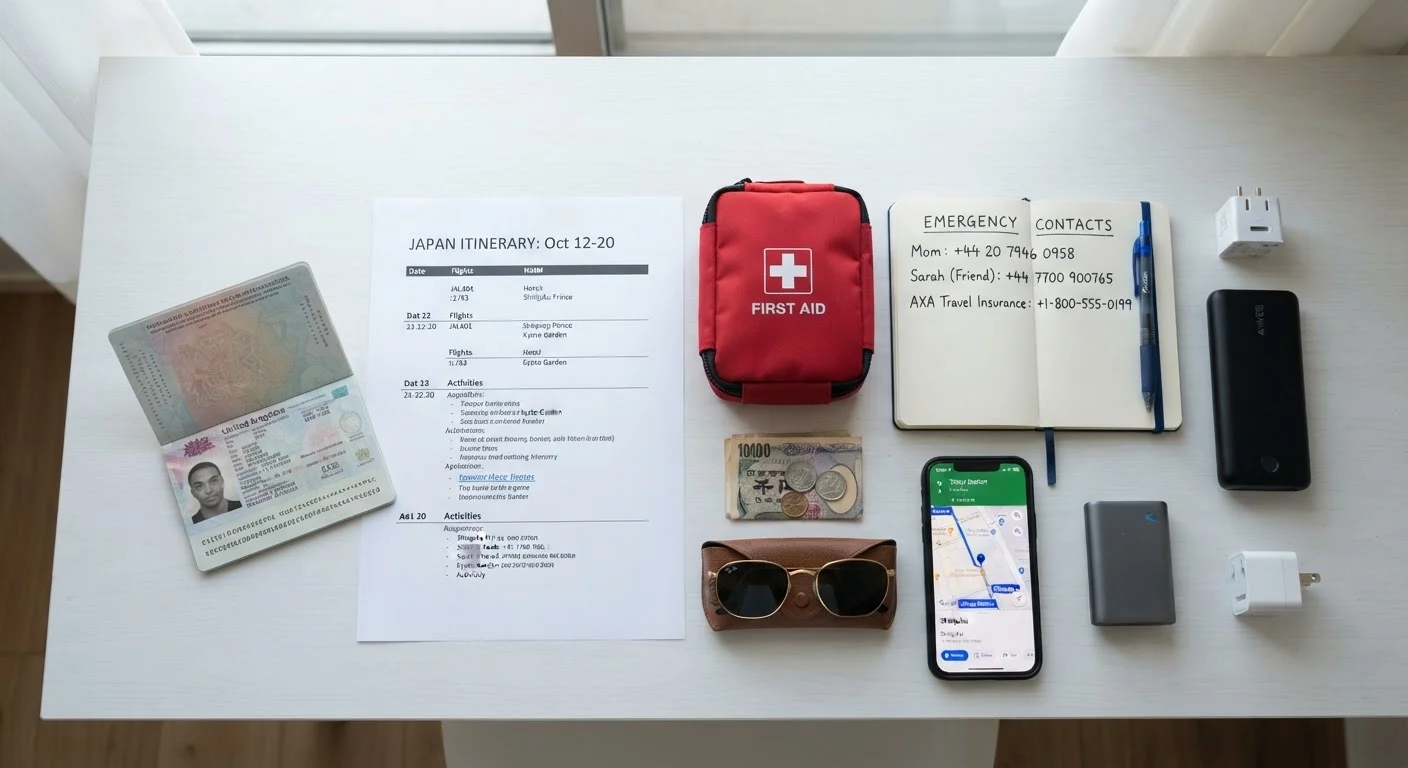
Tools You'll Want on Hand
None of the items below require expensive gear, but a few tools make it significantly easier to organize and store what you need.
Cloud storage account
Store scanned copies of passports, insurance cards, and other critical documents so they're accessible from any device if originals are lost.
US Department of State STEP Program
Free enrollment service that lets the nearest US embassy contact you during emergencies or crises in your destination country.
CDC Traveler's Health website
Check destination-specific vaccination recommendations and active health advisories before your trip.
Offline maps app
Download maps for your destination so you can navigate safely without an internet connection.
Basic travel health kit
A small pouch with bandages, antiseptic, pain reliever, and personal medications to handle minor health issues without scrambling for a pharmacy.
Don't Skip the Health and Insurance Steps
Insurance and Health Steps Have Hard Deadlines
Travel insurance purchased after a trip disruption event — or after you've already noticed symptoms of an illness — will generally not cover related claims. Similarly, some vaccines require multiple doses spread over several weeks to be effective. Start both of these steps at least four to six weeks before your departure date, not the week before.
Health and insurance preparation trips up more first-timers than any other category — not because the steps are complex, but because they require lead time. Vaccinations can take weeks to become effective. Travel insurance purchased after a known event (a storm, a political disruption, an illness you've already noticed) typically will not cover claims related to that event.
If you're traveling internationally, also check our international pre-departure checklist, which goes deeper on entry requirements and destination-specific health advisories. For a thorough walkthrough of vaccination timing and medication packing, see health precautions for first-time travelers.
Verify Entry Requirements From Official Sources
Visa rules, vaccination entry requirements, and travel advisories can change with little public notice. Do not rely solely on travel blogs or booking platforms for this information. Check the US Department of State's travel advisory page and the official embassy website of each destination country before you depart. Requirements that were accurate when this article was written may not reflect current conditions.
This article provides general travel safety information for educational purposes. It is not a substitute for professional medical, legal, or financial advice. Always verify entry requirements, travel advisories, visa rules, and vaccination recommendations with official government sources and licensed professionals before traveling.