
Why First-Time Flyers Need a Pre-Flight Checklist
Flying for the first time involves more moving parts than most people expect. Between booking confirmation numbers, TSA rules, baggage fees, and boarding procedures, it's easy to overlook something important - and some oversights are costly to fix at the last minute. This checklist is designed to walk you through every step in roughly the order you'll need to complete it, starting days before departure and finishing the moment you reach the gate.
If you're also managing a travel budget, see our pre-departure budget checklist to make sure you've accounted for costs beyond your ticket price. And once you're on board, our guide on things first-time flyers wish they'd known before takeoff covers onboard habits worth knowing ahead of time.
Documents and Confirmation
Baggage Preparation
Health and Comfort
Day-Before and Morning Tasks
Airport Security Prep
What to Pack in Your Carry-On
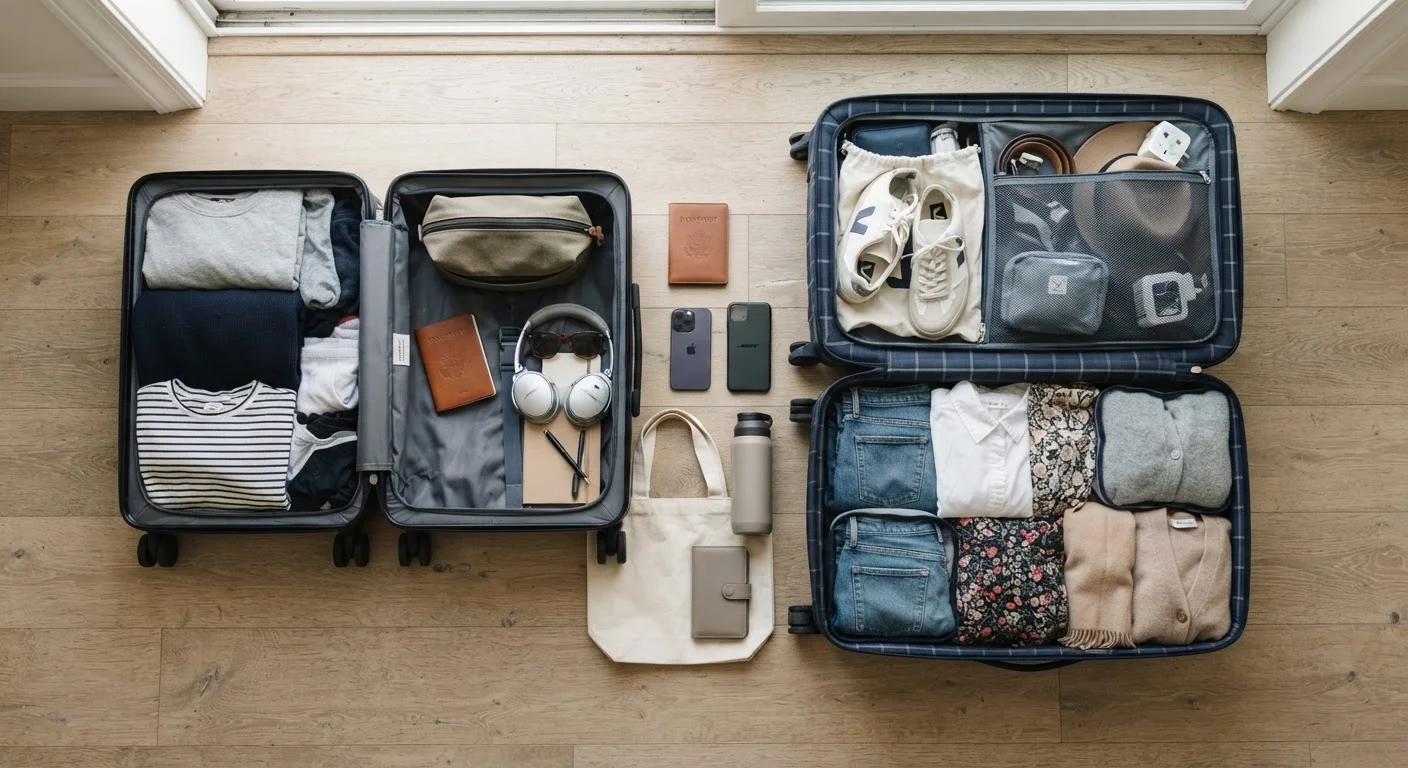
Your carry-on is your safety net. If checked luggage is delayed or lost, everything you truly need - medications, travel documents, electronics, a change of clothes - should already be within reach. Think of the carry-on not as overflow from your suitcase, but as a deliberate pack of essentials.
Never Pack These Items in Checked Luggage
Medications, travel documents, cash, jewelry, and irreplaceable items should always travel with you in your carry-on. Airlines bear limited liability for valuables lost or damaged in checked bags, and delayed luggage can leave you without essentials for hours - or longer. Electronics such as laptops and cameras are also better kept with you, as lithium batteries in checked baggage are restricted by most airlines.
TSA rules in the United States require that all liquids, aerosols, gels, creams, and pastes in carry-on bags be in containers of 3.4 ounces (100 ml) or less, and all must fit in a single quart-sized, clear, zip-top bag. One bag per passenger is permitted. This is one of the most common sources of delays at security for first-time flyers - prepare this bag the night before so you're not sorting through toiletries at the checkpoint.
For a detailed breakdown of what to keep accessible during the flight itself, refer to our guide on what to keep within reach during the flight.
Quart-sized clear zip-top bag
Required for carrying liquids through TSA security in your carry-on bag.
Portable power bank (charged)
Keeps your phone and devices charged at the airport and during the flight.
Luggage scale
Lets you weigh checked bags at home to avoid overweight baggage fees at check-in.
Travel document organizer
Keeps your boarding pass, ID, passport, and confirmation numbers in one accessible place.
The Day Before and Morning of Departure
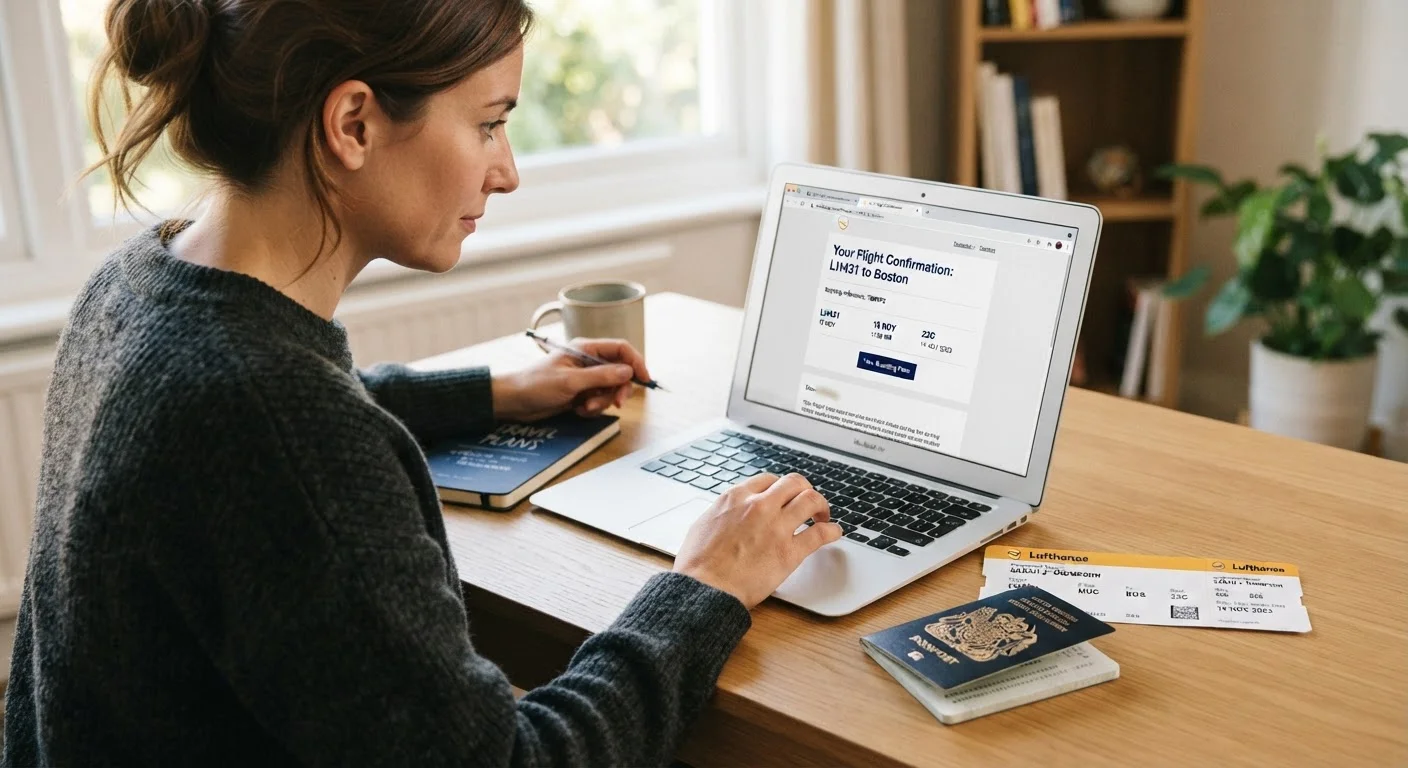
The 24-hour window before your flight is when most pre-flight tasks come together. Online check-in typically opens 24 hours before departure - completing it early lets you select or confirm your seat and avoid paying for last-minute seat assignment fees at the airport.
Don't Wait Until the Airport to Check In
Skipping online check-in and checking in at the airport counter can cost you - some airlines charge a fee for counter check-in, and popular seat selections may no longer be available. On busy travel days, airport check-in lines can also add significant time to your arrival, putting you at risk of missing cutoff times for checked baggage drop.
Set two alarms if you have an early departure. Confirm your transportation to the airport - whether that's a rideshare, parking reservation, or shuttle - the evening before. Domestic travelers are generally advised to arrive at least two hours before departure; for international flights, allow three hours. Security lines, especially at larger airports, can be longer than anticipated during peak travel periods.
For travelers heading abroad for the first time, our pre-departure checklist for your first international trip covers passport validity, travel insurance, and other international-specific requirements. For broader safety preparation, the safety preparation checklist for new travelers is also worth reviewing before you leave home.