Why South Africa Requires More Preparation Than Most Destinations
South Africa is one of the most rewarding long-haul destinations available to US travelers — and one of the most frequently misunderstood. Its scale alone demands respect: the country spans nearly 500,000 square miles, straddles two oceans, and contains ecosystems ranging from semi-desert to subtropical coast. First-timers who treat it as a single, uniform destination routinely make avoidable and expensive errors.
Good preparation is what separates a transformative trip from a frustrating one. Before you book a single flight, work through the destination research fundamentals that apply to any complex international trip. South Africa rewards that groundwork more than most countries.
Entry Requirements and Passport Rules
US citizens do not require a visa for tourism stays up to 90 days, but entry requirements carry several firm conditions that catch travelers off guard. South African border authorities require your passport to have at least 30 blank pages — not 30 days of validity, but physically blank visa pages. A passport with stamps filling most pages can result in denial of boarding.
Blank Passport Pages: A Common Boarding Denial Cause
South African immigration requires a minimum number of blank pages in your passport — not just validity dates. Travelers have been denied boarding by their airline for failing to meet this requirement. Check your passport's blank pages well before your departure date and renew if necessary. Requirements should always be verified against official South African government sources, as specifications can be updated.
Additionally, your passport must be valid for the full intended duration of your stay. Always verify current requirements directly with the South African Department of Home Affairs or the US Embassy before travel, as rules can change. If you're traveling with a minor, additional documentation is often required — confirm well in advance.
See our pre-departure checklist for a complete rundown of documents to verify before any international trip.
Regional Diversity: Cape Town, Johannesburg, and Beyond
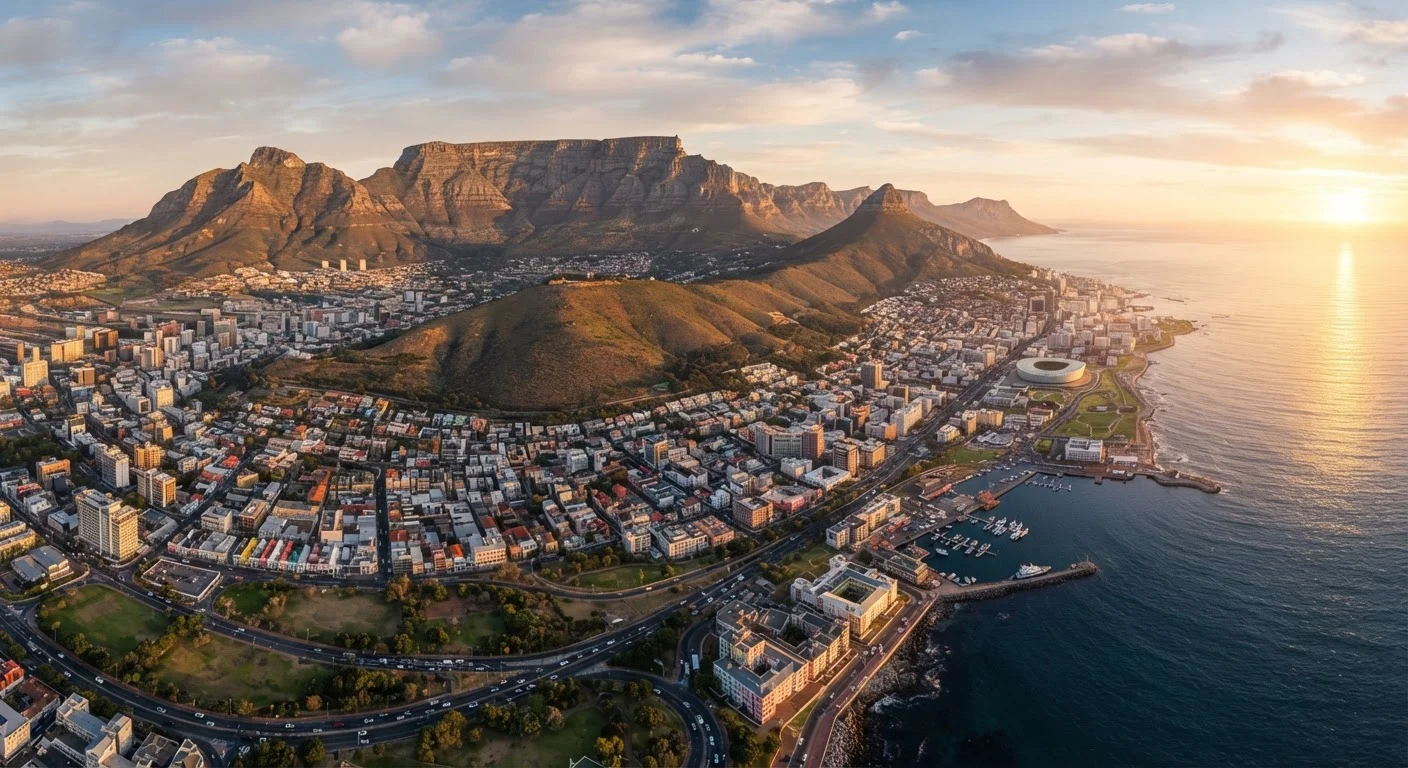
South Africa's three most visited urban centers — Cape Town, Johannesburg, and Durban — each offer a fundamentally different character. Cape Town is a coastal city anchored by Table Mountain, renowned for its wine regions, beaches, and relatively compact tourist infrastructure. Johannesburg is a sprawling commercial metropolis with world-class museums, including the Apartheid Museum, and serves as the primary gateway for safari circuits into neighboring regions. Durban offers a subtropical climate, Indian Ocean beaches, and a distinct South Asian cultural influence that shapes its food and architecture.
Safari travel — often the primary motivation for visiting — is concentrated in regions like Kruger National Park and the private reserves of Limpopo and Mpumalanga provinces. These areas are not day trips from Cape Town; planning a combined safari and city itinerary requires realistic flight time and internal transfer logistics.
11
Official languages recognized in South Africa
South Africa's constitution recognizes 11 official languages, reflecting its extraordinary cultural and ethnic diversity.
~17 hrs
Typical direct flight time from New York to Johannesburg
Nonstop service between the US East Coast and Johannesburg makes South Africa more accessible than many first-timers assume.
~2 million
International tourist arrivals from the Americas annually
South Africa Tourism reports consistent and significant visitation from the Americas, including substantial US-origin travel.
The destination selection process matters here: choosing which region to prioritize based on your interests, budget, and available time is foundational to a successful South Africa trip.
Safety Awareness for First-Time Visitors
South Africa has well-documented urban crime challenges, particularly in Johannesburg and parts of Cape Town. This is not a reason to avoid the country — millions of visitors travel safely each year — but it does require genuine, practiced situational awareness rather than the casual comfort travelers might feel in, say, Western Europe.
Book accommodations in established, reviewed neighborhoods and ask your host or lodge directly about current local conditions — they will give you more current intelligence than any guidebook.
Local operators track neighborhood safety in real time and have a direct interest in their guests' wellbeing, making them a more reliable source than static published advice.
Arrange airport transfers in advance through your hotel or a vetted service rather than taking unmarked taxis, especially at OR Tambo International in Johannesburg.
Unregulated taxi services at major South African airports are a known risk area for first-time visitors; pre-booked transfers eliminate this variable entirely.
Practical adjustments matter: avoid displaying expensive electronics or jewelry in public, use reputable ride-hailing apps rather than hailing taxis on the street, and research neighborhood security conditions before booking accommodation in any major city. Safari and rural areas carry different risk profiles and are generally considered safer for tourists, though wildlife areas require adherence to strict guidelines.
For a grounded framework on staying safe abroad without anxiety, our guide on personal safety while traveling provides the right starting framework.
Money, Currency, and Tipping
South Africa's currency is the South African rand (ZAR). The rand can be volatile against the US dollar, meaning your effective purchasing power may shift noticeably between when you budget and when you travel. Build in a conservative buffer when estimating costs rather than relying on today's exchange rate as a fixed figure.
Credit cards are widely accepted in tourist areas, hotels, and restaurants, but cash remains important in rural areas, markets, and for smaller purchases. ATM withdrawals are generally reliable in major cities; notify your bank before departure to avoid card blocks.
Tipping is customary and expected in South Africa. Restaurant staff, safari guides, game lodge workers, and parking attendants all typically receive gratuities. Our broader guide on tipping norms around the world provides useful context for calibrating your expectations.
Health Considerations Before You Fly
South Africa does not require proof of yellow fever vaccination for travelers arriving directly from the US — but if your itinerary passes through a yellow fever endemic country en route, proof of vaccination may be required at the border. This is a critical distinction that surprises travelers with connecting itineraries through parts of East Africa.
Malaria Risk Is Region-Specific — Don't Generalize
Assuming South Africa is uniformly malaria-free — or uniformly high-risk — leads to either unnecessary medication or genuine health exposure. The risk is concentrated in lowveld safari regions, not in the country's major cities or southern coastal areas. Always consult a qualified travel health provider well before departure to receive region-specific, personalized guidance.
Malaria is present in specific regions, including parts of Kruger National Park and Limpopo province, but is not a risk in Cape Town, Johannesburg, or Durban. Consult a travel health provider or physician at least four to six weeks before departure to discuss prophylactic medication and region-specific advice. Do not rely on general internet guidance for medical decisions of this nature.
What to Realistically Expect on the Ground
South Africa operates largely in English, which significantly reduces the language barrier for US travelers. Road signs, menus, and official communications are in English, though you'll encounter Zulu, Xhosa, Afrikaans, and other languages in daily life. Driving is on the left side of the road — an adjustment that requires focused attention, particularly at roundabouts.
Infrastructure quality varies sharply by region. Lodges within private game reserves often offer high-end amenities, while public roads in rural areas can be unpaved and require a higher-clearance vehicle. Load-shedding — scheduled rolling electricity outages managed by the national utility — remains a reality in many parts of the country and can affect accommodations and businesses. Reputable hotels typically have backup generators, but it's worth confirming this when booking.
If you want a structured set of checkpoints to evaluate South Africa — or any complex destination — before finalizing bookings, see what's worth knowing before you book. Arriving prepared makes every element of the trip more enjoyable, and South Africa is a destination that genuinely rewards the effort.
Entry requirements, health recommendations, and travel conditions can change. Always verify visa rules, vaccination requirements, and safety advisories with official government sources — including the US Department of State and the South African Department of Home Affairs — before finalizing travel plans.