What You're Actually Choosing Between
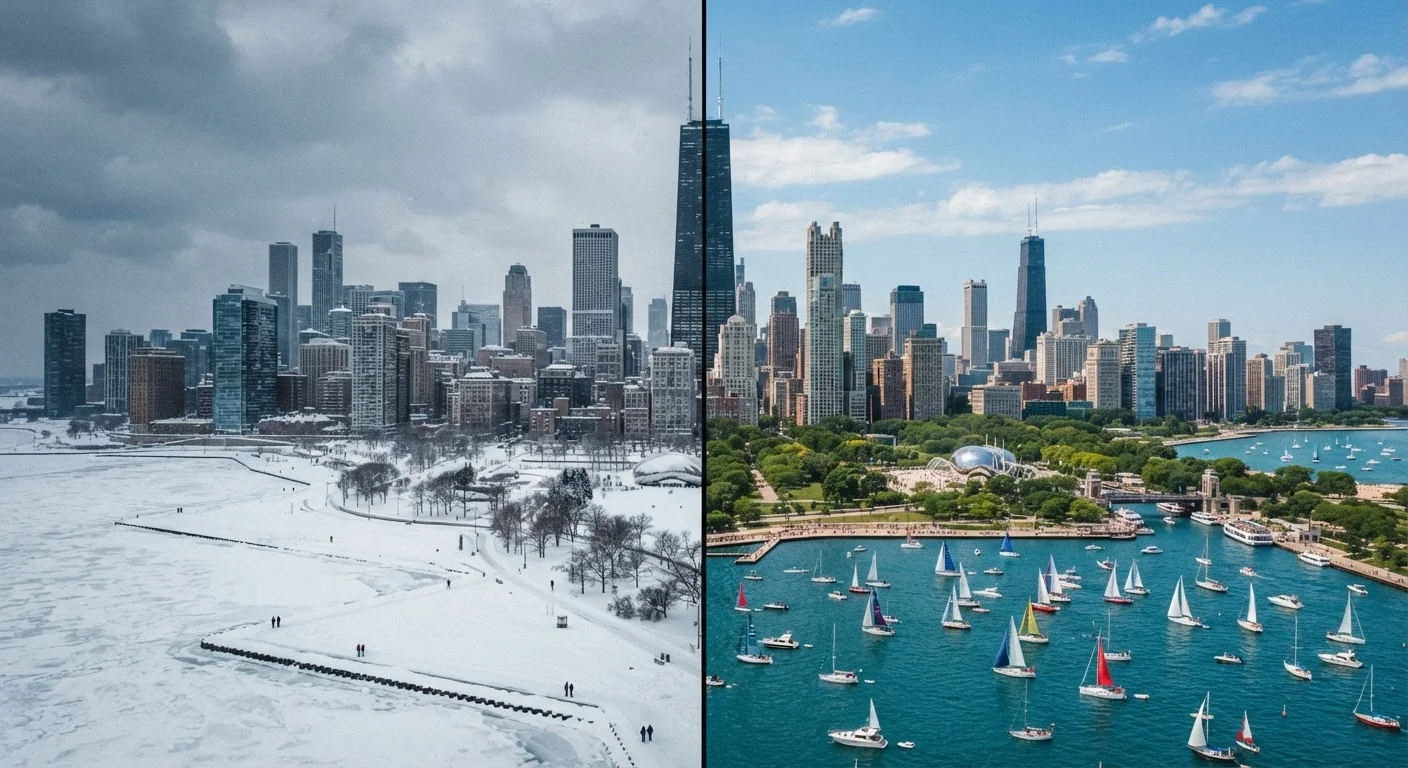
Chicago doesn't do mild. The city's position on Lake Michigan creates two distinct climates within the same zip code — one that routinely produces wind chills below -20°F and one that packs rooftop bars, beach volleyball, and outdoor festivals into a compressed warm season. For first-time visitors, this isn't just a weather question. It's a question about what kind of trip you're willing to plan for.
Winter in Chicago generally spans December through February. Expect average high temperatures between 25°F and 35°F, frequent lake-effect wind that amplifies the cold, and occasional stretches where outdoor time becomes genuinely uncomfortable. Summer — late May through early September — delivers average highs in the low-to-mid 80s°F, long daylight hours, and a city that moves much of its cultural life outdoors. Understanding how these seasons affect pricing, availability, and experience is essential before you book. For a broader framework on how seasons shape travel decisions, see our guide on choosing a destination at the right time of year.
| Criterion | Chicago in Winter | Chicago in Summer |
|---|---|---|
| Average Temperature | 25°F–35°F highs | 80°F–85°F highs |
| Hotel Rates | Significantly lower demand | Peak pricing, book early |
| Crowd Levels | Light at most attractions | High; lines expected |
| Outdoor Activities | Limited; cold exposure risk | Full lakefront, festivals, parks |
| Museum Access | Short waits, full hours | Busier; advance tickets advised |
| Dining & Nightlife | Indoor focus; full options | Patios, rooftops, full scene |
| Packing Complexity | Heavy layers essential | Light clothing; sunscreen needed |
| Event Calendar | Holiday markets, symphony | Lollapalooza, Taste of Chicago |
Winter: Lower Cost, Higher Commitment
Chicago in winter rewards travelers who come prepared. The city's indoor offerings — the Art Institute of Chicago, the Field Museum, the Chicago Symphony Orchestra, and some of the country's most respected restaurants — are fully accessible and far less crowded than in peak season. Hotel rates reflect the drop in demand, and a room near the Loop or River North that commands $250–$350 per night in July may be available for significantly less in January.
The trade-off is real, though. Wind chills make outdoor exploration difficult for extended periods, and attractions like architectural river cruises operate on reduced winter schedules. Layering is non-negotiable: thermal base layers, a wind-resistant outer shell, insulated boots, and warm gloves aren't optional accessories — they determine whether your day is enjoyable or miserable. Budget travelers who are comfortable spending most of their time indoors will find winter Chicago an underrated value.
-20°F
Recorded wind chill in Chicago winters
The National Weather Service has documented wind chills at this level or lower during polar vortex events affecting Chicago.
~36M
Annual visitors to Chicago
According to Choose Chicago, the city's tourism organization, the majority of leisure visits are concentrated in the summer months.
18 miles
Length of Chicago's lakefront trail
The continuous lakefront path connecting neighborhoods from Edgewater to South Shore is fully accessible in summer and partially usable in winter.
Summer: Full City, Fuller Price Tag
Summer is when Chicago becomes the city most visitors picture. Millennium Park fills with free concerts and public art. The 18-mile lakefront trail draws cyclists and runners. Neighborhoods like Wicker Park, Logan Square, and Andersonville host block parties and street festivals nearly every weekend from June through August. Navy Pier, which draws millions of visitors annually, operates at full capacity with fireworks on Wednesdays and Saturdays.
This popularity carries real costs. Hotel rates climb sharply, particularly around major events like the Taste of Chicago, Lollapalooza, and the Chicago Air and Water Show. Booking accommodation three to four months in advance is advisable, not just for price — availability becomes genuinely limited. Understanding how peak demand affects pricing and availability before you commit helps avoid sticker shock. Our article on peak season, off-season, and shoulder season explains the mechanics clearly.
Watch for Event Weekends
Lollapalooza (early August) and the Chicago Air and Water Show (mid-August) are among the highest-demand weekends of the year. Hotel rates during these events can spike dramatically above the already-elevated summer baseline. If your travel dates are flexible, avoiding these specific weekends can meaningfully reduce accommodation costs without sacrificing the summer experience.
Making the Call: Which Season Fits Your Trip
Neither season is objectively superior — they deliver genuinely different versions of the same city. The honest question is whether your travel priorities align with what each season actually offers rather than what you hope it might offer.
If your itinerary centers on museums, architecture, food, and theater, winter delivers all of it at lower cost with fewer crowds. If your vision involves lakefront walking, outdoor dining, festival culture, and neighborhood street life, summer is the correct choice — just budget and book accordingly. One practical middle ground worth considering: late September and October offer mild temperatures, reduced crowds compared to peak summer, and the city's spectacular fall foliage along the lakefront. Spring (April to early May) can be pleasant but unpredictable. Both shoulder periods can represent strong value, depending on your flexibility.
Whatever you choose, Chicago is a city built for exploration. Its transit system (the 'L' train) makes most major neighborhoods accessible without a car, and its walkable downtown core means you can cover serious ground regardless of the season.