
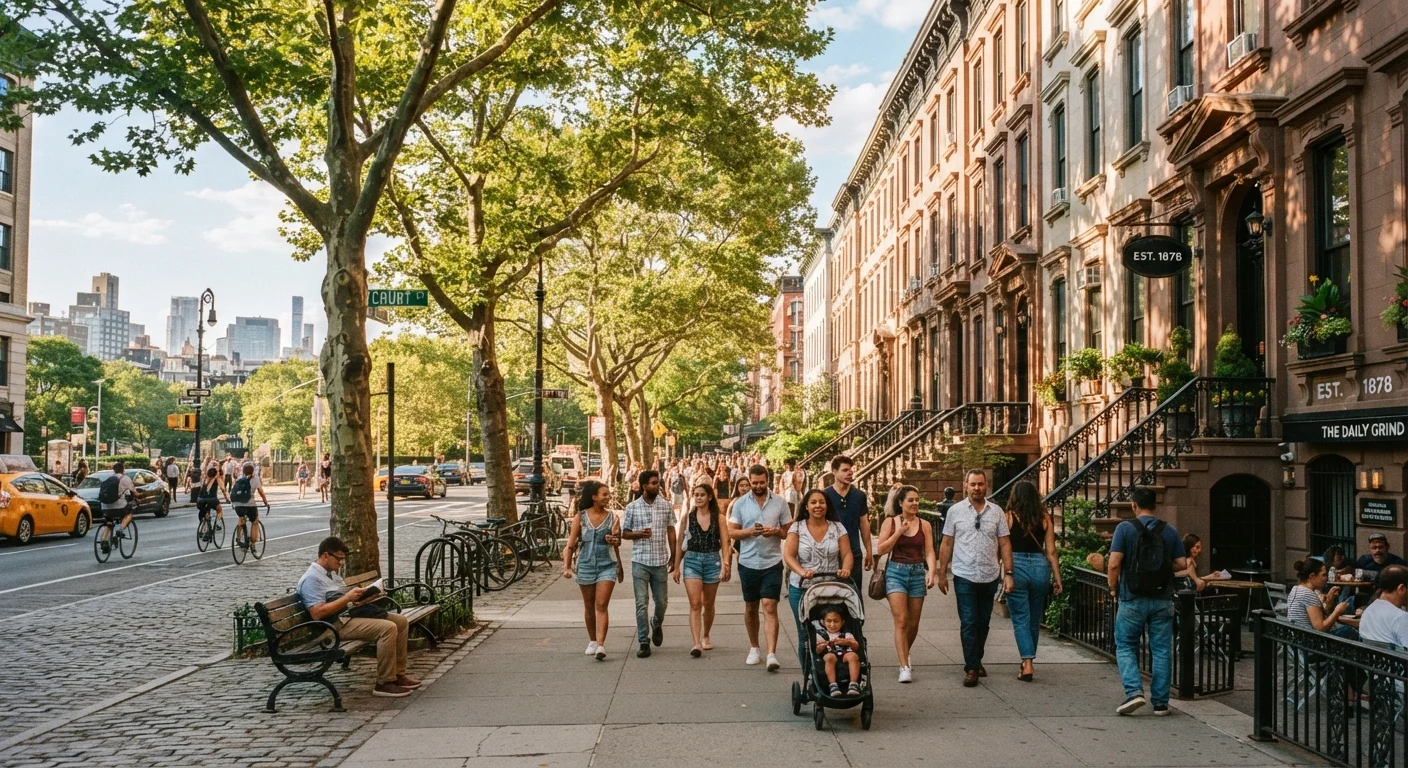
Why Walkability Matters for First-Time Travelers
Choosing a destination where you can navigate comfortably on foot removes one of the biggest pressure points for first-time travelers: figuring out local transit or renting a car in an unfamiliar city. When key attractions, restaurants, and neighborhoods cluster within a reasonable walking distance, the trip itself becomes less logistically demanding — and far more enjoyable.
But walkability is not a single metric. It encompasses terrain, sidewalk continuity, pedestrian signal timing, neighborhood density, and the availability of shade and rest points. A city's overall Walk Score can be misleading if the most tourist-friendly areas are concentrated in just one or two dense neighborhoods while the rest of the city requires a car. For travelers with specific mobility considerations, the calculus changes further — see our guide to evaluating a destination's accessibility before committing to any of the cities below.
The cities in this list were assessed across four practical criteria: density of attractions per walkable mile, quality of pedestrian infrastructure, terrain manageability, and the extent to which accommodation options sit within walkable cores rather than car-dependent outskirts.
Book Inside the Walkable Core
Accommodation location is the single most impactful decision you can make for a walk-first trip. Prioritize hotels or rentals within the neighborhoods listed in each city's walkable core, even if that means a smaller room or slightly higher nightly rate. The savings in rideshare costs and the gain in spontaneous exploration typically outweigh the price difference by a considerable margin.
America's Most Walkable Cities for Foot-First Travelers
New York City, New York
Manhattan's grid system is one of the most pedestrian-intuitive layouts in the world. Numbered streets run east-west, avenues run north-south, and the logic holds from Midtown through the Upper West Side and into Harlem. First-timers who stay in Midtown or the Upper East and West Sides can reach world-class museums, parks, and neighborhoods on foot without ever opening a transit app.
The sidewalks are wide, well-maintained, and busy at virtually all hours, which contributes to a baseline sense of safety through visibility. The main walkability caveat is scale: Manhattan is long, and walkers who underestimate distances between, say, the Financial District and Central Park will wear out quickly. Focus each day on a single neighborhood cluster rather than trying to cross borough boundaries on foot.
Manhattan's numbered grid is one of the most intuitive pedestrian layouts anywhere in the United States.
Boston, Massachusetts
Boston's compact size and dense historic core make it one of the most naturally walkable major cities in the country. The Freedom Trail — a painted red line connecting sixteen historic sites across roughly 2.5 miles — is an ideal framework for first-time visitors who want structure to their exploration without a guide. Beacon Hill, the North End, and Downtown Crossing are all reachable on foot from most central accommodation options.
The terrain is largely manageable, though Beacon Hill's cobblestone streets require suitable footwear. Boston's neighborhoods also transition quickly, meaning walkers move from Italian bakeries to colonial architecture to waterfront parks within a few city blocks — the kind of density that makes walking feel genuinely rewarding rather than merely practical.
The Freedom Trail gives first-time visitors a ready-made walking structure through 2.5 miles of living history.
Chicago, Illinois
The Magnificent Mile, Millennium Park, the Museum Campus, and the Riverwalk form a walkable spine through central Chicago that can occupy several full days. The city's flat terrain — a significant advantage over hillier alternatives — makes distance more manageable, and the lakefront path offers a continuous, traffic-free route stretching for miles along Lake Michigan.
Chicago's grid system, like New York's, is logically numbered and easy to orient within. The Loop and Near North Side neighborhoods are dense with attractions, dining, and transit access, making them the natural base for foot-first travelers. Winter visits require honest planning: lakefront winds and icy sidewalks significantly reduce the pleasure of walking, and the city's walkability is genuinely seasonal.
Chicago's flat terrain and logical grid make distance feel manageable even for travelers new to big-city walking.
Washington, D.C.
The National Mall alone justifies Washington's place on this list. Stretching roughly two miles from the Capitol to the Lincoln Memorial, it connects the Smithsonian museums, war memorials, and the Washington Monument without a single fare gate or rideshare needed. For first-time visitors whose primary interest is American history and culture, D.C. may be the single most walkable destination in the country relative to what it offers.
L'Enfant's diagonal avenues over a grid can disorient newcomers briefly, but landmarks are visible from considerable distances, making self-correction straightforward. Georgetown and Dupont Circle add dense, neighborhood-level walkability beyond the Mall. Note that summer heat and humidity can be significant — plan early morning walks and midday shade breaks accordingly.
The National Mall delivers two miles of iconic American landmarks without a single transit fare required.
San Francisco, California
San Francisco is genuinely walkable and genuinely hilly — these two facts must be held together honestly. The city's neighborhoods are dense, compact, and rich with street-level interest, but the terrain between them can be demanding. Travelers who base themselves in neighborhoods like the Embarcadero, North Beach, or Fisherman's Wharf will find flat or gently graded walking routes to many major attractions, while those tempted to walk from the Castro to Nob Hill on the same afternoon should budget time and energy accordingly.
The reward for effort is high: few American cities pack as much architectural variety, cultural layering, and visual drama into walkable distances. Cable cars supplement foot travel on the steepest corridors and are themselves a legitimate part of the experience.
San Francisco's neighborhoods are extraordinarily dense with interest — the hills are real, but so is the reward.
Philadelphia, Pennsylvania
Philadelphia's historic district is among the most concentrated collections of early American history accessible on foot anywhere in the country. Independence Hall, the Liberty Bell, Reading Terminal Market, and Old City galleries all sit within a compact radius that most visitors can cover without fatigue. The city's street grid — laid out by William Penn in the late 1600s — is logical and easy to read.
Philadelphia also benefits from relative affordability compared to New York or Boston, meaning travelers can often secure centrally located accommodation without premium pricing. The Market Street corridor and South Street add distinct neighborhood character within easy walking range of the historic core. Broader neighborhood safety varies by area; first-timers should research specific districts before planning routes.
Philadelphia's historic district concentrates more early American history into a walkable radius than almost anywhere else.
Portland, Oregon
Portland is compact by major-city standards, and its downtown core — combined with the Pearl District and Old Town — offers a genuinely walkable cluster of food markets, independent retail, parks, and cultural venues. The city's blocks are notably short by American standards, a deliberate feature of its original grid that makes walking feel faster and less fatiguing than block counts suggest.
The climate is a real variable: Portland's famously grey, wet winters reduce the pleasure of extended walking, while its mild, dry summers make it one of the most pleasant cities in the country for foot travel. First-timers who visit between June and September will find walkability at its peak. The city also has strong cycling infrastructure that can complement walking routes.
Portland's unusually short city blocks make walking feel faster and more energizing than in most American cities.
Walk Scores Have Limits
Aggregate walkability scores — including the widely referenced Walk Score metric — measure proximity to amenities using data models, not lived pedestrian experience. They do not account for terrain gradient, sidewalk condition, street-crossing safety, shade availability, or how tourist-relevant the nearby amenities actually are. Use them as a starting reference, then dig into neighborhood-level reviews and maps before drawing conclusions about where to stay.
Making the Most of a Walkable City Trip
Even in the most walkable cities, strategic accommodation choices make a significant difference. Booking a hotel or short-term rental inside a walkable neighborhood core — rather than near an airport or convention district — can mean the difference between a trip centered on walking and one that still depends on rideshares. Research neighborhood-level walkability rather than relying solely on city-wide averages.
Planning your daily radius realistically also matters. Most travelers comfortably cover four to six miles on foot per day when sightseeing; exceeding that without rest planning leads to fatigue that cuts trips short. Cross-reference your itinerary with a map before each day to cluster nearby attractions rather than zigzagging across a city.
If a city's layout eventually pushes you toward public transit, our end-to-end transit walkthrough covers every stage of a local transit journey for first-time visitors. And for travelers who want to move confidently through any unfamiliar street environment, the practical habits in our guide to navigating unfamiliar cities safely are worth reviewing before departure. Comparing domestic walkability with international options? Our coverage of Western Europe's most navigable cities offers a useful contrast.