
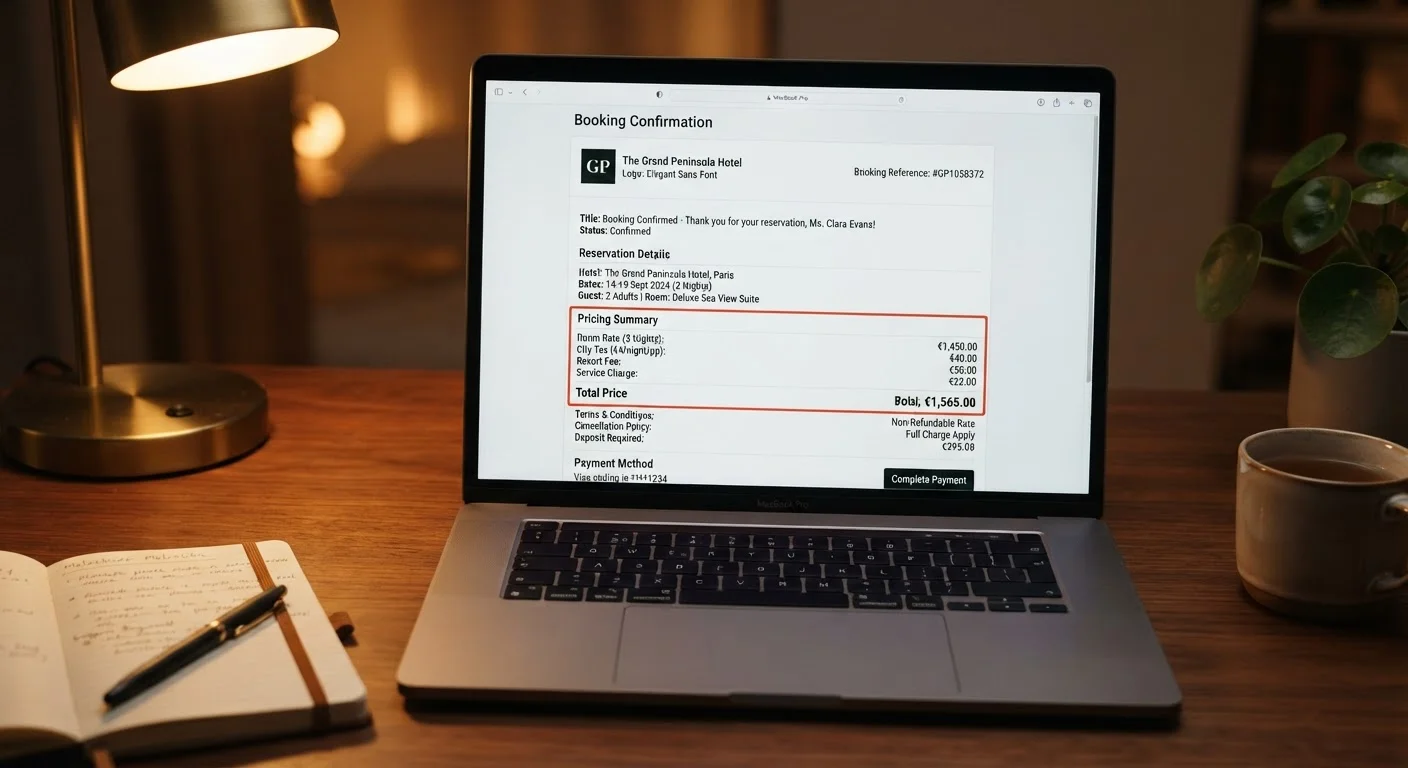
Why Hotel Pricing Language Trips Up First-Timers
Hotel pricing isn't designed to be intuitive. Terms like rack rate, BAR, and incidental hold appear on booking pages and confirmation emails without explanation — and misreading them can mean paying more than you expected. This reference guide defines the most common hotel rate terms in plain language, so you can compare prices accurately before you commit.
For a broader look at what to expect during a stay, the Hotel Basics hub covers everything from check-in procedures to checkout. And if you're also planning a cruise, our cruise terminology guide applies the same plain-language approach to shipboard jargon.
Rack Rate
The published maximum nightly price for a room, set by the hotel. It is rarely what guests actually pay — most bookings are made at discounted rates below this ceiling.
Best Available Rate (BAR)
The lowest non-restricted rate publicly available at the time of booking. This is typically the starting point for comparison when searching online.
Resort Fee
A mandatory daily charge added on top of the base room rate. It is not always disclosed prominently and can significantly increase the total cost of a stay.
Incidental Hold
A temporary pre-authorization on your payment card placed at check-in. It covers potential damages or charges and is released after a successful checkout, but can tie up funds in the meantime.
Rate Parity
A practice in which hotels agree to offer the same price across all booking channels. This means the hotel's direct website and third-party platforms theoretically show identical rates for the same room.
Occupancy Tax
A government-imposed tax on lodging stays, calculated as a percentage of the room rate. The exact rate varies by city, county, and state.
Cancellation Window
The deadline by which a reservation can be cancelled without penalty. Cancelling after this point typically results in a fee equal to one or more nights' charges.
Run of House (ROH)
A reservation type where the guest pays a set price but the hotel assigns the specific room at check-in. The room category is not guaranteed in advance.
Key Rate Terms at a Glance
Before diving into definitions, a quick overview helps frame how these terms relate to one another. The rack rate is the starting point — a published maximum. Almost every other rate type is a discount or variation from it. The Best Available Rate (BAR) is what most travelers actually see when they search. Fees and taxes then layer on top of whatever base rate you're quoted.
| Rack Rate | Published maximum room price; rarely paid by most guests |
| Best Available Rate (BAR) | Lowest publicly available rate at time of search |
| Resort Fee | Mandatory daily surcharge added on top of the base room rate |
| Advance Purchase Rate | Discounted rate paid fully upfront; usually non-refundable |
| Flexible Rate | Higher rate that permits cancellation by a set deadline |
| Occupancy Tax | Government lodging tax; varies by city and state |
Understanding this hierarchy prevents a common mistake: assuming the nightly rate you see is the final amount you'll pay. Always look for the total cost including taxes and fees before comparing options. Our article on reading a hotel room rate walks through exactly how those totals are built.
Hidden Charges and Red Flags
Several fees don't appear in the base nightly rate but show up on your final bill. Knowing their names helps you spot them early.
- Resort fee (destination fee): A mandatory daily charge, sometimes $25–$50 or more, billed separately from the room rate. It may cover pool access, Wi-Fi, or fitness facilities — whether you use them or not.
- Incidental hold: A temporary authorization placed on your credit or debit card at check-in to cover potential damages or unpaid charges. It is released after checkout, but can temporarily reduce your available balance.
- Early departure fee: A penalty charged if you check out before your reserved end date.
- No-show fee: Charged when a reservation is neither used nor cancelled within the cancellation window.
For a full breakdown of how these charges work and how to identify them before booking, see our guide on hidden hotel fees. Listings themselves can also obscure fees — our article on reading accommodation listings without being misled covers how to interpret what's shown (and what isn't).
Always Check the 'Total Price' View
Many booking platforms default to showing the base nightly rate rather than the total cost including taxes, resort fees, and other mandatory charges. Before comparing properties, switch to the total-price display — most platforms offer this as a toggle or filter setting. The difference between the quoted rate and the final bill can be substantial, particularly in resort destinations or major urban markets.
Rate Types and Booking Strategies
Hotels offer multiple rate structures depending on how and when you book:
- Advance purchase rate: A discounted rate requiring full prepayment at booking. Usually non-refundable — you pay even if plans change.
- Flexible rate: A higher nightly price that allows cancellation up to a defined deadline without penalty. Useful when travel plans are uncertain.
- Member rate / loyalty rate: A price tier available to guests enrolled in the hotel's loyalty program. Enrollment is typically free.
- Package rate: A bundled price combining the room with add-ons like breakfast, parking, or airport transfers. Useful only if you'll actually use the included components.
- Negotiated rate: A pre-arranged rate for corporate or group travelers, negotiated outside public booking channels.
The right rate type depends on how flexible your travel dates are and how confident you are in your plans. Booking a non-refundable advance purchase rate saves money but transfers all cancellation risk to you. For travelers who want to understand every lodging category before choosing where to stay, The Full Spectrum of Accommodation is a useful companion reference.