
Why the Rate You See Is Rarely the Rate You Pay
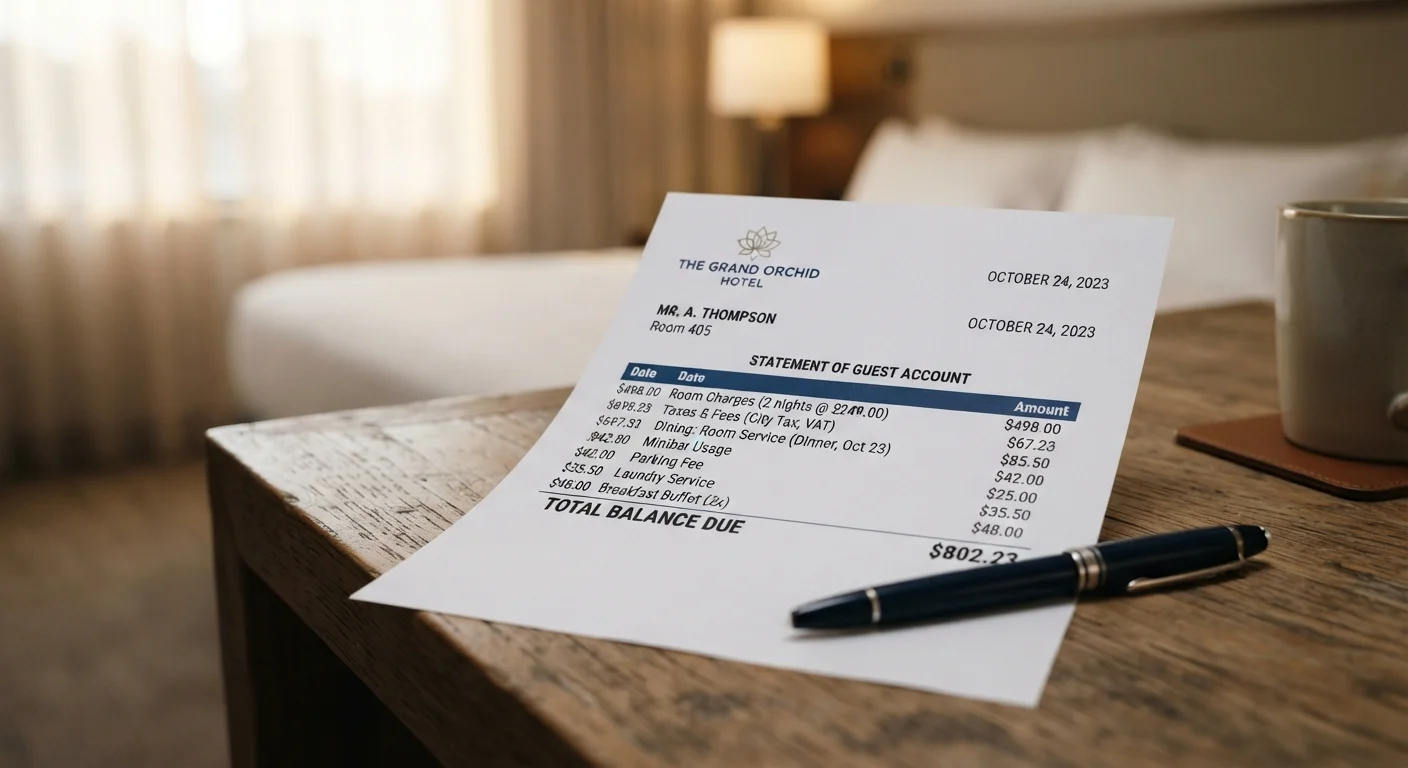
When you search for a hotel and see a nightly rate, that number is almost never what you'll pay. Hotels are permitted to advertise a base rate and disclose mandatory fees separately — a practice that's widespread across the industry. For a first-time traveler, the gap between the advertised price and the final bill can be jarring.
The most common culprit is the resort fee (sometimes called an amenity fee or destination fee). This is a daily mandatory charge — often $20 to $50 or more per night — that gets added on top of your room rate at checkout. It typically bundles access to amenities like the gym, pool, or Wi-Fi, whether you use them or not.
Other fees that routinely inflate hotel bills include:
- Parking fees: Daily rates of $20–$60 or more are common in urban hotels, even when a parking garage is on-site.
- Wi-Fi charges: Some properties charge separately for in-room internet access even when the lobby offers free Wi-Fi.
- Early check-in and late check-out fees: Arriving before or departing after standard times can trigger additional charges.
- Safe, mini-bar, or in-room coffee fees: These may appear automatically on your bill if services are activated in your room.
For a fuller picture of how rates are structured, see how nightly rates, resort fees, and taxes all add up.
$3B+
Annual U.S. resort fee revenue
Industry analysts have estimated that U.S. hotels collectively collect over $3 billion annually in resort and amenity fees, reflecting how widespread the practice has become.
$20–$50+
Typical daily resort fee range
Resort fees at U.S. properties commonly range from $20 to more than $50 per night, with higher fees concentrated in Las Vegas, Miami, and New York City.
~30%
Share of total stay cost added by fees and taxes
Travel industry observers have noted that taxes and mandatory fees can add roughly 20–35% on top of a base room rate depending on the property and location.
How to Spot Fees Before You Confirm a Booking
The key is to look past the headline rate and find the full-cost breakdown before you enter payment details. Here's a step-by-step approach:
- Check the booking summary page carefully. Before you click "Confirm," look for a line labeled "taxes and fees," "property fees," or "additional charges." Some platforms show a total that excludes mandatory fees until the very last step.
- Visit the hotel's direct website. Many properties list their resort or amenity fees on their own FAQ, policies, or rooms pages. The direct site also often gives you the most accurate all-in price.
- Use the full-price display filter. Some booking platforms allow you to sort and view prices inclusive of taxes and fees. Enable this view whenever available.
- Search recent guest reviews for fee mentions. Travelers frequently flag unexpected charges in review sections. Searching for terms like "resort fee" or "parking" in reviews can surface what a listing doesn't disclose.
- Call the hotel directly. If you can't find a clear fee breakdown online, a quick call to the front desk is the most reliable way to ask: "What mandatory fees are charged per night beyond the room rate?"
Also be aware that fees can differ by room type or rate plan — a refundable rate may carry different conditions than a prepaid one. This matters especially if your plans could change. You can also apply similar scrutiny to other travel expenses; hidden fees in car rental agreements follow very similar patterns.
Always Ask for a Full Fee Breakdown
Before confirming any booking, look for a line that says "total including taxes and fees" — not just the nightly rate. If you're unsure what's included, call the hotel directly and ask: "Are there any mandatory daily fees beyond the room rate?" A two-minute call can prevent a surprise $100+ addition to your final bill.
Building Hotel Fees Into Your Travel Budget
Once you know what fees to look for, the next step is accounting for them in your overall trip budget. Fees that seem small per night add up quickly across a multi-night stay. A $35 daily resort fee on a five-night booking adds $175 to your total — a significant amount that deserves a line in your budget alongside the room rate itself.
A practical approach is to calculate your cost per stay, not just cost per night. Add together: the room rate × number of nights, plus all mandatory fees × number of nights, plus any applicable taxes. That combined figure is your realistic lodging cost.
Parking deserves special attention. If you're driving to your destination, call ahead to confirm whether the hotel has on-site parking, what it costs per night, and whether nearby public garages are cheaper alternatives. In some cities, parking at an adjacent municipal garage can save $20 or more per night compared to hotel valet.
For a broader view of how lodging costs fit into your overall travel spend, estimating and managing travel costs before you go is a useful starting point. And if you're heading abroad, note that international hotels sometimes add city tourist taxes on top of any resort fees — covered in more depth in the hidden costs of international travel.
One more charge to plan for: the incidental hold. At check-in, many hotels place a temporary pre-authorization on your card — sometimes several hundred dollars — to cover potential in-room charges. It isn't a fee, but it does temporarily reduce your available credit. Learn more about how this works in the hotel incidental hold explained.