What Hotels Actually Offer
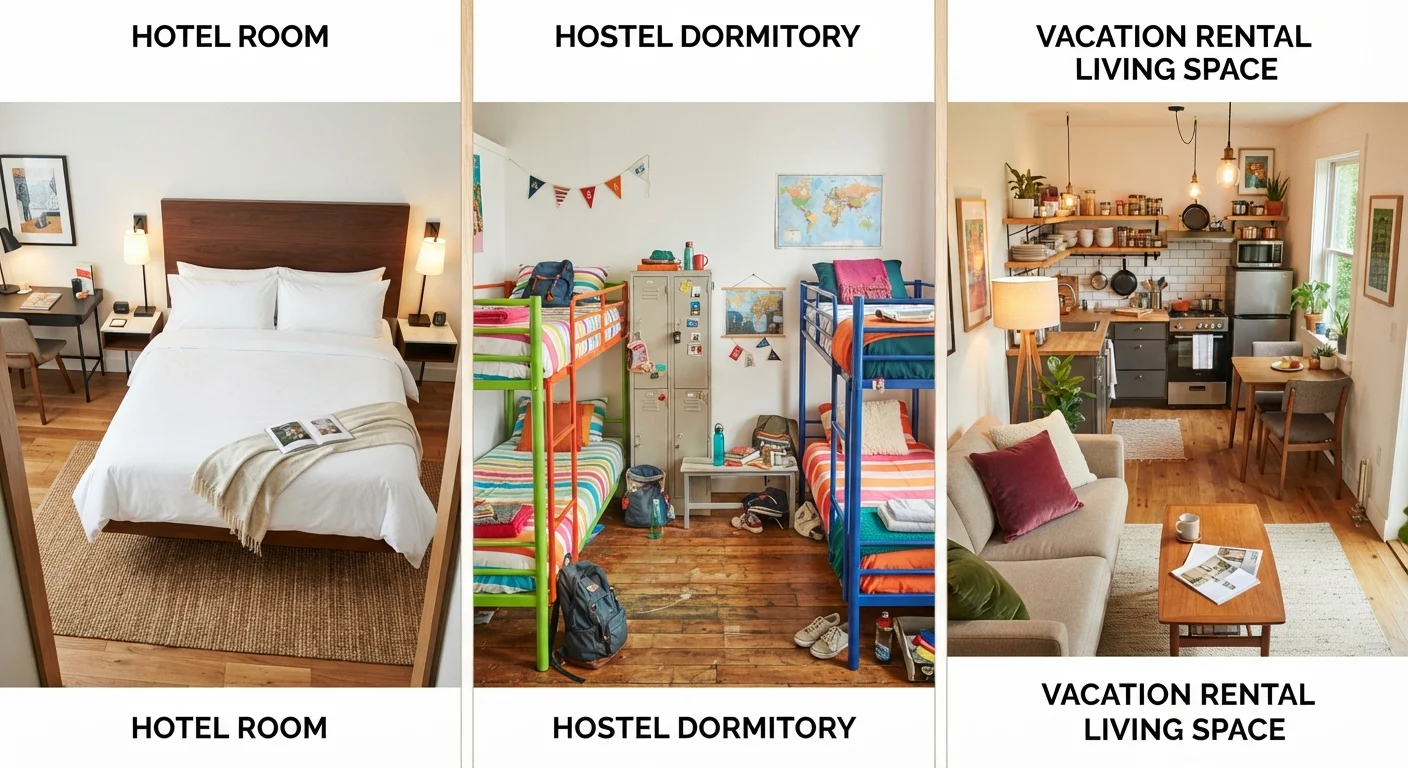
A hotel is a commercially operated property that rents individual, private rooms by the night. What makes it a hotel — as opposed to other lodging — is the bundle of services that comes with it: a staffed front desk, daily room cleaning, fresh towels, and a private bathroom. These aren't perks; they're the baseline.
Hotels also carry a standardized rating system. Star ratings give you a rough signal about what level of facilities and service to expect, though the rating bodies differ by country and the system has real limitations. A three-star hotel in one city may feel very different from a three-star in another.
Within hotels, there's meaningful variation. Boutique hotels vs. chain hotels is a distinction worth understanding: chains promise consistency across locations; boutique properties emphasize local character. Neither is inherently better — it depends on what you value. For a fuller look at the hotel experience from arrival to departure, the Hotel Basics hub covers what to expect at each step.
Check What's Actually Included Before Booking
Hotel listings often bundle amenities that look similar across properties — but details like free breakfast, parking, or Wi-Fi can be included at one property and charged separately at another. Before finalizing a booking, scroll past the headline price to the full amenities list and any added fees. A slightly higher nightly rate that includes parking may cost less overall than a cheaper room with a $25 parking surcharge.
What Hostels Are — and Aren't
A hostel is a budget-oriented accommodation that typically sells beds rather than private rooms. The standard setup is a dormitory: a shared room with bunk beds and four to twelve guests sleeping in the same space. Bathrooms are usually communal. Common areas — a shared kitchen, lounge, or outdoor space — are central to the hostel experience.
The trade-off is clear: you give up privacy in exchange for lower nightly costs and a social environment. Hostels are popular with solo travelers and backpackers, but that stereotype undersells them. Many modern hostels offer a range of room types, including private rooms, at prices still below comparable hotels.
What hostels don't offer is the service layer of a hotel. Housekeeping may be infrequent, check-in hours can be limited, and amenities vary considerably. Reading reviews matters more here than with chain hotels, because quality is far less standardized.
~40,000
Hostels operating globally
Industry estimates from Hostelworld and similar booking platforms suggest tens of thousands of hostels operate worldwide, ranging from budget dorms to boutique social spaces.
4–12
Typical beds in a hostel dorm room
Most standard hostel dormitories accommodate between four and twelve guests, with six-bed rooms being among the most common configurations.
How Vacation Rentals Work Differently
A vacation rental is a privately owned home, apartment, or condo that an owner makes available to guests for short stays. Unlike hotels or hostels, you're renting an entire living space — with a kitchen, living room, and typically multiple rooms. That space belongs to you for your stay, with no other guests sharing it.
The appeal for many travelers is the home-like setup: you can cook your own meals, spread out over several nights without repacking, and live at a pace that doesn't revolve around hotel checkout times. For groups or families, splitting the cost of a rental often makes financial sense.
The gap is in support. There's no front desk. If something breaks, you contact a host — response times vary. Cleaning is handled before and after your stay, not during it. There may also be a cleaning fee added at checkout, a detail easy to miss when comparing listed nightly rates. The hotel vs. rental comparison guide walks through this decision in more depth for first-time travelers.
Choosing the Right Fit for Your Trip
No single lodging type is universally better. The right choice depends on four practical factors: your group size, your trip length, how much support you expect to need, and what you're willing to trade off.
- Solo traveler on a tight budget: A hostel private room or dorm can work well, especially if you want to meet other travelers.
- Couple or solo traveler who values ease: A hotel removes friction — someone handles the room, the front desk handles questions, and your experience is predictable.
- Family or group of four or more: A rental often delivers more space per dollar and practical comforts like a kitchen and shared living area.
- Extended stay (a week or more): A rental or extended-stay option may feel more sustainable than a traditional hotel room over time.
If you're still building your mental map of all the options that exist — including B&Bs, boutique inns, and other formats — the full accommodation reference guide and the beginner's lodging overview both offer clear starting points.
Lodging Types Can Overlap
Some properties blur the lines between categories. A boutique hotel might have the communal feel of a hostel. A serviced apartment operates like a rental but with hotel-style support. Comparing eight lodging categories side by side can help when a property doesn't fit neatly into one bucket. Don't let category labels do all the work — read what each specific property actually provides.