
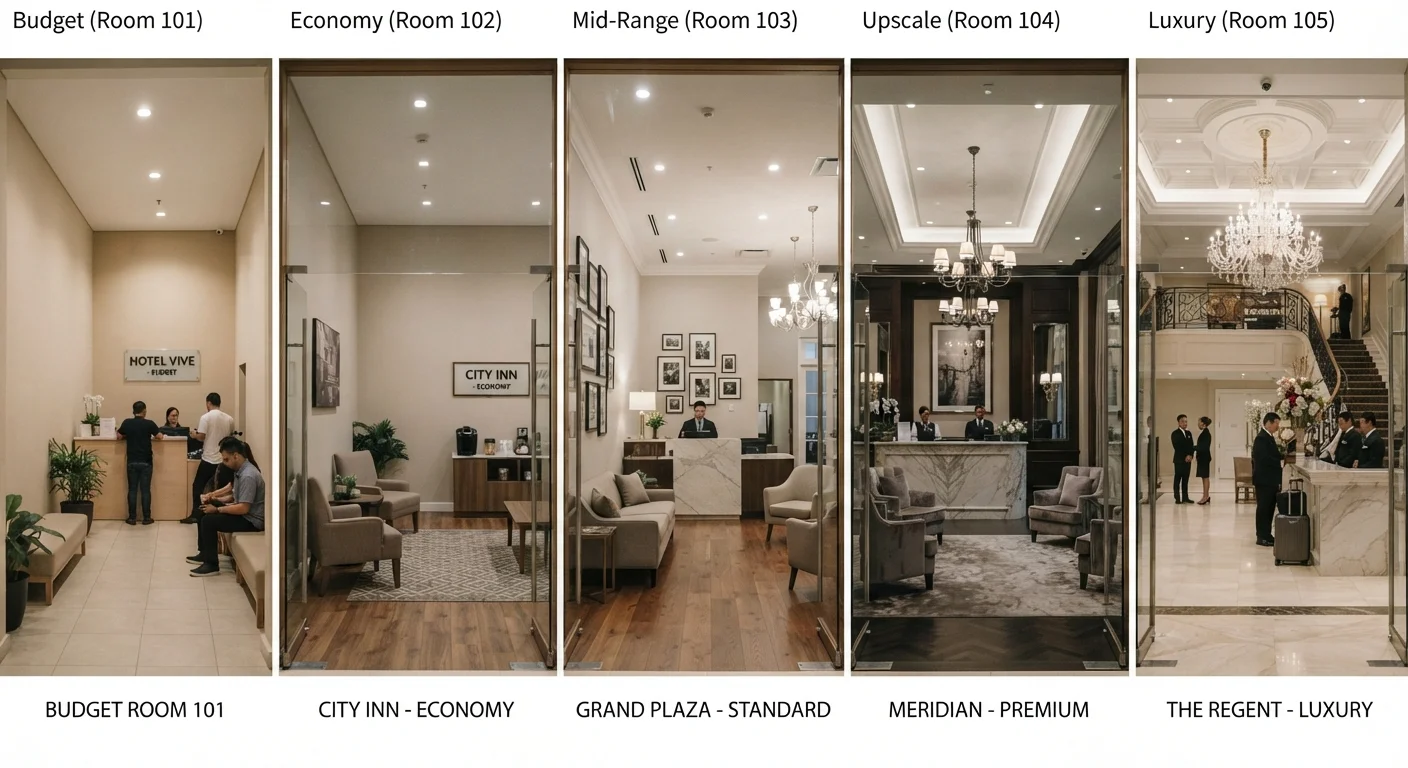
What Star Ratings Are — and Who Assigns Them
Hotel star ratings are shorthand for a property's overall quality tier, covering physical facilities, room standards, and service levels. The core problem for first-time travelers: there is no single global authority that sets these ratings. Different countries, hotel chains, and booking platforms each apply their own criteria.
In the United States, ratings are often assigned by platforms like AAA (using a Diamond system), Forbes Travel Guide, or individual booking sites — not a government body. In Europe, many countries have national tourism boards that issue official ratings, but the standards differ across borders. A three-star hotel in one country may offer noticeably more or fewer amenities than a three-star property in another.
| Global rating authority | None — ratings vary by country and platform |
| U.S. rating examples | AAA Diamonds, Forbes Travel Guide stars |
| Most common traveler tier | Three-star (mid-range, broad amenity coverage) |
| What ratings measure best | Physical facilities and amenity breadth |
| What ratings measure poorly | Service quality, cleanliness, location, noise |
| Self-rated properties | Common on some platforms; no third-party verification |
Because of this inconsistency, treat star ratings as a starting point for comparison, not a guarantee. Always cross-reference the listed amenities and guest reviews. See our guide on reading hotel reviews without being misled for a practical way to verify what a rating promises.
What Each Star Level Generally Signals
While specifics vary, the following tiers reflect broadly accepted industry norms across most Western markets:
- One star: Basic, clean accommodation. Private room with a bed; shared or private bathroom. Minimal on-site services. Often suitable for travelers who only need a place to sleep.
- Two stars: Slightly more comfort — likely a private en-suite bathroom, a television, and basic furnishings. Front-desk hours may be limited.
- Three stars: The mid-range sweet spot for many travelers. Expect 24-hour reception, a restaurant or bar on-site, room service (limited), fitness facilities, and consistently furnished rooms. Business amenities like Wi-Fi and a work desk are standard.
- Four stars: Upscale properties with elevated service. Think valet parking, concierge, multiple dining options, spa access, and well-appointed rooms with premium linens. Staff-to-guest ratios are higher.
- Five stars: Luxury in both product and service. Personalized attention, butler service at some properties, multiple restaurants, premium spa and fitness facilities, and consistently high-end finishes throughout. Prices reflect the category.
Star rating
A numerical classification (typically 1–5) indicating a hotel's overall quality tier based on its facilities, services, and amenities. Standards vary by country and rating organization.
Rating body
An organization — governmental, industry, or private — that evaluates and assigns official quality ratings to hotels. Examples include AAA in the U.S. and national tourism boards in many European countries.
En-suite bathroom
A private bathroom attached directly to a guest room, as opposed to a shared bathroom located in a hallway. Common from two-star hotels upward.
Concierge
A hotel staff member dedicated to assisting guests with reservations, local recommendations, transportation, and other personal requests. Typically found in four- and five-star properties.
Self-rated property
A hotel that assigns its own star classification without verification from a recognized third-party rating body, which can result in inconsistent or inflated ratings.
For travelers deciding between a three- and four-star property, consider which amenities you'll actually use. If you rarely use a hotel gym or restaurant, a well-reviewed three-star may serve you equally well at lower cost.
Where Star Ratings Fall Short
Star ratings measure facilities more reliably than they measure experience. A four-star hotel with aging infrastructure and indifferent staff can disappoint more than a two-star property run by attentive owners who keep everything spotless.
Ratings also don't capture location quality, noise levels, or cleanliness — variables that often matter most to guests. A hotel can hold three stars and still sit next to a construction site or have slow elevator service.
Platform Stars vs. Official Stars
Stars displayed on booking platforms may reflect the platform's own internal scoring algorithm rather than an official rating body's assessment. When accuracy matters, look for properties that explicitly name their rating body (such as AAA or a national tourism board). If no rating body is listed, the stars may be self-assigned or algorithmically generated.
Self-rated properties are another gap: some hotels assign their own stars without third-party verification, particularly on smaller booking platforms. If a listing's star count seems surprisingly high relative to the photos and price, check whether a recognized rating body actually issued it.
To spot inconsistencies before booking, review our article on red flags in hotel listings that first-time travelers often miss. And if you're unsure whether a hotel is even the right lodging type for your trip, understanding the differences between hotels, hostels, and rentals can help clarify your options.