Understanding the Basics Before You Step Underground
London's Underground — universally called "the Tube" — is one of the world's oldest metro systems and, for a first-time visitor, one of the most navigable once you understand its internal logic. The network runs on a zone system: Zone 1 covers central London, and zones expand outward to Zone 9. Most tourist journeys stay within Zones 1 and 2, which is useful to know because fares are calculated by how many zones you cross.
Before you worry about which train to catch, spend five minutes with the Tube map. It's a schematic diagram, not a geographically accurate street map — distances are compressed or stretched for readability. Each line has a name and a distinct color. Interchanges (stations where two or more lines meet) are shown as ringed circles. If you've never read a transit map before, our guide to reading a transit map for the first time walks you through the visual language step by step.
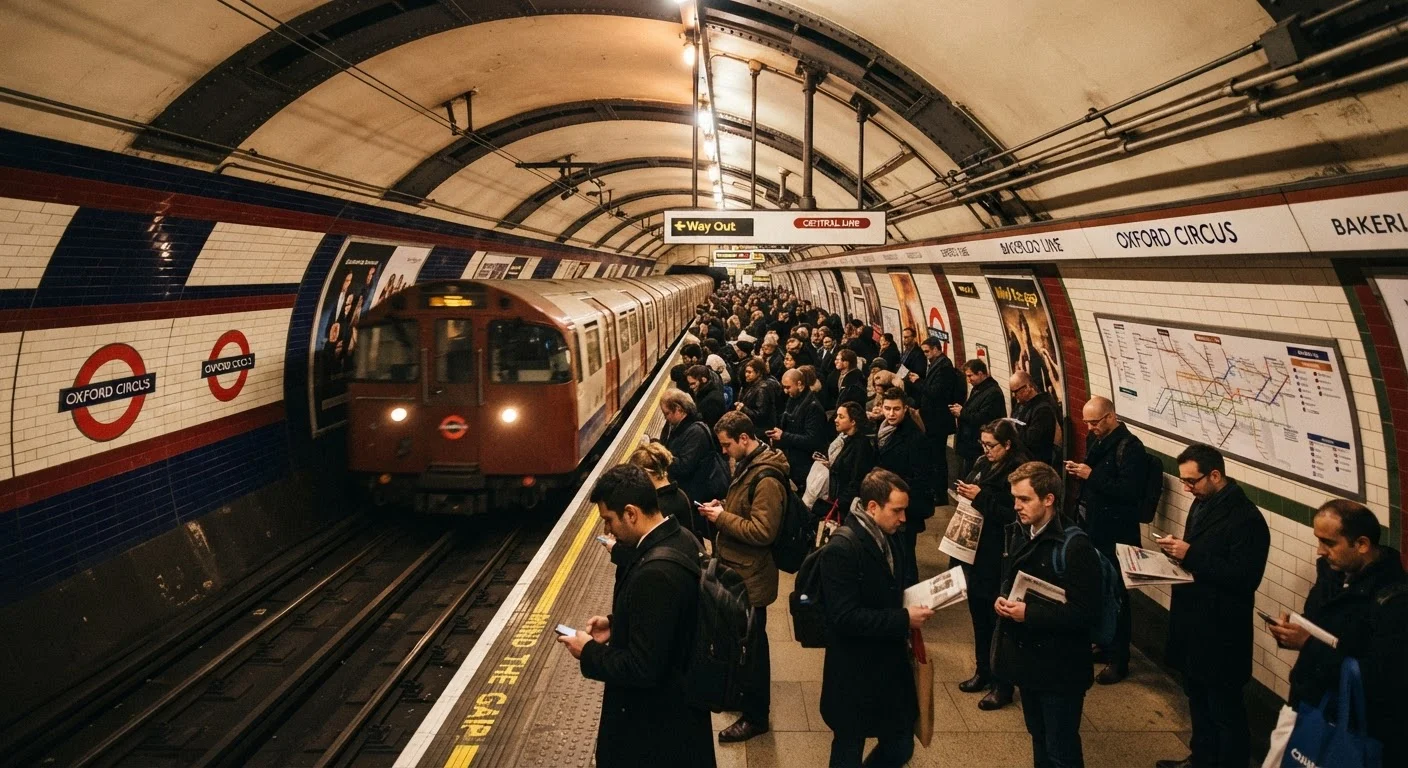
One quirk that catches beginners off guard: platforms are signed by the terminus station at the end of that branch, not by a direction like "northbound." When the board says Westbound to Heathrow Terminal 5, that's your cue — you're looking for a train whose final stop is Heathrow, and you'll ride it until your station appears.
What you will need
How to Pay — and Avoid Paying Too Much
Cash is not accepted on the Tube. You need either an Oyster card (a rechargeable smart card sold at any staffed station) or a contactless bank card or phone. Both options use the same fare structure and charge a daily price cap — meaning once your spending hits a set ceiling for the day, any further journeys are free. Contactless is the most friction-free option if your card or phone supports it: no queuing at a machine, no top-up to manage.
Use One Card Consistently
If you're traveling with others, each person should tap their own card separately — never try to pass one card back through the gate. Using a single card for multiple people results in incomplete journey records and potentially incorrect charges. Each traveler needs their own payment method.
Whichever method you use, always tap your card on the yellow reader at the entry gate and again at the exit gate. Skipping the exit tap (called "touching out") triggers a maximum fare charge for that journey. You'll also be locked out of the daily cap calculation, so costs can stack up quickly. This is among the most common mistakes first-timers make — see what first-time transit riders get wrong for the full list of traps to sidestep.
Planning and Executing Your First Journey
Once you know your starting station and destination, the steps are straightforward. Use Transport for London's (TfL) Journey Planner (available on their official website and app) to confirm which line to take, where to change if needed, and roughly how long the journey takes. TfL also shows real-time service alerts, which is worth checking before you leave — line closures, especially on weekends, are common.
Look up your route before leaving
Use TfL's official Journey Planner to find your line(s), any interchanges, and total travel time. Note the terminus name for your direction of travel — this is what the platform signs will display.
Tap in at the entry gate
Hold your Oyster card or contactless card flat against the yellow circular reader on the gate. Wait for the green light and the gates to open before walking through. Do not rush — the system needs a clean read.
Find the correct platform
Follow the signs for your line color and the terminus name in your direction. At interchange stations, follow color-coded signs from one platform to another. Allow extra time for larger stations like King's Cross St. Pancras or Bank, where walking between lines can take several minutes.
Board, ride, and exit the train
Stand back from the doors until passengers have exited, then board. On most lines you'll need to press a button or push the door to open it — doors don't always open automatically. Count the stops or watch the in-carriage display to know when yours is approaching.
Tap out at the exit gate
Before going through the exit barriers, touch your card to the yellow reader again. The gate will open and the correct fare is deducted. Check the display briefly to confirm a fare was registered, then follow Way Out signs to street level.
When you arrive at your destination, follow the Way Out signs to the surface. Some large stations have multiple exits leading to different streets; checking in advance which exit puts you closest to your destination saves unnecessary walking. For a complete walkthrough of an urban transit journey from hotel to destination, see our end-to-end public transport guide.
Finally, moving through an unfamiliar underground system can feel disorienting at first. Our companion piece on navigating unfamiliar cities without looking like a target offers practical habits for staying oriented and confident above and below ground.
Weekend Closures Are Common
TfL regularly closes sections of specific lines on weekends for maintenance. A route that works perfectly on a weekday may be suspended or replaced by a slower bus service on Saturday or Sunday. Always check TfL's service status page the evening before any journey you're relying on — don't assume a line is running just because it was fine the day before.