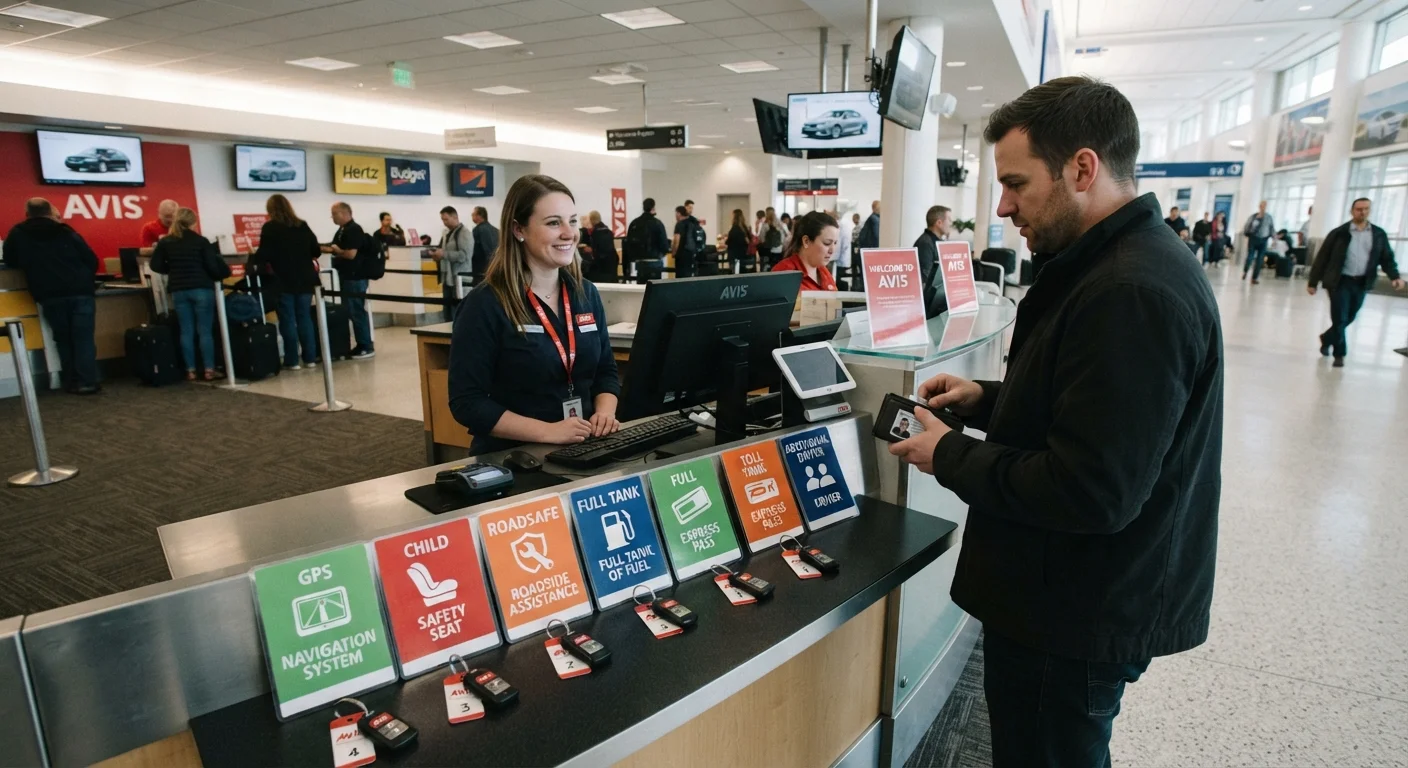

The Price Difference Is Real — But It's Not the Whole Story
Off-airport rental locations are often 20–30% cheaper on the base rate, and that gap is genuine. The reason comes down to a fee called the Customer Facility Charge (CFC) — a per-day surcharge levied on rentals originating at or within airport property. At many major US airports, CFCs run between $6 and $15 per day, and when stacked onto state and local taxes, the total surcharge on an airport rental can easily reach 25–35% above the base rate.
Off-airport locations avoid the CFC entirely, which is where their rate advantage comes from. But that savings is the starting point of the decision, not the ending point. The factors that shape your actual experience — pickup logistics, operating hours, and what happens when something goes wrong — don't show up on the rate comparison screen.
For a broader look at how rental add-ons affect total cost, see our guide to car rental extras.
| Criterion | Airport Rental Counter | Off-Airport Pickup Location |
|---|---|---|
| Base rate | Higher (CFC + airport taxes) | Lower (no CFC) |
| Pickup convenience | Inside or adjacent to terminal | Requires shuttle or rideshare |
| Operating hours | Typically 24 hours at hub airports | Usually 7 AM – 10/11 PM |
| Delay risk | Low — counter stays open | High if arrival is after closing |
| Pickup time (total) | 15–25 minutes on average | 35–60 minutes on average |
| Contract complexity | Standard rental terms | Identical rental terms |
| Best for flight type | Any arrival time | Daytime, on-schedule arrivals |
Shuttle Logistics: The Hidden Time Cost
Off-airport locations don't sit at the curb. They're typically located 1–5 miles from the terminal, accessible by a company-operated shuttle or, in some cases, a rideshare you arrange yourself. On a smooth day, this adds roughly 20–45 minutes to your pickup process: waiting for your bags, locating the shuttle pickup zone (often in a less-marked area of the terminal), riding to the lot, and completing paperwork on arrival.
That timeline gets longer when flights land during peak hours or when multiple flights arrive simultaneously — shuttle queues back up quickly. First-time travelers frequently underestimate this, particularly at unfamiliar airports where even finding the ground transportation level takes extra time.
Airport counters, by contrast, are almost always reachable within the terminal or via a direct, well-signed walkway to an on-site garage. There's no external shuttle, and you can often start the return process before you even collect your bags using a rental company's app or kiosk.
15–30%
Typical airport surcharge above base rate
Customer Facility Charges and concession fees at US airport rental facilities commonly push total taxes and fees to 25–35% of the base rate.
20–45 min
Added time for off-airport shuttle pickup
Industry estimates and traveler reports suggest off-airport shuttle transfers add roughly 20 to 45 minutes under normal conditions, longer during peak arrival periods.
Operating Hours: Where Off-Airport Locations Carry Real Risk
This is the factor most travelers overlook until it affects them. Off-airport rental desks operate on reduced hours — commonly 7 AM to 10 or 11 PM — because they're staffed independently of the airport's 24-hour rhythm. If your flight is delayed past closing time, there's no counter to reach. In most cases, the vehicle is held for you until the following morning, but you'll need to find alternative transportation for the night.
Airport counters are typically open whenever flights are operating, which at hub airports means around the clock. For evening arrivals, red-eye flights, or any itinerary with connection risk, that coverage matters considerably.
If you do find yourself stranded by a missed rental window, our overview of airport transfer options can help you navigate a backup plan quickly.
Always Confirm Off-Airport Hours Before Booking
Operating hours for off-airport locations vary by city, company, and season. Before confirming a reservation, look up the specific branch hours — not just the general company hours — and cross-check them against your expected arrival time plus a realistic delay buffer. If the location closes before your buffer window ends, the airport counter is the safer choice for that trip.
What Stays the Same Regardless of Location
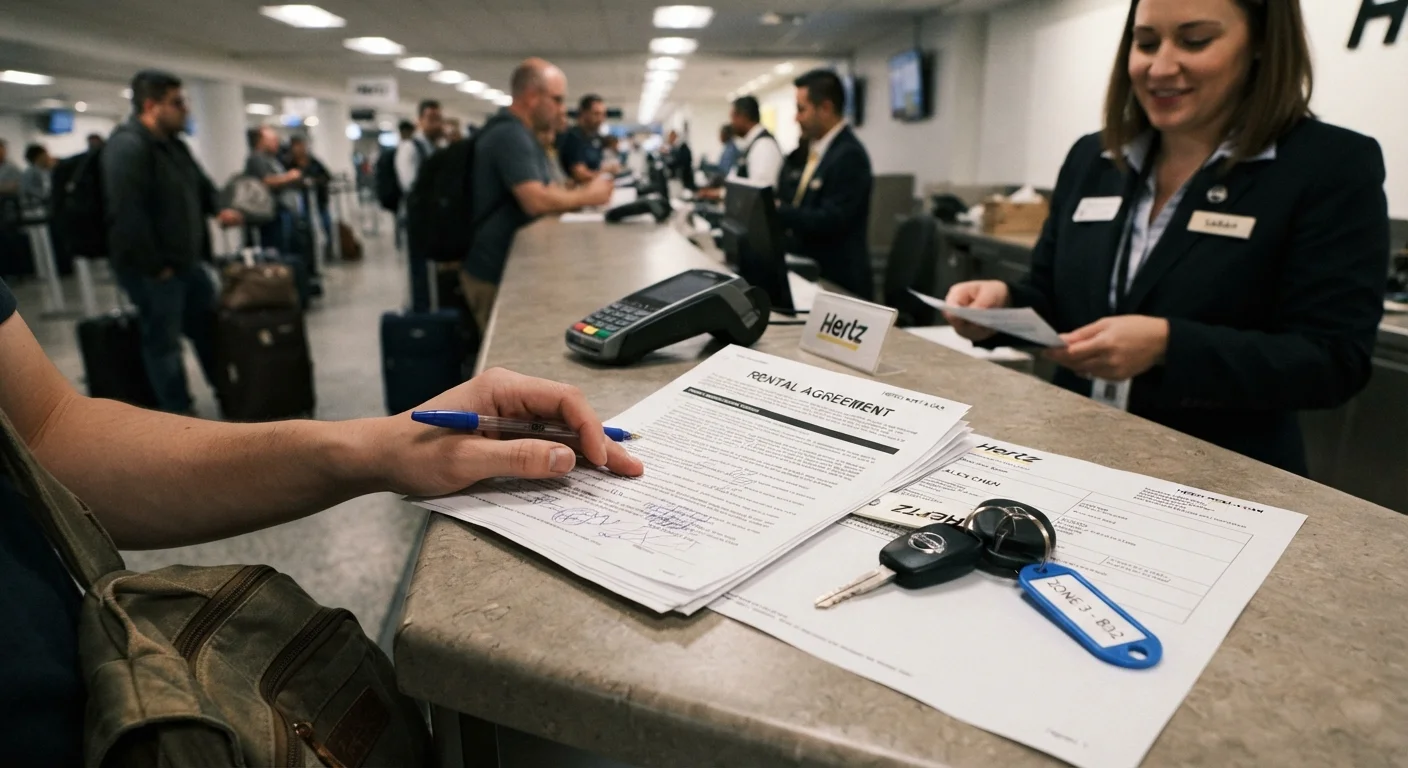
A common misconception is that off-airport locations use a different — simpler or more relaxed — contract process. They don't. The same documentation requirements apply: a valid driver's license, a credit card in the renter's name, and meeting the minimum age requirement (25 at most companies, or 21–24 with a young driver surcharge). Insurance upsells, fuel policies, and toll transponder charges appear at off-airport desks exactly as they do at airport counters.
For first-time renters, this is worth internalizing: the location changes the logistics, not the contract. Study the agreement carefully either way. Our article on one-way car rentals covers how drop-off location choices layer on additional complexity, which is relevant if your trip involves returning the vehicle somewhere other than where you picked it up.
In short, if your itinerary is fixed, daytime, and cost-sensitive, an off-airport location is a legitimate choice worth researching. If you're a first-time renter, flying in late, or dealing with any connection uncertainty, the airport counter's reliability is worth the premium.