
How the Rental Process Actually Works
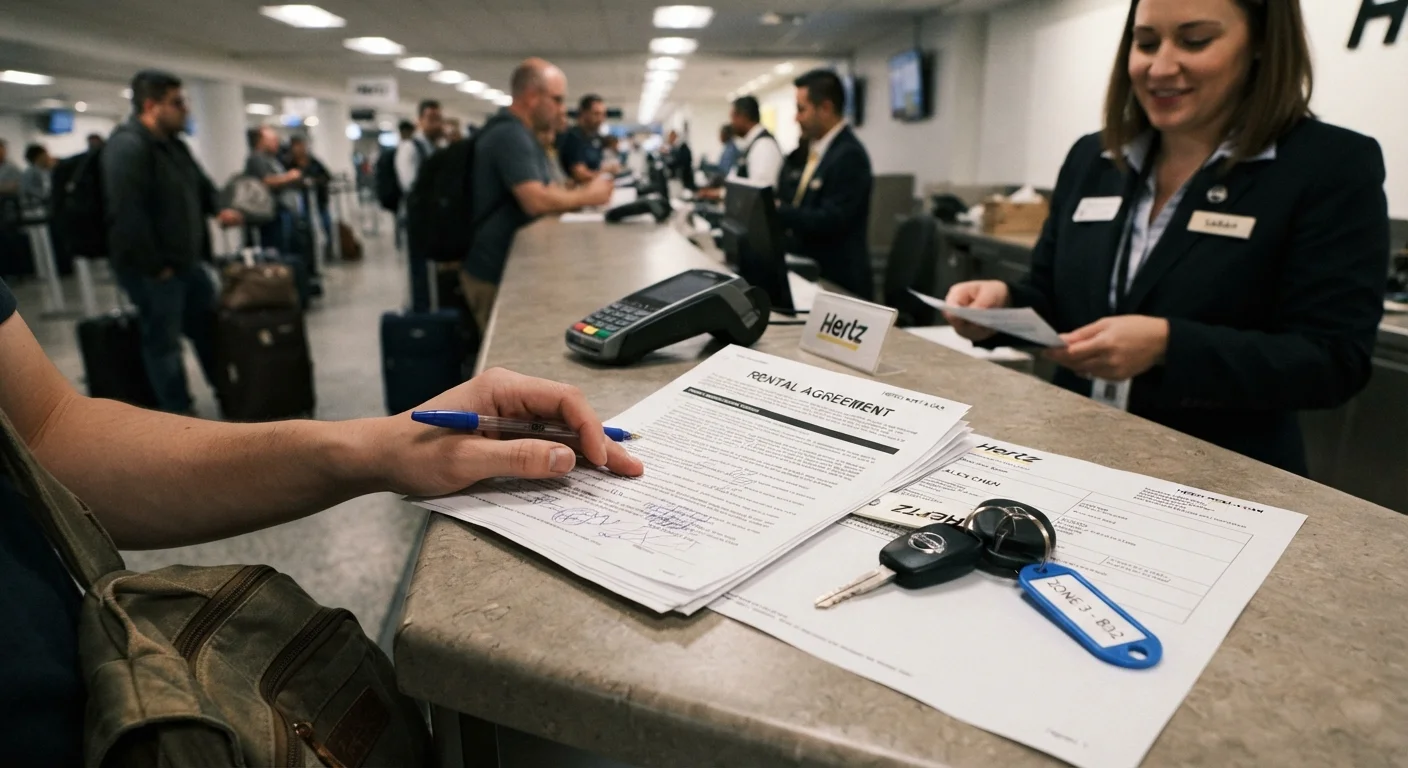
Renting a car follows a straightforward sequence once you know the steps. You book a vehicle class online or by phone, show up at the rental counter with your driver's license and a credit card, sign a rental agreement, inspect the car, and drive away. At the end of your trip, you return the car, a staff member checks it for damage, and your final charges are settled.
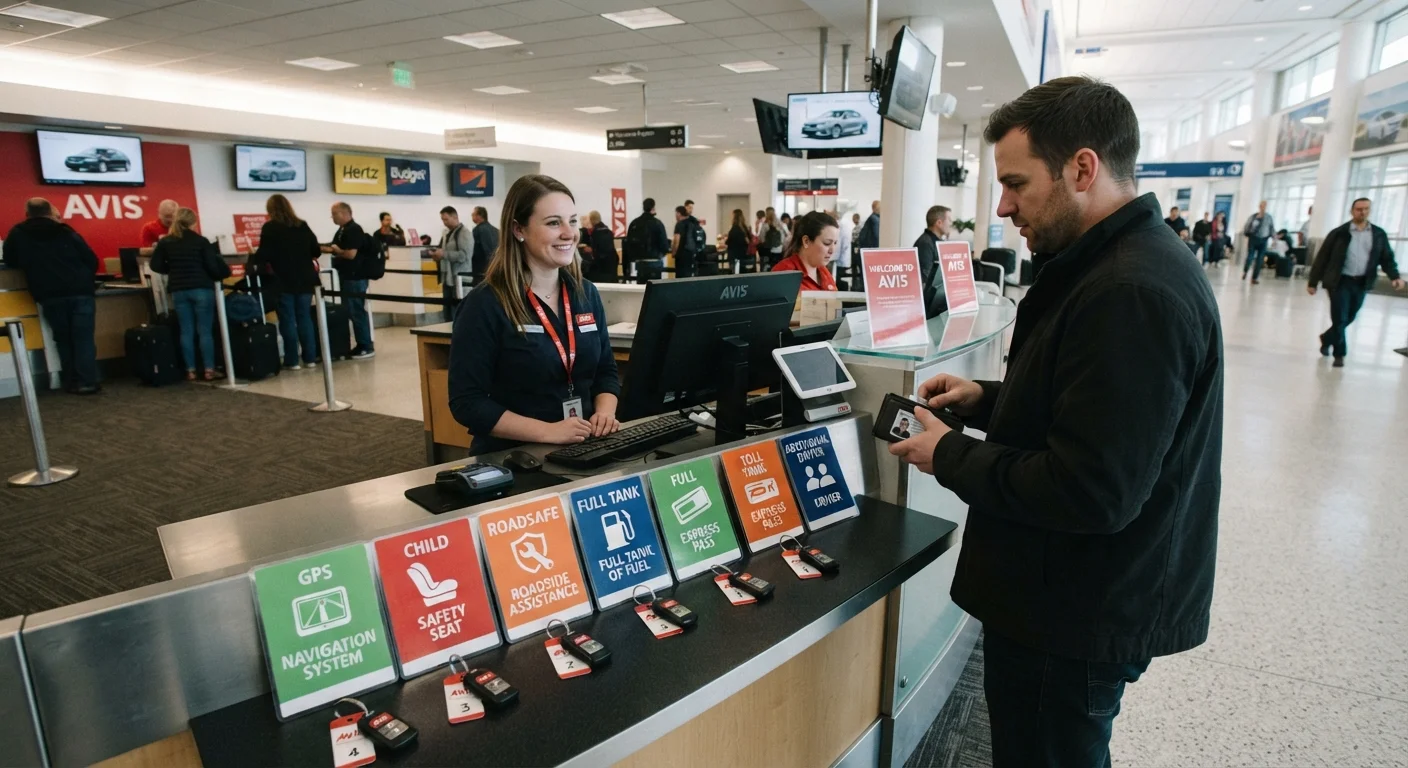
What trips up first-timers isn't the process itself — it's the decisions layered into it. At the counter, agents typically offer add-ons like insurance products, GPS devices, and prepaid fuel. Each carries a daily fee that compounds quickly. Knowing what you actually need before you arrive makes those conversations far less stressful.
If you're arriving at an airport, note that some rental counters are located inside the terminal while others require a shuttle to an off-site facility. Factor that transit time into your planning. For alternative ground transport, see our guide to airport transfers.
Collision Damage Waiver (CDW)
A product offered by rental companies that removes or limits your financial responsibility if the rental vehicle is damaged. It is not technically an insurance policy but functions similarly.
Supplemental Liability Insurance (SLI)
Optional coverage that protects you financially if you injure another person or damage their property while driving a rental car.
Vehicle class
A size category used by rental companies to group similar cars — such as economy, compact, or full-size — rather than a guarantee of a specific make or model.
Security deposit hold
A temporary authorization placed on your credit card at pickup to cover potential charges such as damage, fuel, or late fees. The hold is released after you return the car in good condition.
Full-to-full fuel policy
A rental agreement arrangement where you receive a full tank of gas and are required to return the car with a full tank to avoid refueling charges.
Additional driver fee
A daily charge applied when you add another licensed driver to your rental agreement so they are legally permitted to drive the vehicle.
Understanding Vehicle Categories
Rental fleets are organized into categories — economy, compact, intermediate, full-size, SUV, and more. These labels describe a general size tier, but the actual model you receive within that category can vary. A company may advertise a compact sedan and hand you any model that fits the tier.
The practical differences that matter most to travelers are trunk space, passenger capacity, and fuel consumption. A larger vehicle costs more per day and typically uses more fuel, but may be necessary if you're traveling with bulky luggage or multiple passengers. For a closer look at what these labels mean in practice, our article on vehicle categories explained goes into useful detail.
Check the Trunk Before You Drive Away
Luggage space varies significantly even within the same vehicle category. If possible, ask to see the trunk before committing to a specific car — especially if you're traveling with checked-bag-sized luggage. This is a quick check that can prevent an uncomfortable trip.
Insurance and Coverage Options
Insurance is where most first-time renters feel the most confused — and where the most money is at stake. Rental counters typically offer several products: a Collision Damage Waiver (CDW) or Loss Damage Waiver (LDW) covering vehicle damage, Supplemental Liability Insurance (SLI) covering third-party injury or property damage, and personal accident or effects coverage.
Before automatically accepting these at the counter, check two things. First, does your personal auto insurance policy extend to rental vehicles? Many policies do, at least partially. Second, does the credit card you're using to pay for the rental include any rental coverage as a cardholder benefit? Some do, subject to conditions. Confirming both in advance — ideally in writing — can save you a meaningful daily charge.
This is a nuanced area. Our dedicated article on rental car insurance coverage explains what each product covers and what gaps to watch for. For decisions specific to your situation, consult your insurer or card provider directly.
Duplicate Coverage Is a Common Costly Mistake
Paying for rental company insurance products when your personal auto policy or credit card already provides similar protection means you're paying twice for the same coverage. Verify your existing coverage before the trip — not at the counter, where time pressure can lead to hasty decisions.
Fuel Policies and Hidden Fees
Rental companies typically offer two fuel arrangements. Full-to-full means you pick up the car with a full tank and return it full — this is usually the most straightforward option. Prepaid fuel means you pay upfront for a full tank at the company's per-gallon rate and return the car at any fuel level; you won't be refunded for unused fuel. A third variation charges a premium per-gallon rate if you return the car without refueling — this option is almost always the most expensive.
Beyond fuel, watch for fees that aren't always highlighted during booking: additional driver fees (charged per day for each extra driver listed on the contract), young driver surcharges for renters under 25, and airport location surcharges. Tolls on your route are another cost to plan for — some companies offer transponder rentals, while others bill tolls after the fact with an administrative fee added.
Reading the full rental agreement before signing, even quickly, is worth the few minutes it takes. The common rental car assumptions article covers several misconceptions that lead to unexpected charges at return.
Airport Location Fees Are a Real Budget Factor
Renting from an airport location is convenient but often more expensive than renting from an off-airport site due to concession fees and local taxes passed to the consumer. If you have flexibility and a way to reach a nearby off-airport location, the cost difference may be worth comparing. Factor in transport costs both ways before deciding.
What to Do at Pickup and Return
At pickup, take 5 to 10 minutes to walk around the vehicle before accepting it. Document any existing scratches, dents, or scuffs with photos or video, and make sure any damage is noted on the rental agreement or condition form. If staff are busy, alert them to your documentation. This protects you if the company later claims damage you didn't cause.
At return, arrive with enough time to refuel if your policy requires it and to complete the handoff before any late fees kick in. Request a receipt or itemized closing statement at the counter — don't assume the final bill matches what you expected. If unexpected charges appear afterward on your card, contact the company promptly with your documentation as evidence.
For a more detailed walkthrough of both moments, our article on navigating the rental car pickup process covers counter upsells and condition checks step by step.