Why These Norms Exist in the First Place
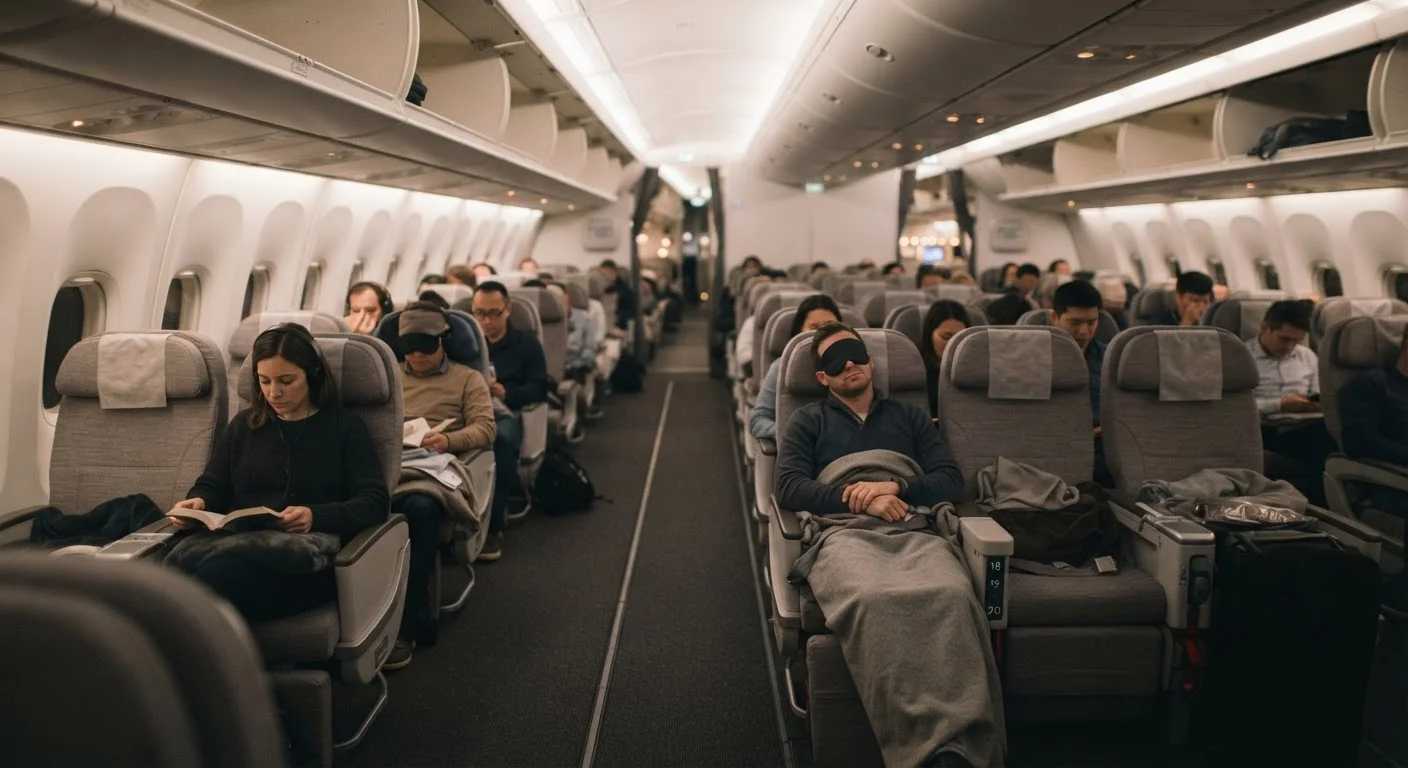
An airplane cabin is one of the most compressed shared spaces most people will ever occupy. Seats are close, storage is limited, and everyone is stuck in place for the same block of time. That combination makes small behaviors - a sudden seat recline, a loud video call, a bag claiming two overhead bins - feel much larger than they would on the ground.
Onboard etiquette isn't about rigid rules or judging strangers. It's a set of informal agreements that make a genuinely challenging environment more tolerable for everyone. Most experienced flyers follow these norms without thinking. If you're new to flying, knowing them in advance removes one more thing to feel anxious about. For a broader look at what surprises first-timers, see things first-time flyers wish they'd known before takeoff.
Crew Can't Enforce Social Norms
Flight attendants are responsible for safety and service - not mediating disputes over armrests or noise. If a situation is genuinely disruptive, a calm word to the crew is appropriate. For most minor friction, the most effective response is a polite, direct conversation with the passenger involved.
The Armrest Question (and Other Seat-Space Norms)
Seat position determines a lot of unspoken social dynamics. Window seat passengers control the window shade and have a wall to lean on. Aisle seat passengers get easy access to the restroom and the ability to stand without climbing over anyone. The middle seat offers none of those perks - which is why the broadly accepted convention gives the middle seat passenger both of the shared armrests.
Reclining is another area where context matters more than the act itself. The recline button exists for a reason, and using it isn't inherently inconsiderate. What makes a difference is timing: avoid reclining during meal service, do it slowly rather than snapping back suddenly, and if the person behind you is tall or has a tray table in use, a brief glance and nod before reclining costs nothing. Understanding the tradeoffs of each position helps - window, middle, and aisle seats all come with different social dynamics.
A Simple Rule for Uncertain Situations
When you're unsure whether something is appropriate in a shared cabin, ask yourself: if the 50 people around me all did this simultaneously, would it create a problem? If yes, it's worth reconsidering. This mental check works for everything from volume levels to how much overhead space you claim.
Noise, Screens, and Shared Air
Sound travels surprisingly well in a pressurized cabin. Engine noise masks some of it, but a video playing without headphones or a loud phone conversation carries several rows in any direction. The practical standard: use headphones for all audio, keep conversations at a conversational volume, and be especially thoughtful during overnight or early-morning flights when many passengers are trying to sleep.
Overhead lighting follows similar logic. If the cabin has dimmed for a red-eye flight and everyone around you is trying to rest, switching on your overhead reading light is fine - but angling it away from your neighbor's face is a small adjustment they'll silently appreciate. For more on making rest actually work mid-flight, sleeping on a plane without arriving exhausted covers the practical side in detail.
18 inches
Average economy seat width on narrowbody aircraft
Figures cited by aviation consumer research groups suggest standard economy seat widths have remained around 17-18 inches on many narrowbody jets, making spatial awareness especially important.
31 inches
Typical seat pitch (legroom) in economy class
Seat pitch - the distance from one seat back to the next - averages roughly 30-32 inches on domestic U.S. flights, according to aviation data trackers, leaving little buffer between passengers.
Boarding, Deplaning, and Overhead Bins
Overhead bin space is shared real estate that runs out fast. The clearest norm: stow your bag above your own row, place smaller items under the seat in front of you, and avoid using a second bin for a jacket or personal item when the flight is full. If you board late and your row's bin is already full, stow your bag toward the front of the plane rather than behind your row - it speeds up deplaning for everyone.
When it's time to get off, aisle passengers typically stand and step back to allow middle and window passengers out first. Jumping into the aisle the moment the seatbelt sign turns off - before the rows ahead of you have moved - creates a standing bottleneck with nowhere to go. Most seasoned travelers wait one row at a time, moving when the path is actually clear. These small habits are part of a broader pattern of shared-space courtesy that applies in many travel contexts, from cruise ship etiquette to local transit norms around the world.