
Why Onboard Etiquette Matters More Than on Land
A cruise ship is a floating community of hundreds - sometimes thousands - of people sharing the same corridors, pools, restaurants, and lifts for days at a stretch. There is no walking away to a different neighborhood. That density makes small courtesies land harder than they would ashore, and small irritants compound quickly.
None of this is printed in the welcome letter. Most experienced cruisers absorb these norms over several sailings; first-timers often don't realize a norm exists until they've already stepped on someone's patience. This guide makes the unwritten rules explicit so you can start your voyage on steady footing. It complements the practical logistics covered in the Cruise Basics hub, focusing instead on the social layer of ship life.
The Deck Chair: Everyone's First Flash Point
Pool-deck lounge chairs are a finite resource on any ship. The practice of draping a towel over a chair at 7 a.m. and not returning until noon - sometimes called "chair hogging" - is the single most reliably resented behavior afloat. Many lines have policies permitting staff to remove unattended items after 30 to 60 minutes, though enforcement varies.
Flag Staff Rather Than Moving Others' Items
If you find a chair, seat, or space that appears abandoned with personal items on it, resist the urge to move those items yourself. Instead, find a crew member and let them handle it. This avoids potential confrontation and keeps you out of disputes over whether an item was truly unattended.
The practical norm: if you plan to leave your chair for more than about half an hour, take your belongings with you. If you find a chair with items on it and no occupant visible, give it 20-30 minutes before concluding it's abandoned - then flag a crew member rather than moving items yourself.
On sea days especially, outdoor spaces fill early. Arriving at the pool deck by 8 or 9 a.m. on a sea day is not overcautious; it reflects the reality of how quickly chairs fill on a ship with limited outdoor footage.
Buffet and Dining Room Norms
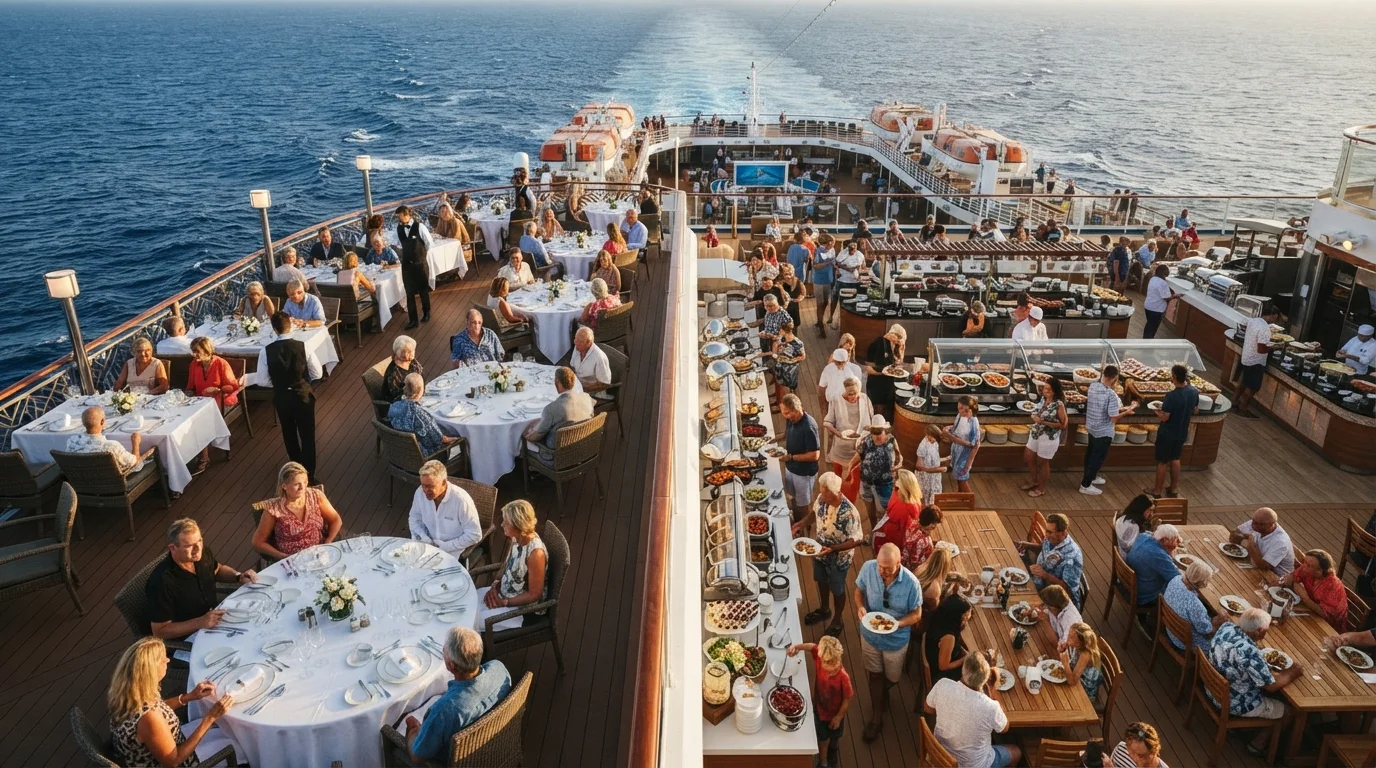
The buffet is where etiquette and food safety overlap most directly. Always use the serving utensils provided - not your hands, not a utensil from your own plate. This is a hygiene issue first and a courtesy issue second. If a serving spoon is missing, flag a crew member.
Queue position matters. Cutting ahead in a busy buffet line is noticed and remembered - ships are small worlds. If you are rejoining your traveling companion who held a spot, that is generally accepted; jumping a queue solo is not.
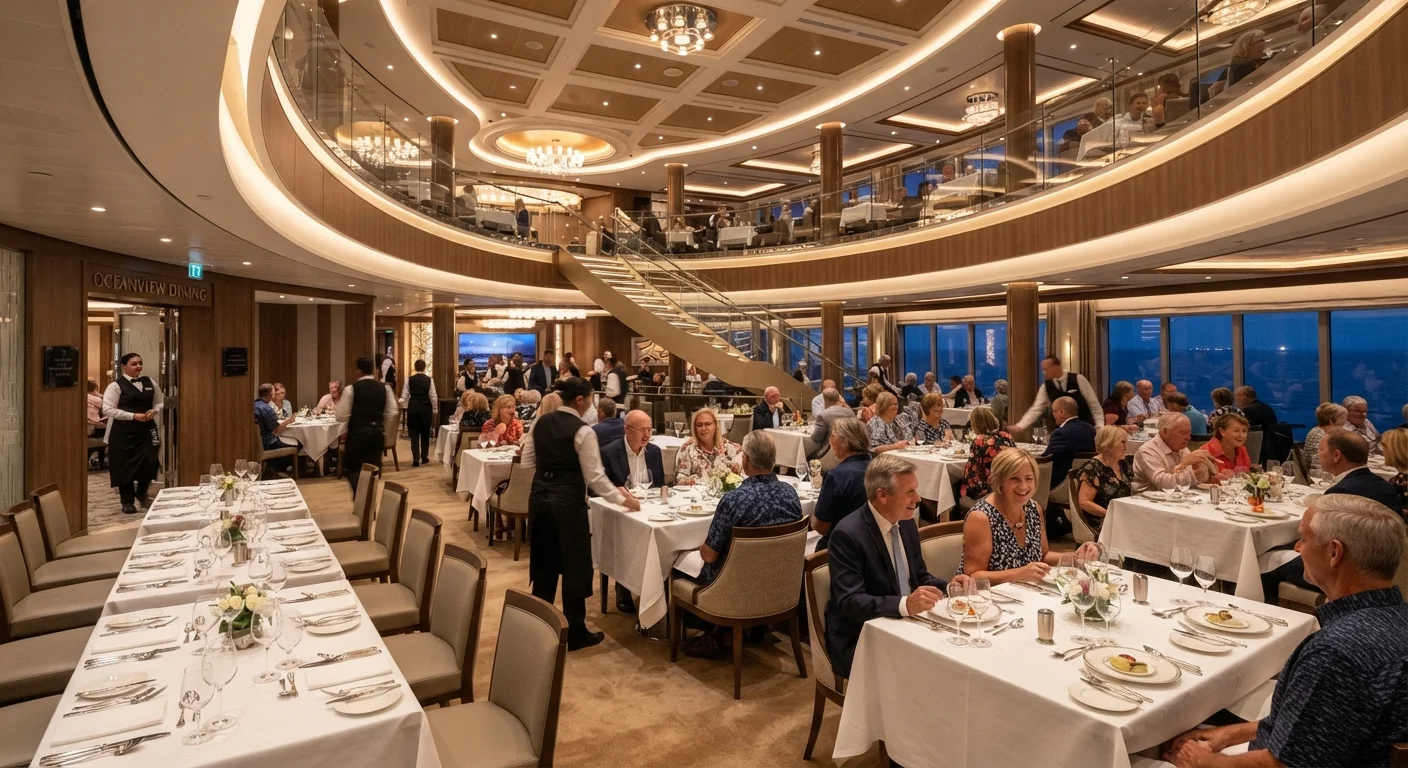
For the main dining room, how sittings and dress codes work is worth reading before your first sailing. In short: arrive on time for your assigned sitting, dress to whatever standard the evening requires (check the daily program), and be patient with your tablemates - shared tables are a traditional feature of cruise dining and can become a highlight of the trip. For a full picture of how all dining venues connect, see how onboard meal options are organised.
Use serving utensils at the buffet - never your hands or personal cutlery.
Shared serving tools are the primary barrier against cross-contamination at open food stations. Bypassing them introduces risk for every passenger who eats from that dish afterward. This is one of the few etiquette points that is also a genuine food-safety matter.
Limit unattended deck-chair reservations to no more than 30 minutes.
Pool-deck seating is a shared, scarce resource. Holding a chair with a towel for several hours while absent denies other passengers a spot they are actively seeking and is a recognized source of onboard frustration.
Arrive at your assigned dining sitting on time.
The main dining room operates on coordinated timing - kitchen output, service rotations, and neighboring tables all align to your sitting's schedule. Late arrivals disrupt service for fellow diners at shared tables and create unnecessary pressure on dining staff.
Keep cabin corridor and balcony noise low after 10 p.m.
Ship corridors are narrower and cabin walls thinner than most land-based accommodations. Sound from voices, music, and sliding doors travels clearly into neighboring staterooms, disturbing passengers who have early port-day wake-ups.
Build generous buffer time when returning from independent shore activities.
Ships operate on firm departure schedules. Passengers who miss the ship must arrange and fund their own transit to the next port, which can be expensive and stressful. Being late also risks the ship briefly delaying, inconveniencing everyone aboard.
Corridors, Elevators, and Cabin Neighbors
Cabin corridors are close quarters. Sound carries through doors and thin walls with more fidelity than most guests anticipate. A few straightforward habits make an outsized difference:
- Corridor volume: Keep voices low after around 10 p.m. and before 8 a.m. This applies to groups returning from late entertainment - a quick transition from bar noise to corridor quiet is appreciated by everyone on that deck.
- Balcony doors: Balcony cabins share partition walls. Slamming the sliding door or running a TV at high volume spills into adjacent balconies. Keep the door closed when the TV is on.
- Elevators: Let passengers exit before boarding. During peak hours - meal times, disembarkation mornings - elevator waits are long. If you are mobile and your destination is two or three decks away, the stairs are faster and free up lift capacity for passengers who need it.
Tipping: Understanding the Structure
Most major cruise lines apply a daily service charge (often called a "gratuity" or "crew appreciation" charge) automatically to your onboard account. This is distributed across cabin stewards, dining staff, and other crew. The amount and structure vary by line, so check your booking documents before sailing.
Automatic Gratuities: Know Before You Sail
Policies around service charges differ between cruise lines and can change. The amount, how it is distributed, and whether it can be adjusted are all details to verify directly with your cruise line or in your booking confirmation before departure. Understanding the structure in advance helps you make informed and considerate decisions onboard.
Additional cash tips for a crew member who has gone notably above expectations are always appropriate and genuinely valued. They are not obligatory. If you choose to adjust or remove the automatic charge, be aware that doing so reduces the pooled earnings of crew members you may never interact with directly - not just the ones you found wanting.
For additional context on tipping conventions in shared hospitality environments, the unwritten rules of hotel etiquette article offers a useful parallel.
Shared Spaces and Quiet Consideration
Speakers and personal audio devices: use headphones in shared indoor spaces - the atrium, the library, the theater. Bluetooth speakers on open decks exist in a gray zone; at low volume and away from dense seating they are generally tolerated, but if nearby passengers are visibly trying to read or sleep, it is a signal to switch to headphones.
Photography: photographing the ship, the ocean, and public spaces is fine. Photographing other passengers without their awareness - especially children - is not. If a crew member or another guest is in your shot, a brief acknowledgment is courteous. Traveling with children? how onboard life works for families covers additional considerations for parents navigating shared spaces.
Shore excursion times are non-negotiable: the ship will not wait for passengers who are late returning from an independently arranged shore activity. Being the reason everyone misses departure is a serious breach that affects hundreds of fellow travelers. Budget significant buffer time when returning from ports.
“The measure of a good shipboard community is not how people behave when everything is easy - it's how they treat shared spaces and fellow passengers when space is scarce and patience is short.”
— Cruises Explained Editorial Team, Editorial collective specializing in first-time cruiser guidance