The Core Difference: Where Your Bag Goes
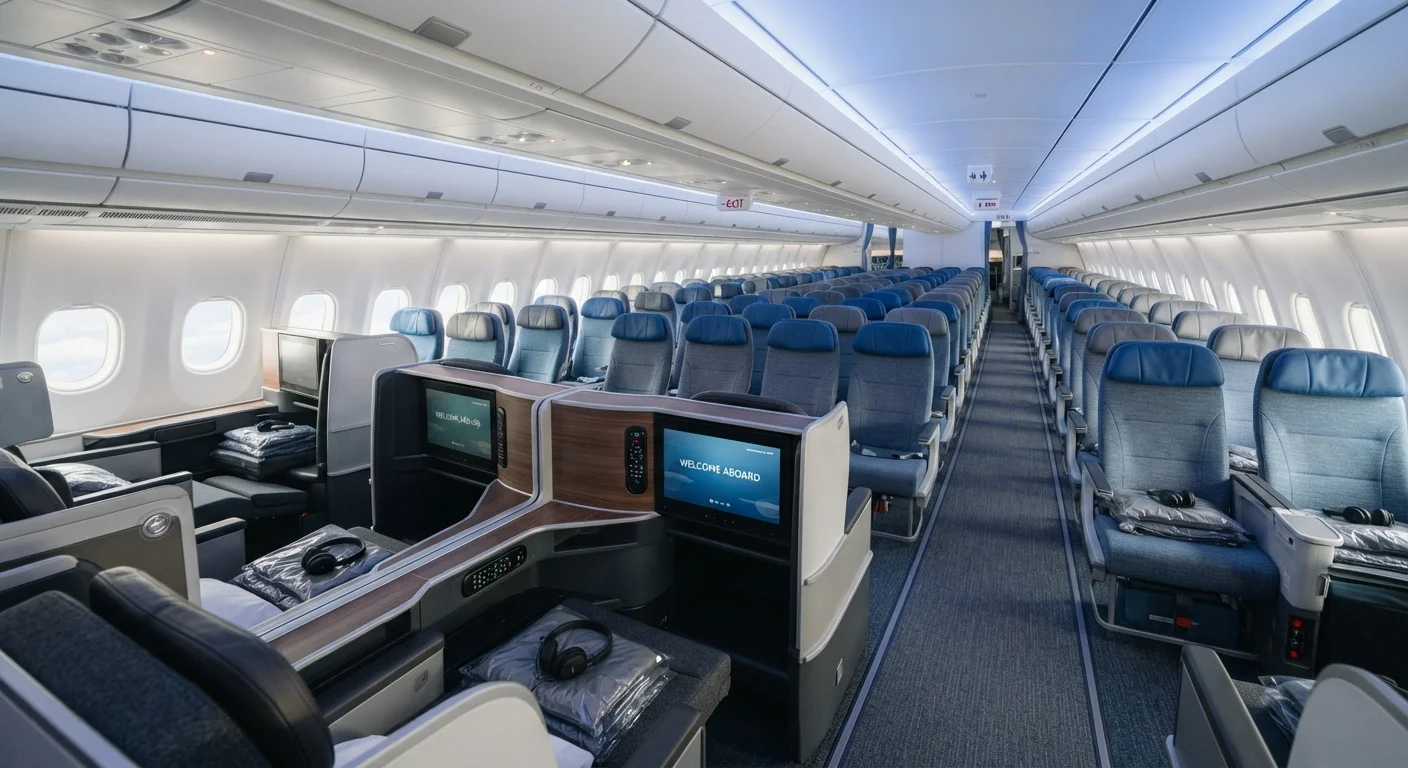
The most fundamental distinction between carry-on and checked baggage is physical location during the flight. A carry-on bag travels with you inside the aircraft cabin, stored in the overhead bin or under the seat in front of you. A checked bag is handed over at the check-in counter or bag drop, tagged with a barcode, and loaded into the aircraft's cargo hold - out of your reach until you arrive at baggage claim.
That difference in location has real consequences. With a carry-on, you keep control: you can access it during the flight, and it lands when you do. With a checked bag, you surrender control - it could, in rare cases, be delayed or misdirected. To understand exactly what happens once you hand a bag over, see what happens to your checked bag after you hand it over.
Size, Weight, and the Rules That Catch Travelers Off Guard
Airlines set their own size and weight limits, so there is no single universal standard. That said, common U.S. domestic carrier guidelines give you a useful baseline.
| Criterion | Carry-On Baggage | Checked Baggage |
|---|---|---|
| Location during flight | Overhead bin or under seat | Aircraft cargo hold |
| Typical size limit (U.S.) | ~22 × 14 × 9 inches | 62 linear inches total |
| Weight limit | Varies; often unenforced domestically | 50 lbs standard; fees above |
| Typical fee (U.S. domestic) | Usually free (1 bag) | $30-$40 first bag, each way |
| TSA liquid rules apply | Yes - 3-1-1 rule | No size restriction on liquids |
| Lithium batteries allowed | Yes | No - must travel in cabin |
| Risk of delay or loss | Minimal - stays with you | Small but real possibility |
| Accessible during flight | Yes | No |
Carry-on size is typically capped around 22 × 14 × 9 inches (including wheels and handles). Airlines measure the total linear inches of your bag, and gate agents do check. A bag that fits at home may be flagged if it's overstuffed and can't close properly.
Checked bag weight is usually limited to 50 lbs for a standard bag. Bags between 50-70 lbs are classified as overweight and trigger a surcharge, often $100 or more each way. Bags over 70 lbs may be refused entirely. Weigh your bag at home before you leave.
Carry-on weight matters too. U.S. carriers don't typically weigh carry-ons at the gate, but international airlines often enforce strict limits of 15-22 lbs. If you're connecting to an international flight, check every carrier's policy individually.
Fees: What You're Actually Paying For
$7.0B+
Annual U.S. airline baggage fee revenue
U.S. airlines collectively reported over $7 billion in baggage fee revenue in recent pre-pandemic years, according to U.S. Bureau of Transportation Statistics data.
~6 per 1,000
Mishandled bag rate on U.S. carriers
The U.S. Department of Transportation tracks baggage reports; mishandling rates have historically hovered around 4-7 per 1,000 bags on domestic flights.
3.4 oz
TSA carry-on liquid container limit
The TSA's 3-1-1 rule limits each liquid container in your carry-on to 3.4 fluid ounces (100 ml), all fitting in one quart-sized clear bag.
On most major U.S. airlines, the first checked bag on a domestic flight costs between $30 and $40 each way, and the second runs $40-$50. Basic economy fares sometimes restrict carry-on bags to a personal item only - read the fine print when booking.
Some airlines include one or more checked bags in certain fare classes or with co-branded credit cards. Always verify the specific baggage policy for the fare you're purchasing, not just the airline's general page, since policies differ by ticket type and route.
If you plan to travel with a lot of luggage and need to think about ground transportation at your destination, the right airport transfer choice matters too - oversized bags affect what vehicle or service will work for you.
What You Can and Cannot Pack - The Security Layer
TSA security rules apply differently to carry-ons and checked bags, and confusing the two is one of the most common and costly mistakes first-time flyers make.
In your carry-on: Liquids, aerosols, and gels must follow the TSA 3-1-1 rule - containers of 3.4 oz (100 ml) or less, packed into one quart-sized clear zip-top bag, one bag per passenger. Sharp objects like scissors over 4 inches, box cutters, and full-size sporting equipment are prohibited in the cabin.
In your checked bag: Larger liquid containers are allowed. Many sharp or bulky items that can't go in the cabin can go below. However, lithium batteries, e-cigarettes, and spare lithium-ion battery packs must travel in the cabin - they are prohibited in checked luggage due to fire risk.
If you need to carry prescription medications, the rules have their own layer of nuance. Review traveling with medications: airport rules and what to carry before you pack.
TSA Rules vs. Airline Rules: Two Different Things
TSA security rules are federal and apply at every U.S. airport checkpoint - they determine what can or cannot pass through the security lane. Airline baggage rules are set by each carrier and govern size, weight, and fees. You can comply with TSA rules and still violate your airline's carry-on size policy, or vice versa. Always check both before you travel.
Making the Right Call Before You Pack
The right choice between carry-on and checked baggage usually comes down to three factors: trip length, what you're bringing, and how much flexibility you want at the airport.
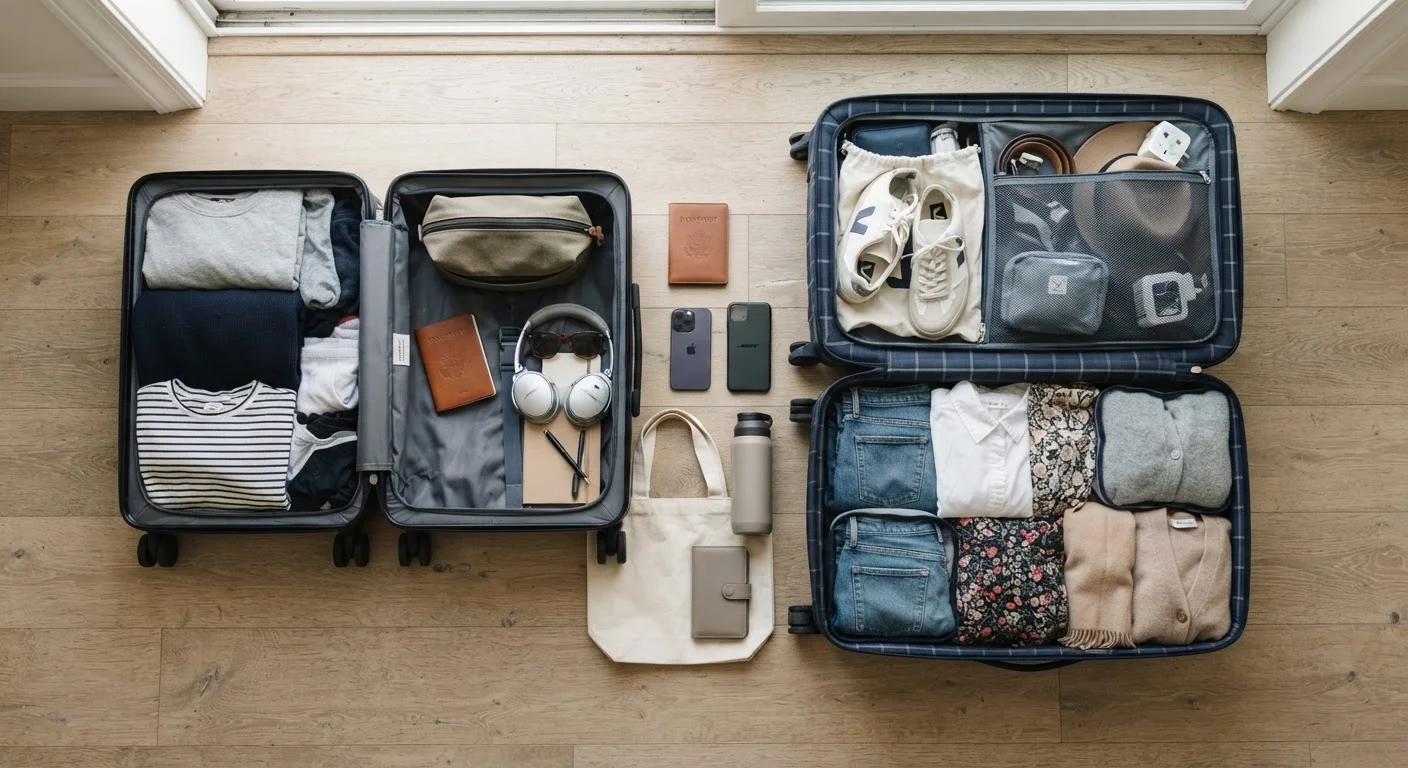
- Short trips (1-4 nights): A carry-on and personal item is almost always sufficient and avoids fees entirely.
- Longer trips or special gear: A checked bag gives you the room you need without squeezing everything into a cabin bag.
- Valuables, medications, and documents: These should always travel in your carry-on regardless of what else you check.
If you're also planning a cruise as part of your trip, the same logic applies aboard ship - cabin storage is limited, and strategic packing matters. The guide to packing for your cruise cabin walks through what actually fits and what to leave behind.
Whatever you decide, confirm your airline's current baggage policy at the time of booking. Policies change, and the fee or size limit you read about today may differ from what's in effect when you fly.