Why onboard sleep is harder than it looks
Most passengers board with good intentions and land exhausted anyway. The problem isn't willpower - it's environment. Aircraft cabins are pressurized to simulate an altitude of roughly 6,000-8,000 feet, which lowers oxygen levels slightly and causes faster dehydration. Add persistent engine noise, irregular lighting, unpredictable cabin activity, and a seat that puts your body in an awkward semi-upright position, and you have conditions that actively work against sleep.
First-time flyers are often surprised by how little the seat reclines in economy - typically 2-4 inches - and how frequently the cabin lights shift or crew members pass through. None of this is insurmountable, but pretending it isn't a challenge leads to poor preparation. Understanding what you're working against is the first step toward actually resting.
It also matters when you sleep. Sleeping at the wrong time relative to your destination can deepen jet lag rather than reduce it. See this practical reference on time zones and jet lag to understand how your body clock interacts with long-distance travel.
What you will need
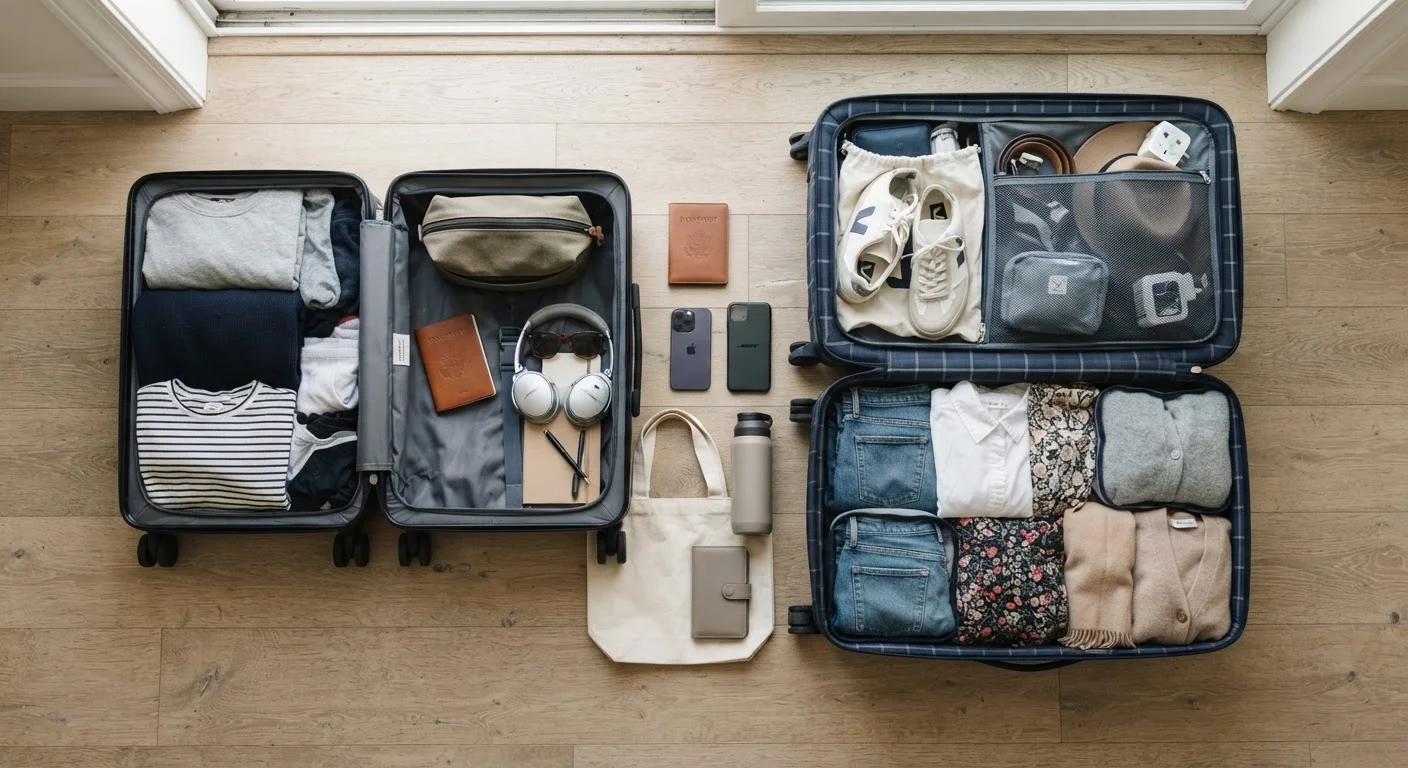
What to bring and how to set up
Effective onboard sleep begins before you board. A neck pillow, eye mask, and ear protection aren't luxury items - they address the three most disruptive factors in a cabin: awkward head position, ambient light, and noise. Choosing the right ones for your comfort style and packing them accessibly in your personal item (not the overhead bin) makes a meaningful difference.
Neck pillow
Supports your head and prevents the painful forward-drop that wakes you mid-sleep.
Eye mask
Blocks cabin lighting and crew movement so your brain recognizes darkness as a sleep cue.
Earplugs or noise-canceling headphones
Reduces engine noise and cabin chatter, which are two of the most disruptive sleep barriers on a plane.
Lightweight blanket or travel wrap
Aircraft cabins are often cooler than most people expect, and staying warm supports deeper sleep.
Refillable water bottle
Staying hydrated counteracts the dry pressurized cabin air that causes fatigue and headaches.
Once you're in your seat, set everything up proactively. Waiting until you're drowsy to search your bag costs time and disrupts the transition. Cabin temperature is worth noting too: planes often cool down mid-flight, and being cold is one of the most reliable ways to stay awake. A lightweight travel wrap or extra layer from your bag keeps you comfortable through temperature shifts.
How to follow through: the step-by-step approach
Choose your seat strategically
Window seats are generally best for sleeping - you control the shade, have a wall to lean against, and won't be disturbed by seatmates needing to pass. Seats near the front of your cabin class tend to be quieter than those close to the galley or lavatories. Book your seat as early as possible to secure a useful position, and check the aircraft's seat map before confirming - some economy rows have less recline than others due to exit rows or bulkheads behind them.
Set your watch - and your intentions - to destination time
As soon as you board, mentally shift to your destination's time zone. Decide whether the flight overlaps with your destination's nighttime hours; if it does, that's when you should sleep. If the flight arrives in the morning, sleeping through most of it makes landing-day alertness far easier. Checking a reference like this guide to time zones and jet lag before you fly helps you plan realistically.
Set up your sleep environment before takeoff
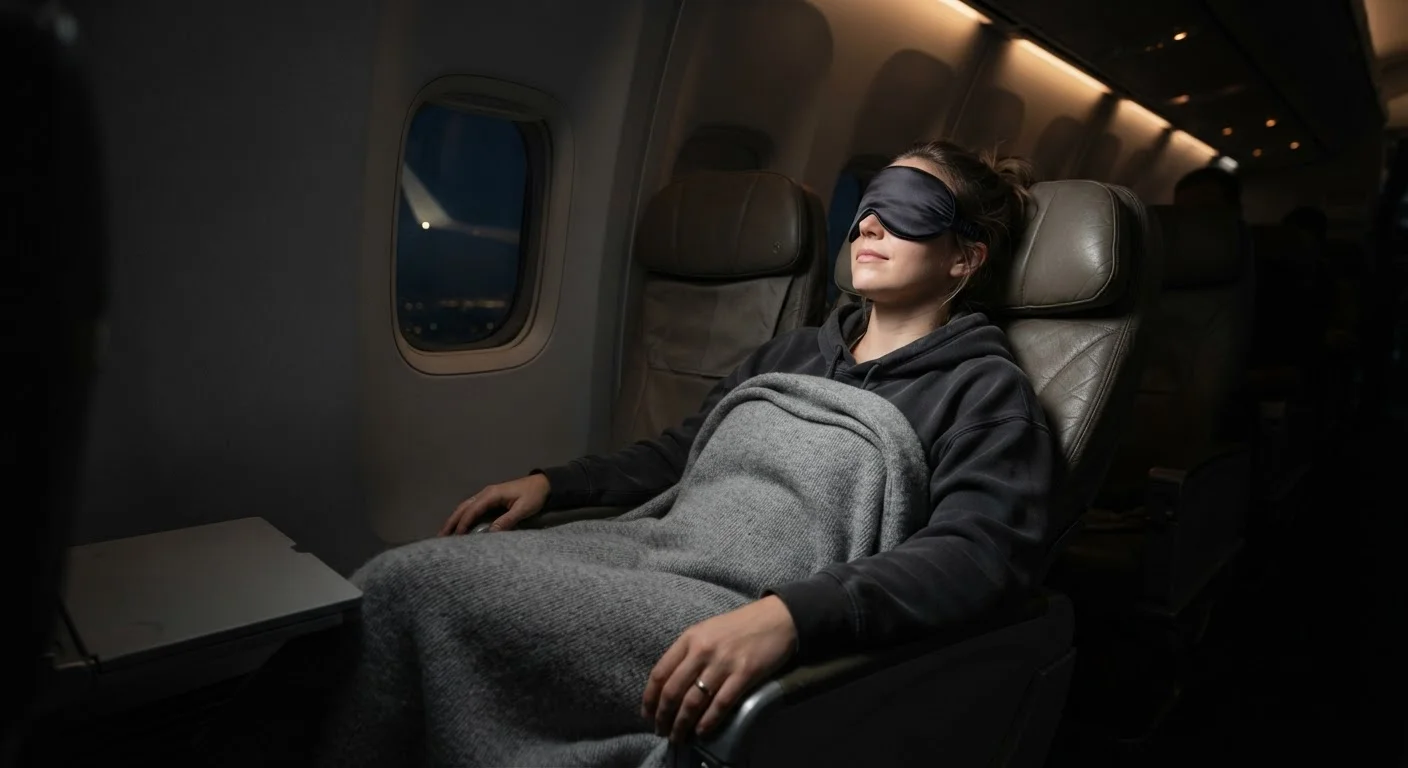
Don't wait until you're tired to dig through your bag. As soon as you're seated and the overhead bin is sorted, take out your neck pillow, eye mask, earplugs, and blanket. Stow them in the seat pocket so they're immediately accessible. Lower the window shade if it's daytime outside or once you're ready to sleep. This removes friction - the fewer steps between wakefulness and sleep position, the more likely you'll actually rest.
Eat and drink in sleep's favor
Heavy, rich meals right before sleep are harder to digest and often cause discomfort in a reclined or semi-reclined position. If the flight timing means you should sleep early, eat lightly and avoid alcohol - it may feel relaxing but reduces sleep quality significantly. Caffeine takes hours to clear your system, so skip coffee or cola if you're within four to six hours of your planned sleep window. Drink water consistently throughout the flight. For more on how cabin food and drink affect how you feel, see what to eat and drink on a plane.
Find a posture that actually works in economy
Recline your seat fully if it's appropriate for the time of flight and the passenger behind you has room. Tuck the neck pillow so it catches the side of your head rather than sitting flat behind your neck - this prevents the head-drop that jolts you awake. If you have a blanket, use it to fill gaps between your body and the armrest, reducing shifting. Crossing your arms over your chest or resting them on the tray table can help stabilize your upper body. For broader comfort advice, keeping your body comfortable on a long-haul flight covers posture and circulation in more detail.
Use a minimal wind-down routine
Your brain responds to cues, not just tiredness. Even on a plane, a short routine signals that sleep is coming: dim your screen, switch to a sleep-focused playlist or white noise, put on your eye mask, and settle into your chosen posture. Give yourself 15-20 minutes to fall asleep - don't panic if it takes a little while. Anxious flyers may find it helpful to pair this routine with a calming technique; flying with anxiety: practical ways to stay calm onboard offers evidence-informed approaches worth reading before departure.
Sync Your Arrival, Not Just Your Departure
Think backward from your arrival time. If you land at 7 a.m. local time, staying awake on the plane and then sleeping when you arrive keeps your body clock confused for longer. Sleeping during the flight's overlap with your destination's nighttime hours - even partially - shortens the adjustment period significantly.
Once you land, your onboard choices will show their effects - for better or worse. Habits like skipping water, ignoring posture, or eating heavily before trying to sleep have cumulative consequences that surface after you land. Small onboard habits that quietly ruin your landing day covers exactly how those decisions play out once you're off the plane.
Managing expectations and adjusting mid-flight
Even with good preparation, you may not sleep deeply or for long - and that's normal. Even light rest with your eyes closed and your body still is restorative compared to being fully alert for a ten-hour flight. If you wake up after an hour or two, don't assume the attempt failed. Try to return to your sleep position rather than immediately switching to a screen.
If discomfort is the issue - stiffness, leg ache, or a headache from dehydration - address it directly: stand briefly, stretch, drink water, and then try again. Keeping your body comfortable on a long-haul flight provides specific techniques for managing physical discomfort during extended flights.
Finally, remember that the goal isn't a perfect night's sleep - it's arriving functional. Partial rest combined with sensible food, hydration choices, and smart sleep timing gets most travelers to their destination in reasonable shape. Give yourself room to adjust, and don't treat every restless hour as failure.
Sleep Aids Deserve Careful Consideration
Some travelers consider over-the-counter sleep aids for long flights. These affect people differently and can cause grogginess that outlasts the flight, making arrival harder rather than easier. Before using any sleep aid on a flight, speak with a healthcare provider - especially if you have underlying conditions, are connecting to another flight, or need to be alert shortly after landing.