What Your Seat Choice Actually Controls
When you pick a seat on a plane, you're not just choosing where to sit - you're deciding how much freedom you have to move, how much you'll be disturbed, and how comfortable your body will be for the duration of the flight. Most first-time flyers choose instinctively (usually window) without realizing the practical consequences. Understanding what each position actually involves helps you make a decision that matches your travel style, not just your childhood preference.
Before diving in, it helps to know that paying to choose a seat isn't always necessary - on short flights especially, the difference between positions matters far less than on a four-hour journey.
| Window Seat | Middle Seat | Aisle Seat | |
|---|---|---|---|
| Privacy & personal space | High - one neighbor, wall support | Low - neighbors on both sides | Moderate - one neighbor, open aisle |
| Ease of getting up | Difficult - must pass two people | Difficult - must pass one person | Easy - stand up freely |
| Sleep comfort | Best - wall to lean on | Poor - no surface to lean against | Moderate - lean on headrest only |
| Interruptions from others | Rare - others must pass you | Occasional - both sides may need out | Frequent - seatmates and cart traffic |
| View & natural light | Full control of window shade | No window access | No window access |
| Legroom flexibility | Slightly limited by fuselage curve | Standard - no extra stretch | Best - can extend leg into aisle |
| Armrest access | One armrest (outer wall side) | Both center armrests by convention | One armrest (outer aisle side) |
Window Seat: Control at a Cost
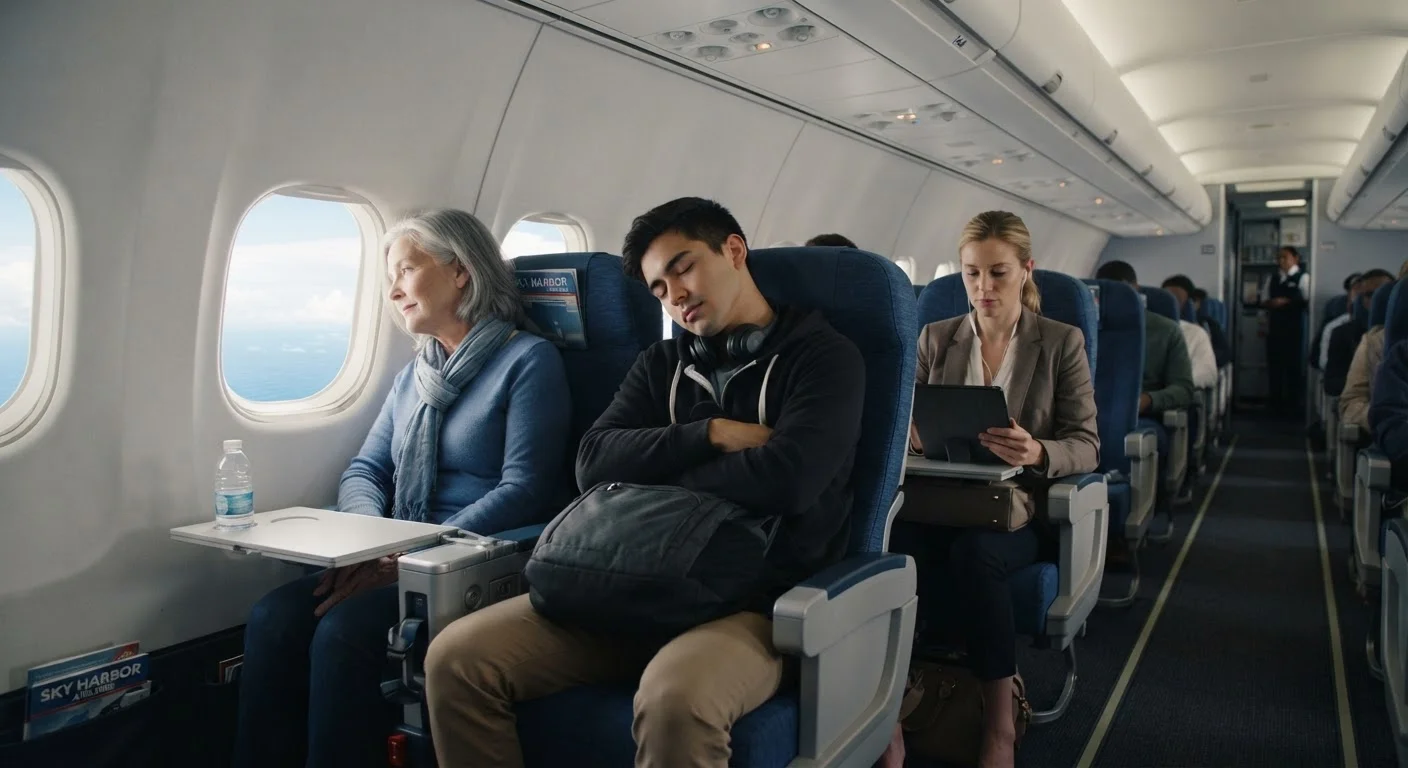
The window seat is the most requested position, and for good reason. You get a wall to lean against, full control over the window shade, and a view that can genuinely calm a nervous flyer. Seeing the horizon, cloud formations, or city lights below can help orient you during turbulence - a concrete reminder that the aircraft is flying normally.
The drawback is access. Every time you need the restroom or want to stretch your legs, you must disturb one or two seatmates. On long flights, this creates real social friction. If you're prone to needing bathroom breaks or have restless-leg tendencies, being pinned against the fuselage for three hours is genuinely uncomfortable. Window seats also tend to have slightly curved walls that intrude on shoulder space, particularly near the front of some narrowbody aircraft.
Use the Window Shade Strategically
If you're in a window seat, you control the shade for the whole row - and your neighbors may have opinions about glare or light during sleep periods. On long overnight flights, closing the shade after takeoff is generally considered courteous. During daytime flights, leaving it partly open is usually fine unless someone directly beside you asks otherwise.
Best for: Light sleepers who rarely need to get up, anxious flyers who benefit from visual anchoring, anyone traveling solo who doesn't want to interact much.
Middle Seat: The Compromise Nobody Chose
The middle seat is the default nobody wants - but it's worth understanding rather than dreading. You're flanked on both sides, which means less privacy, no wall to lean on, and an awkward negotiation over armrests at the start of the flight. By longstanding passenger convention, the middle-seat occupant is entitled to both center armrests as a small compensation for their position - though not everyone follows this unspoken rule. See our guide on onboard etiquette most passengers quietly appreciate for how these informal norms play out in practice.
If you're traveling with a companion and the only available seats together include a middle, one of you will likely take it. In that context, it's a reasonable trade for staying together. Middle seats on short flights are far less punishing than on transcontinental or international routes.
Best for: Travelers flying with a partner or friend seated in the same row, or anyone on a very short hop where position barely matters.
Aisle Seat: Freedom With Interruptions
Aisle seats are the practical choice for many experienced travelers. You can stand whenever you like, access overhead bins without waking anyone, and extend one leg into the aisle during quiet periods. For flyers with anxiety, the sense of not being trapped can make a genuine difference to comfort.
The trade-offs are real, though. You'll be the person other passengers need to pass - window and middle seat travelers will tap your shoulder or climb over you multiple times per flight. Your seat also sits in the path of the drink cart, and flight attendants moving through the cabin may brush your elbow or shoulder repeatedly. Aisle seats near galleys and lavatories amplify both noise and foot traffic significantly.
~60%
Passengers who prefer window or aisle
Surveys of air travelers consistently show the middle seat is the least preferred position across all cabin classes.
3-4 times
Average aisle interruptions per long-haul flight
Aisle passengers on flights over four hours are typically disturbed multiple times as seatmates and crew move through the cabin.
Best for: Frequent movers, taller passengers who need aisle legroom, anyone with mild flight anxiety who benefits from not feeling enclosed, and business travelers who prioritize efficiency over scenery.
Making the Final Call
Three questions will usually resolve the decision: How often do you expect to get up? Do you sleep easily on planes? And how long is the flight?
- Flight under 90 minutes: Choose based on availability. The difference is minimal and likely not worth a seat-selection fee.
- Flight 2-5 hours: Comfort begins to matter. Consider how often you move and whether you plan to sleep.
- Flight over 5 hours: Your seat position will significantly affect how you feel on arrival. Prioritize accordingly.
If you're undecided and flying economy, the aisle or window will serve most travelers better than the middle. Just know that whichever seat you land in, a little awareness of how shared cabin space works - from armrests to reclines - goes a long way toward a smoother flight for everyone.