Why This Matters More Than You'd Think
Here's a scene that plays out on nearly every flight: someone in the middle seat realizes their headphones, book, or allergy medication is buried inside their bag - now tucked in an overhead bin three rows back. What follows is an awkward, time-consuming scramble that frustrates everyone nearby.
The fix is simple: before you stow your carry-on, pull out everything you'll want during the flight. This one habit - taking just five minutes at the gate or during boarding - is one of the most practical things a first-time flyer can do to feel comfortable and in control once the plane door closes.
If you're still deciding what to bring onboard at all, see our guide on carry-on vs. checked bag trade-offs before you pack. And make sure your bag meets airline size requirements - baggage rules vary significantly by carrier.
Never Put These in the Overhead Bin
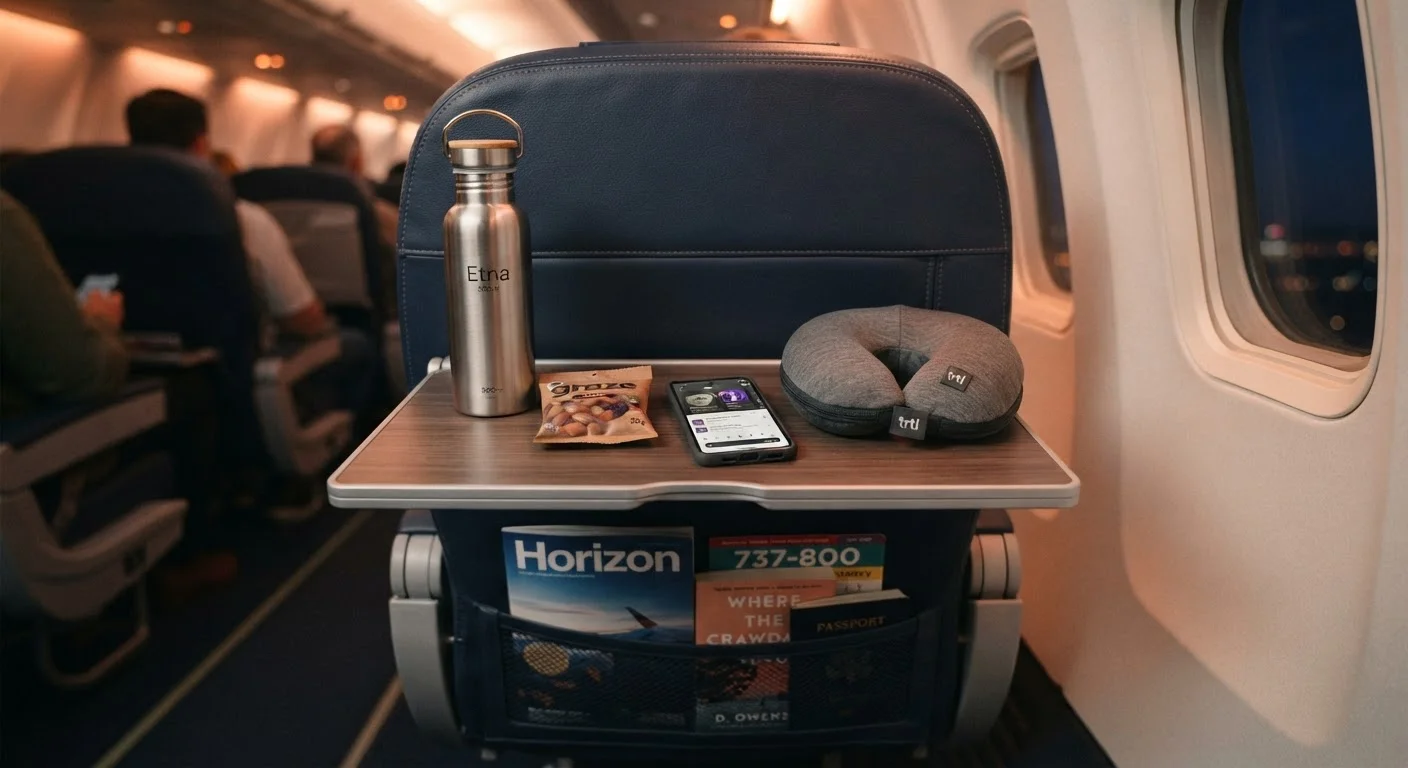
Valuables, travel documents, prescription medication, and fragile electronics should always stay under the seat in front of you - never in the overhead bin. Overhead bins can be reassigned mid-flight if space runs out, and accessing them is not always permitted when the seat belt sign is on. Keeping critical items at your feet means they're always within reach and under your direct control.
What to Pull Out Before You Stow Your Bag
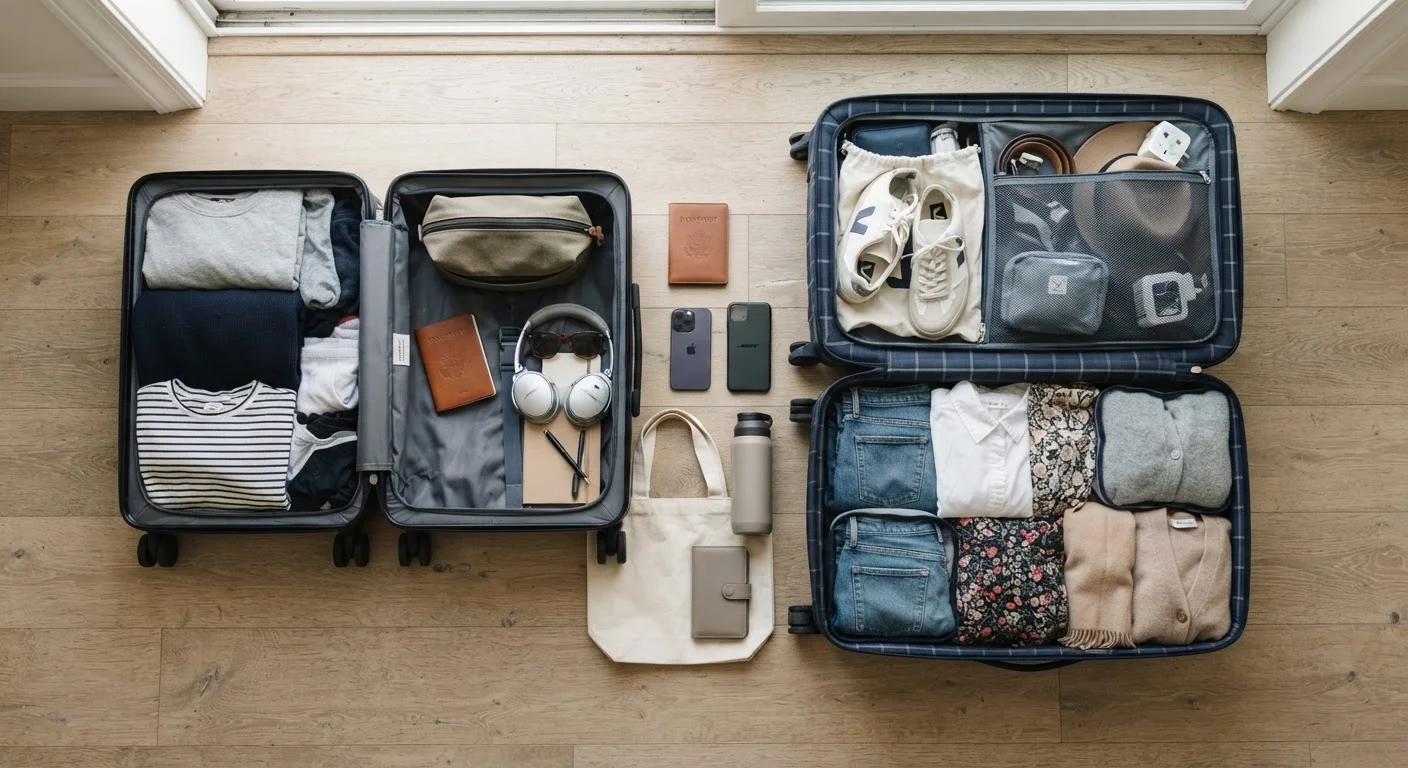
Use the checklist below as a quick audit during boarding. Group everything into a small tote, packing cube, or zip pouch that fits under the seat in front of you - that way it's accessible the whole flight without standing up once.
Documents & Essentials
Health & Comfort
Entertainment & Focus
Overnight & Long-Haul Extras
Not sure what belongs in your carry-on versus checked luggage in the first place? Our pre-flight checklist for first-time flyers walks through the full packing process from home to gate.
Tools That Make This Easier
You don't need to buy anything special to stay organized on a flight - but a few inexpensive items make a real difference. Here's what experienced travelers typically keep on hand.
Small zip pouch or packing cube
Corrals all your under-seat essentials into one grabbable unit so nothing gets scattered across the floor.
Noise-canceling earbuds or headphones
Reduces engine noise and cabin chatter, making long flights significantly more comfortable and restful.
Portable battery pack (power bank)
Keeps your phone and other devices charged throughout a long flight, especially when seat power outlets are unavailable.
Travel neck pillow
Supports your head and neck during sleep or rest without relying on the seat's limited built-in headrest.
Reusable water bottle
Allows you to stay hydrated throughout the flight without waiting for the beverage cart.
For broader airport navigation tips beyond just your bag, explore the Airport Know-How hub - it covers everything from security lines to gate changes for first-time flyers.
This article is for general informational purposes only. Airline policies on carry-on size, personal items, and in-cabin rules vary by carrier and route. Always verify current requirements directly with your airline before travel.