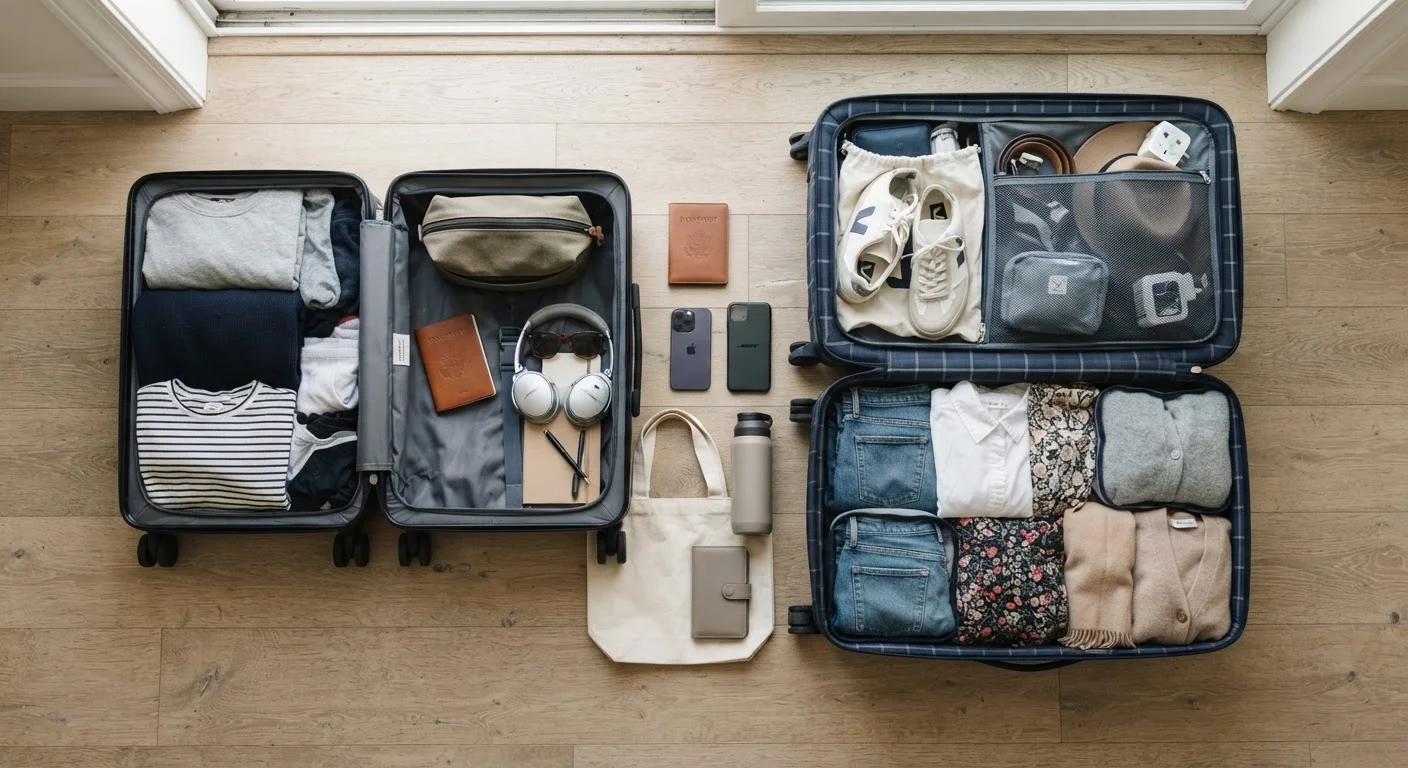
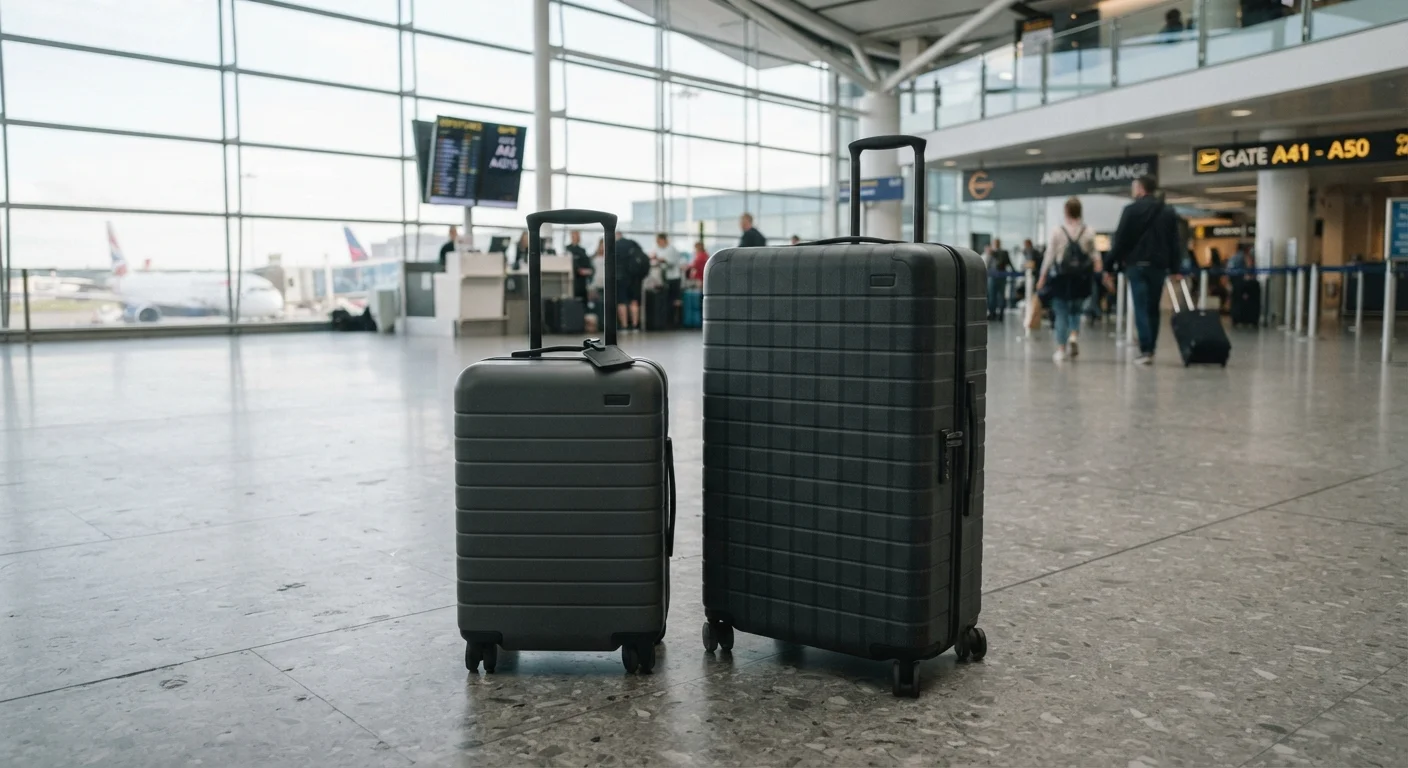
What Each Option Actually Involves
A carry-on bag travels with you into the aircraft cabin and fits in the overhead bin or under the seat in front of you. Most major U.S. airlines allow one carry-on and one personal item (such as a purse or laptop bag) at no additional cost for standard economy fares - though this varies by carrier and fare class. Size limits typically hover around 22 x 14 x 9 inches, but always confirm with your specific airline before you pack. See our guide to baggage rules for a breakdown of size limits, weight allowances, and fee structures across airlines.
A checked bag is handed over at the check-in counter or a baggage drop kiosk before your flight. It's tagged, loaded into the cargo hold, and retrieved at baggage claim after landing. Most domestic airlines charge a fee per checked bag - typically $30-$35 for the first bag on major carriers, though this changes frequently. If you've ever wondered what happens between the check-in counter and the carousel, our article on where your checked bag goes walks you through the full journey.
| Criterion | Carry-On Bag | Checked Bag |
|---|---|---|
| Typical cost (major U.S. carriers) | Usually free with standard fare | ~$30-$35 per bag, each way |
| Size / capacity | Max ~22 x 14 x 9 inches | Much larger (typically up to 62 linear inches) |
| Liquid restrictions at security | Yes - 3-1-1 rule applies | No restrictions |
| Baggage claim wait | None | Typically 15-30+ minutes |
| Risk of loss or delay | Very low - stays with you | Small but real risk of misrouting |
| Gate check possibility | Yes, on full flights | Not applicable |
| Best trip length | 1-3 nights | 4+ nights |
The Real Trade-Offs: Speed, Cost, and Convenience
The carry-on's biggest advantage is time. Skip the check-in line, skip the baggage claim carousel, and walk straight out of the airport. On a short trip, this can save 30-45 minutes each way - a meaningful chunk of your travel day.
The checked bag's biggest advantage is space and freedom. You're not wrestling with security's 3-1-1 liquids rule (which limits containers to 3.4 oz / 100 ml each, all fitting in one quart-sized bag). You can pack full-size toiletries, a hair dryer, or even a small gift without a second thought. If you're traveling with medications that require special handling, review the airport rules for medications in hand luggage before deciding what goes where.
~2.8M
Bags mishandled by U.S. airlines annually
According to the U.S. Department of Transportation's Air Travel Consumer Reports, major airlines collectively mishandled roughly 2.8 million bags in a recent reporting year - a useful reminder that valuables belong in your carry-on.
$7B+
Annual airline baggage fee revenue (U.S.)
The U.S. Bureau of Transportation Statistics has tracked baggage fee revenue exceeding $7 billion per year across domestic carriers, underscoring why understanding fee structures before you book matters.
One underappreciated risk of carry-ons: if your flight is full, gate agents may ask passengers to check their bags at the gate - sometimes at no charge, sometimes not. Planning on a carry-on doesn't guarantee your bag stays with you in the cabin.
Also consider your connection time. A tight layover is far less stressful when you don't need to check a bag at a separate counter or worry about whether your luggage made the same flight you did. Heavy luggage also affects how you get to and from the airport - our article on choosing the right airport transfer when traveling with lots of luggage covers how bag volume should shape that decision.
How to Decide: A Practical Framework
Ask yourself three questions before you commit to either option:
- How long is the trip? One to three nights almost always fits in a carry-on. A week or more usually calls for a checked bag unless you're prepared to do laundry mid-trip.
- What are you bringing? Bulky items, gifts, full-size toiletries, sports equipment, or fragile valuables are easier to manage in a checked bag. Electronics, documents, and daily essentials should travel with you in the cabin regardless of which option you choose - see our checklist of what to keep within reach during the flight for guidance.
- What does your airline actually charge? Budget carriers can flip the math entirely. Some charge more for an overhead-bin carry-on than a checked bag. Always look up the full fee schedule on your airline's website before assuming carry-on means free.
Budget Airlines Have Different Rules
Ultra-low-cost carriers such as certain budget airlines in the U.S. often charge separately for carry-on bags that use the overhead bin - not just for checked bags. In some cases, checking a bag can cost less than bringing a full-size carry-on aboard. Always review your specific airline's baggage policy page before assuming what's included in your fare.
If you're still weighing how much to pack overall, our article on overpacking vs. traveling light explores how to strike a balance between preparedness and portability.