Why Luggage Volume Matters More Than You Think
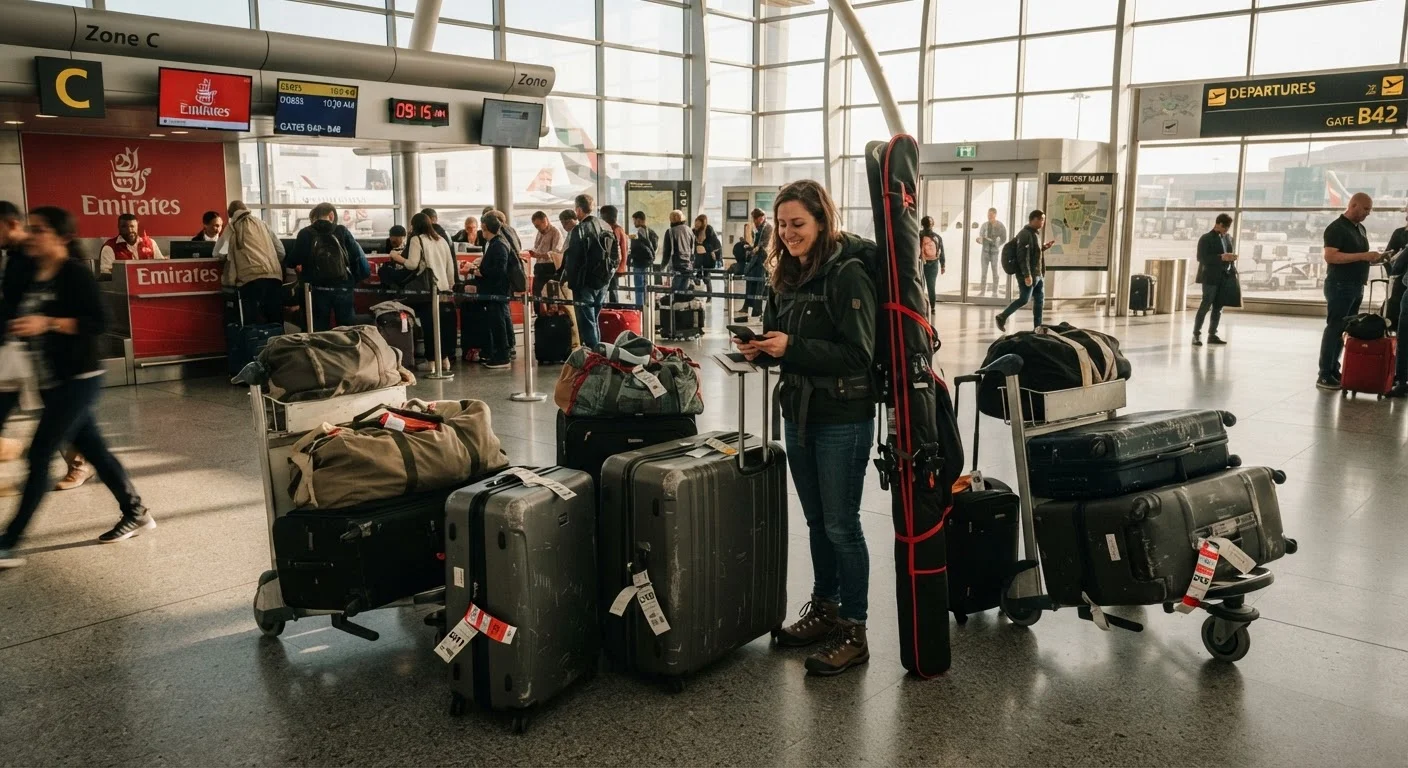
Most first-time travelers focus on price and travel time when picking an airport transfer - but luggage volume is just as important and far more often overlooked. Arriving at a rideshare pickup with two oversized suitcases, a car seat, and a golf bag can turn into a stressful scramble that costs both time and money.
Every transfer type - taxi, rideshare, shared shuttle, private car, or public transit - has its own luggage rules. Some set hard limits on the number of bags, others charge extra per piece, and a few simply won't accept oversized items at all. See our full breakdown of transfer types for a general overview of how each method works before diving into the luggage-specific trade-offs below.
The golden rule: confirm the luggage policy before you book, not after you land.
How Each Transfer Type Handles Heavy or Bulky Bags
Here's a practical look at how the most common airport transfer options stack up when luggage volume is a deciding factor.
| Public Transit | Rideshare App | Shared Shuttle | Standard Taxi | Private Car/Van | |
|---|---|---|---|---|---|
| Typical bag limit | No formal limit, but very tight | 1-2 bags (driver discretion) | 1-2 bags; oversized extra fee | 2-3 bags standard | Confirmed at booking |
| Oversized items accepted | Rarely practical | Inconsistent; often refused | Usually not | Depends on trunk size | Yes, with advance notice |
| Extra luggage cost | None, but difficult physically | May prompt XL vehicle upgrade | Often charged per extra bag | Some cities regulate fees | Negotiated upfront |
| Advance booking required | No | No | Recommended | No | Yes - essential |
| Best luggage load | Carry-on only | 1 standard suitcase | 1-2 standard bags | 2-3 standard bags | Any volume or specialty gear |
| Group/family suitability | Low | Low-medium | Medium | Medium | High |
Public transit (metro, bus, commuter rail) rarely has a formal bag limit, but tight cars, stairs, turnstiles, and lack of storage make it genuinely difficult with more than one large rolling bag. It's a reasonable option for solo travelers with a carry-on, but a poor one for families hauling gear.
For a broader look at car-free options beyond the ones listed here, the guide to ground transfer options without a car covers ferries, buses, and metro lines in more depth.
Rideshare Apps Can Cancel on Heavy Luggage
Standard rideshare vehicles are compact, and drivers are not obligated to accept luggage that doesn't fit safely in their vehicle. If you show up to a rideshare pickup with more bags than will fit, the driver may decline the ride - and you may still be charged a cancellation fee. If you need a rideshare with extra space, select the XL or larger-vehicle option explicitly when booking, and still confirm your bag count in the app's notes if the option exists.
Specialty Items: Sports Equipment, Strollers, and More
Standard bag counts don't tell the whole story when you're traveling with specialty equipment. Ski bags, surfboard cases, bicycles, golf bags, and large strollers all present unique challenges - and not all transfer services will accommodate them, even if they theoretically have the trunk space.
- Ski and snowboard bags: Typically 6-7 feet long, these require SUVs, vans, or roof racks. Confirm dimensions when booking.
- Golf bags: Usually fit in a standard car trunk if the bag is in a soft case, but hard cases may require a larger vehicle.
- Bicycles: Almost always require a dedicated van transfer or a service with a trailer - never assume a standard car will work.
- Strollers and car seats: Foldable strollers usually fit in a standard trunk alongside luggage, but bulky travel systems may need van-class vehicles.
When booking, describe your items specifically - not just "large bag" but the exact dimensions or item type. This protects you from showing up to a vehicle that can't fit your gear.
Always Describe Your Gear in Detail When Booking
When pre-booking a private or shuttle transfer, don't just select a vehicle class - describe your items in the notes field. List exact bag counts, any oversized cases, and specialty equipment by name. A reputable provider will confirm whether they can accommodate your load or offer a suitable alternative, giving you written confirmation to rely on at pickup.
Hidden Luggage Fees: What to Watch For
Even when a transfer service accepts your bags, extra fees can catch you off guard. Some shared shuttle services charge per bag beyond the first. Certain private hire apps add a surcharge for XL vehicle upgrades triggered by luggage needs. Airport taxis in some cities have regulated flat fees that include a standard bag allowance - but not necessarily oversized items.
Before booking any transfer, ask or check the provider's policy on: extra bag fees, oversized item surcharges, and whether a larger vehicle costs more. Managing transfer costs is part of broader travel budgeting - the travel money planning hub offers useful grounding if you're tracking your overall trip budget.
Also think about what you're packing in the first place. If you're on the fence about checking a bag versus going carry-on only, the carry-on vs. checked bag guide can help you decide before you're committed to a luggage load that limits your transfer choices.
For a comprehensive walkthrough of the entire transfer booking process - from confirming pickup spots to tipping norms - the complete airport transfer guide for new travelers is a practical next read.