The Moment You Hand Over Your Bag
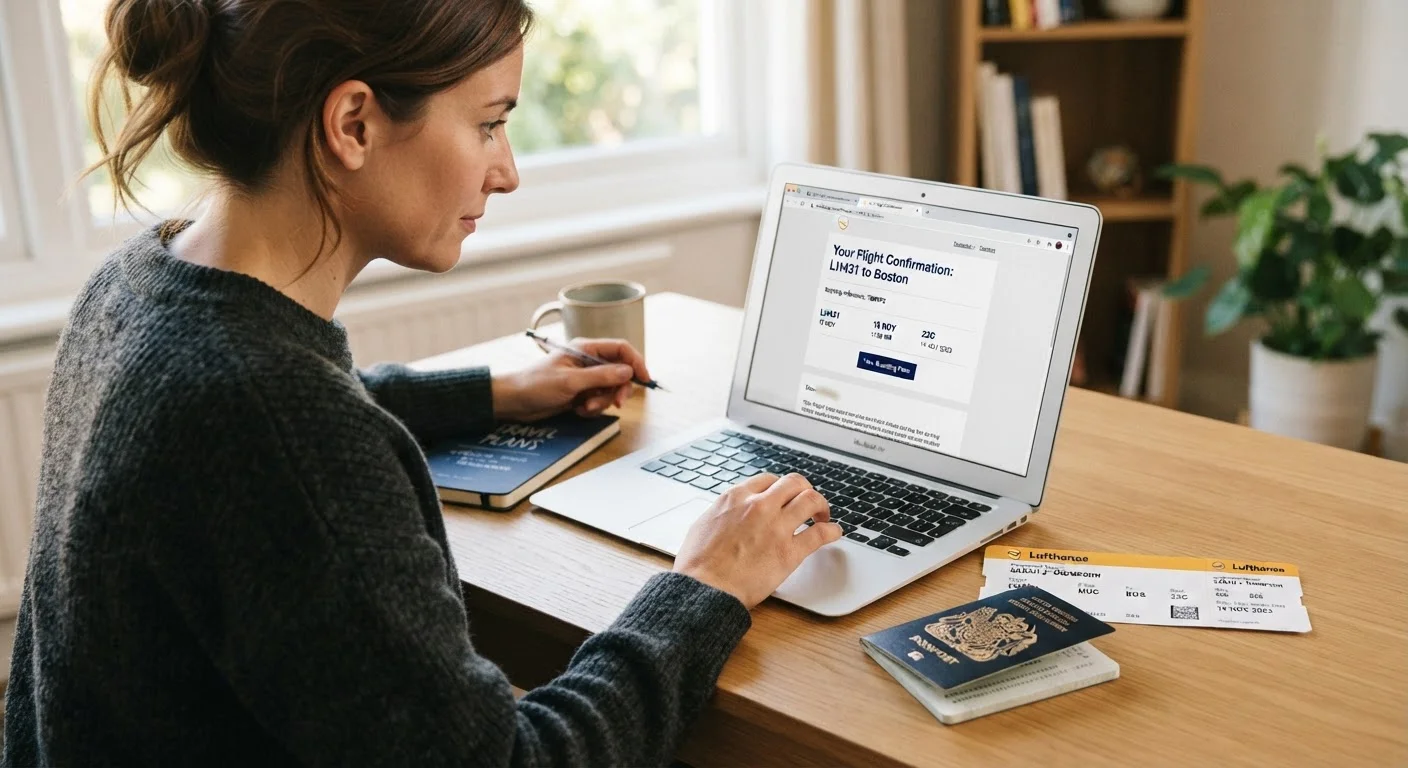
When you place your bag on the scale at the check-in counter, the agent prints a bag tag - a sticky label with a barcode unique to your itinerary. This tag is wrapped around your bag's handle and is the single most important thing that keeps your luggage connected to you for the rest of the journey.
Once the agent sends your bag down the intake conveyor, your involvement ends - but the bag's journey is just beginning. For a broader picture of everything that happens from this moment through to your gate, see our step-by-step airport walkthrough.
Check In as Early as Possible
The earlier your bag enters the system, the more time it has to be screened, sorted, and loaded before your departure. Most airlines recommend arriving at least 90 minutes before a domestic flight and two or more hours before an international one. Cutting it close at the counter is one of the most common reasons bags miss flights.
Security Screening You Never See
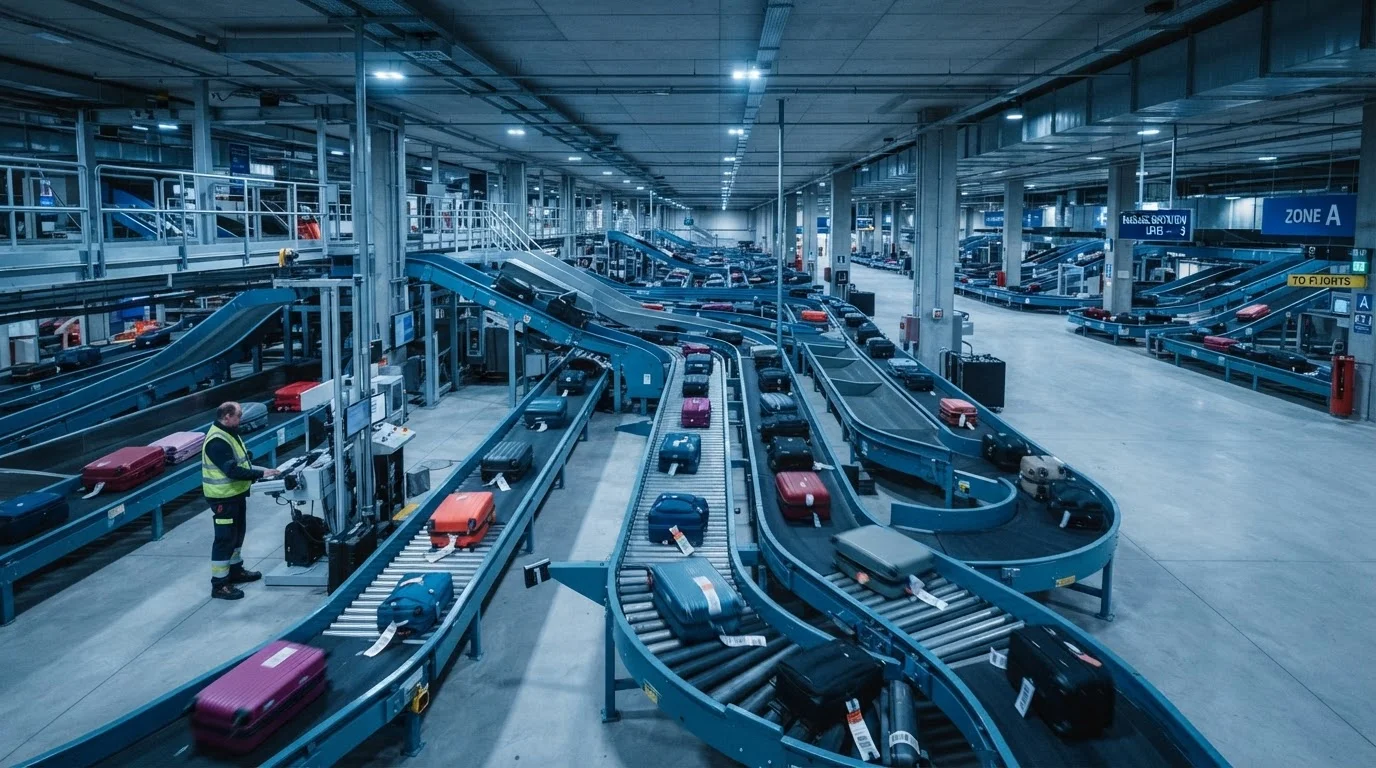
Behind the check-in area, your bag moves onto a conveyor that feeds into the airport's Baggage Handling System (BHS). The first stop is security screening - a legal requirement for all checked luggage on U.S. flights under TSA regulations.
Most bags pass through large CT-style imaging machines that create a three-dimensional picture of the contents. Explosive detection software analyzes the image automatically. If the machine flags something unusual, the bag is diverted to a secondary screening area where a TSA officer may open and inspect it by hand. If this happens, they are required to leave a paper notice inside your bag explaining that it was searched.
TSA Notice of Inspection
If TSA opens your bag for a physical search, they are required to place a paper notice inside before resealing it. Finding this notice does not mean anything is wrong - it is a routine part of the screening process. TSA does not remove items without cause, and if something is confiscated, the notice will explain why.
This entire process is designed to happen quickly enough that your bag can still make your flight - which is one reason airlines ask you to check in well before departure.
Sorting and Routing to Your Gate
After clearing security, the barcode on your bag tag is read by automated scanners at multiple points along the belt network. Software matches the code to your flight and diverts the bag toward the correct loading area - sometimes routing it through miles of underground conveyor infrastructure in large hub airports.
At smaller airports, this routing may involve more manual handling by baggage staff. At major hubs, bags can travel on destination-coded vehicle (DCV) carts that move autonomously along tracks to the right gate area.
~1.8B
Checked bags handled annually at U.S. airports
The TSA screens all checked baggage across hundreds of U.S. airports each year, representing one of the largest automated logistics operations in the country.
~6 per 1,000
Bags mishandled per thousand passengers
According to aviation industry reports, mishandling rates - including delayed, damaged, or lost bags - have generally remained below 10 per 1,000 passengers in recent years on U.S. carriers.
Loading Into the Aircraft
Once your bag reaches the gate's staging area, baggage handlers load it into the aircraft's cargo hold. On most commercial jets, bags are not thrown in loose - they are packed into Unit Load Devices (ULDs), which are rigid aluminum containers shaped to fit the curved belly of the aircraft. On smaller regional planes, bags are loaded individually by hand.
The cargo hold is pressurized and temperature-regulated on nearly all passenger aircraft, so standard luggage and most medications are safe. If you're unsure whether to check a particular item or carry it on, our guide on choosing between a carry-on and checked bag covers the key trade-offs.
Arrival and Baggage Claim
After landing, the process reverses. Handlers unload containers from the hold and transport bags to the baggage claim carousel assigned to your flight - displayed on screens throughout the arrivals hall. Domestic bags typically begin appearing within 15-25 minutes of the plane reaching the gate.
If your bag doesn't appear, don't leave the airport. Go directly to the airline's baggage service desk, show your claim ticket (the small sticker the agent attached to your boarding pass at check-in), and file a report. The airline can track exactly where your bag is in the system. Most misdirected bags are delivered within 24 hours.
Understanding what your airline's policies actually cover - including weight limits and fees - before your trip can also help you avoid surprises. Our article on what baggage rules actually mean for your trip breaks this down clearly.