Why This Decision Matters More Than It Seems
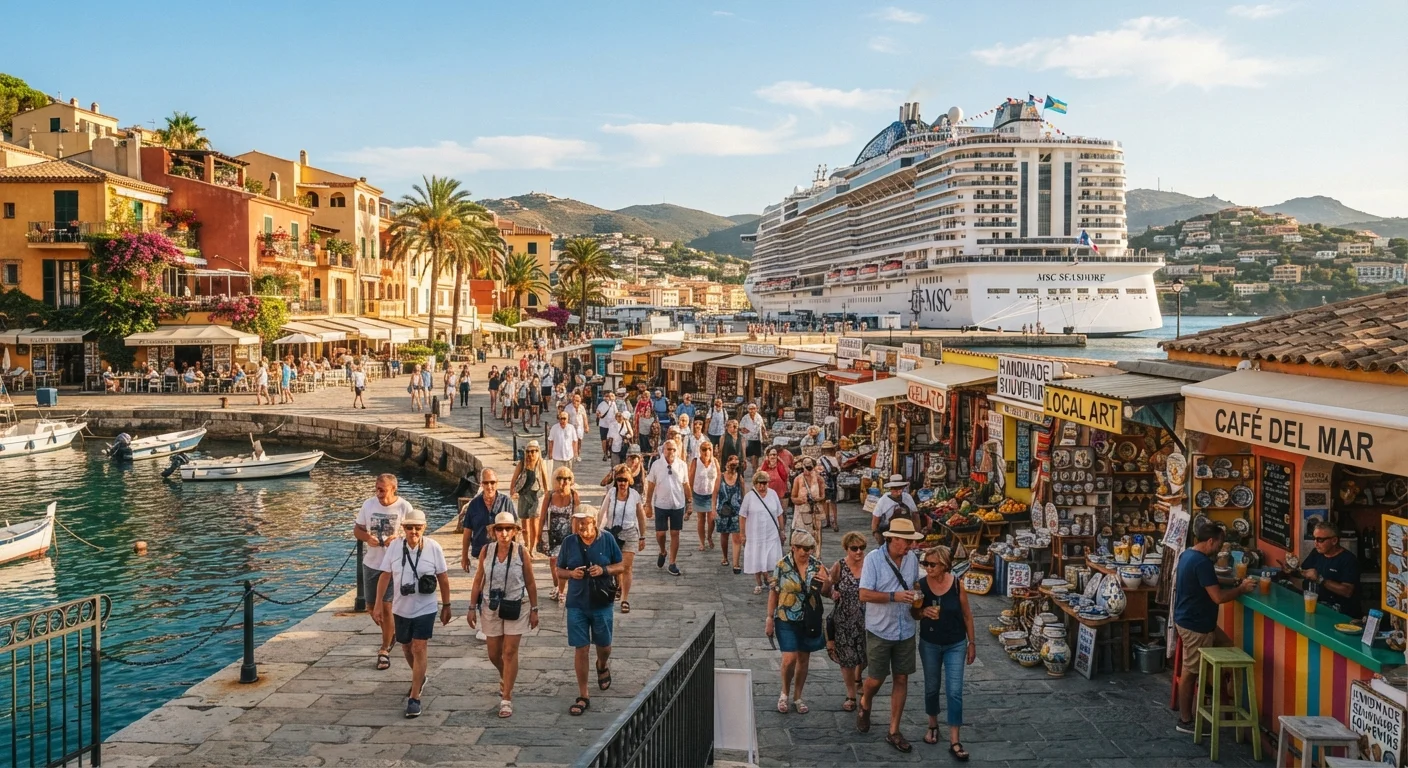
A port day represents a finite window - often just six to nine hours ashore. How you spend that time, and how you get there, shapes your entire memory of a destination. The choice between booking through your cruise line and arranging something independently isn't just about cost; it touches on safety, logistics, and how much uncertainty you're comfortable managing.
For first-time cruisers, this decision can feel high-stakes. Getting it wrong can mean missing the ship, overpaying for a mediocre tour, or spending half a port day lost trying to find a local taxi rank. Understanding the real trade-offs - not just the surface ones - makes the choice much clearer. See our detailed breakdown of shore excursion options for a broader look at what each approach involves.
The Case for Booking Through the Ship
Ship-organized excursions exist precisely because port days are logistically complicated. The cruise line has vetted the operators, negotiated access, and - crucially - built in the one guarantee that nothing else can offer: if a ship-booked tour runs late, the vessel waits.
Ship waits if your tour runs late
The 'sail guarantee' is the clearest advantage of booking through the cruise line - if an operator-caused delay keeps your group from reaching the pier on time, the ship holds. No independent arrangement provides this assurance.
Vetted operators reduce safety uncertainty
Cruise lines screen the operators they partner with and bear reputational responsibility for them. This doesn't eliminate all risk, but it reduces the chance of encountering unscrupulous or unsafe local operators.
Convenient for complex or remote destinations
In ports with limited English signage, unreliable local transport, or significant distances between ship and attractions, guided tours remove the burden of figuring out logistics in a short time window.
Easy to book and manage in one place
Shore excursions booked through the cruise line appear in your onboard account, require no separate payment processing abroad, and are typically cancellable with advance notice.
This "sail guarantee" is not symbolic. Ships run on strict schedules and do leave passengers behind who miss the departure time through independent misadventure. Shore excursion bookings through the cruise line effectively eliminate that risk for most circumstances.
Ship tours are also well-suited to ports where language barriers, complex transportation, or limited infrastructure make independent navigation genuinely difficult. In some destinations, excursion guides provide contextual knowledge that no self-guided map can replicate. If your itinerary includes multiple ports in quick succession, the reduced mental overhead of a pre-arranged tour can preserve energy for the trip overall. To understand how port-intensive itineraries are structured, see how cruise itineraries are designed.
The Case for Going Independent
Independent port exploration is how many repeat cruisers prefer to spend their time ashore. Once the ship-departure anxiety fades, the advantages of self-directed port days become difficult to ignore.
Significantly higher cost than independent options
Ship-organized excursions include a markup over what local operators charge directly. In popular destinations, comparable tours can be found independently for considerably less, sometimes half the price or lower.
Fixed group schedules limit personal flexibility
Tour groups operate to a timetable that works for everyone, which means less time at places you love and more time at stops that don't interest you. Adjustments are generally not possible once the tour is underway.
Quality can be inconsistent across destinations
Cruise line excursions are not uniformly excellent. Some ports yield highly positive ship tour experiences; others receive frequent criticism for rushed pacing or low-quality guides. Reviews from past passengers on that itinerary are a useful signal.
Popular excursions sell out well before sailing
High-demand tours on popular itineraries - particularly in Alaska, the Mediterranean, or the Caribbean - can fill weeks before departure. Late bookers may find their preferred options unavailable.
The most consistent advantage is cost. Ship-organized excursions carry a premium for the convenience, vetting, and guarantee they provide. Independent travelers who research their port in advance can often arrange comparable or richer experiences at meaningfully lower prices - particularly in well-touristed destinations where local operators are plentiful and English-language services are common.
Flexibility is the other major draw. An independent port day lets you linger at a site that moves you, skip one that doesn't, eat where locals eat, and return to the ship at your own pace. That kind of spontaneity is fundamentally unavailable on a group tour operating to a fixed schedule.
The difference between shore days and sea days is worth understanding before you plan - port days demand active decision-making in a way sea days simply don't.
Key Variables That Should Drive Your Decision
No single approach works for every port. Several practical factors should steer your thinking for each destination individually.
Always Know Your All-Aboard Time
Regardless of how you spend your port day, confirm the all-aboard time posted on your daily schedule - this is typically 30 minutes before the ship's scheduled departure. Independent travelers are solely responsible for returning on time. If you miss the ship, you are responsible for arranging and funding your own transportation to the next port of call.
- Port infrastructure: Well-developed tourist ports (with taxis, clear signage, and established local tour operators) favor independent exploration. Remote or tender ports - where passengers are ferried ashore by smaller boats - often involve more logistical complexity.
- Distance to highlights: If a destination's main attraction is 90 minutes from the pier, an independent round-trip eats into your time significantly. Ship tours often use coaches that consolidate that travel efficiently.
- Group size and composition: Traveling with children, older adults, or passengers with mobility considerations may make the structured support of a ship excursion more practical.
- How much time is in port: A five-hour port call leaves little margin for independent planning hiccups. An eight-hour stop offers much more breathing room.
Reviewing your full itinerary before sailing - rather than deciding port by port once aboard - gives you the clearest picture. The step-by-step cruise planning walkthrough covers how to approach these decisions during the pre-sailing phase.
~30-50%
Typical cost premium for ship excursions vs. local operators
Travel industry observers and cruising community research consistently note that cruise line excursion pricing runs materially higher than comparable independent arrangements in most well-visited ports.
6-9 hrs
Typical time in port on most cruise itineraries
Port call durations vary by itinerary and destination, but most standard cruise schedules allow roughly six to nine hours ashore - a window that makes pre-planning essential regardless of which approach you choose.