What a Cruise Itinerary Actually Includes
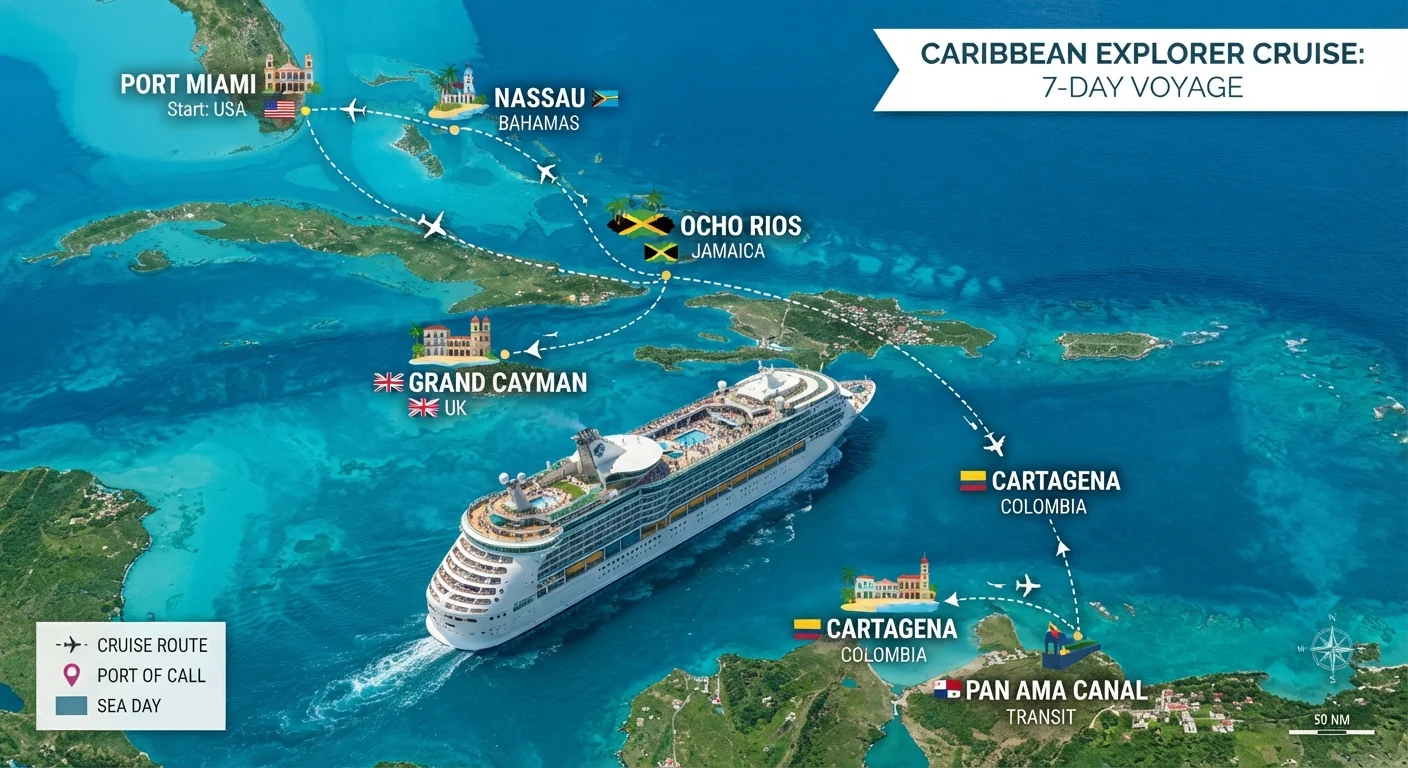
A cruise itinerary is the day-by-day schedule of your voyage - a sequence of destinations, sailing times, and onboard days that defines the shape of your trip from embarkation to disembarkation. Understanding its structure helps you compare sailings on more than price alone.
Every itinerary is built from three core components:
- Port days - days when the ship docks at a pier or anchors offshore near a destination, giving passengers time ashore.
- Sea days (also called days at sea) - full days spent sailing between destinations, with no port call scheduled.
- Embarkation and disembarkation days - the first and last days of the voyage, when you board or leave the ship at the home port.
Most cruise listings lay these out in a simple day-by-day format. Learning to read that schedule - not just the port names, but the hours and types of each day - is one of the most practical skills a first-time cruiser can develop. The Plan a Cruise hub offers a full walkthrough of how to approach this process step by step.
Port Days vs. Sea Days: The Core Trade-Off
The ratio of port days to sea days is the biggest single factor shaping the pace of a cruise. Port-heavy itineraries move quickly: you're off the ship most mornings, exploring a new destination, back onboard by evening, then doing it again the following day. Sea days, by contrast, are spent entirely aboard - no schedule unless you create one, and no rush to be anywhere.
Sea Days Are Worth Planning For
Many first-time cruisers underestimate how enjoyable a full day at sea can be. Ships typically publish a daily activity program covering enrichment talks, fitness classes, cooking demonstrations, live entertainment, and more. Reviewing it the evening before - and choosing just one or two things to anchor your day - makes sea days feel purposeful rather than directionless.
What surprises many first-time cruisers is that sea days also tend to lower total spending. Shore excursions, local meals, and port shopping add up fast; a day at sea carries none of those variable costs. For a detailed look at how this ratio affects your pace, rest, and budget, see our guide to balancing port and sea days.
The Role of the Turnaround Port
The turnaround port - also called the home port or embarkation port - is where you board on day one and disembark on the final morning. Its location matters practically: it determines your ground travel arrangements, whether you need to arrive the night before, and whether driving and parking is a realistic option for your household.
On a round-trip (loop) itinerary, the ship returns to the same port it departed from. On a one-way sailing, you start in one city and finish in another, which means coordinating flights or ground transport at both ends. The breakdown of loop, repositioning, and river itineraries explains how each type works and what each means for your broader travel logistics.
How Itinerary Design Affects What You Spend
Itinerary structure shapes your budget in ways the base fare doesn't make obvious. Port-heavy sailings create more opportunities to spend on excursions, local transport, dining, and souvenirs - costs that accumulate quickly across a full week. How you approach those port days financially also matters; our overview of cruise shore excursion options covers the key trade-offs between booking through your ship and going independently.
Cruise length adds another layer. Longer voyages distribute the fixed cabin cost across more nights, but also extend the window for discretionary spending at sea and ashore. Our article on how cruise duration affects cost and experience explores this further, while our guide to cruise pricing models explains how the cruise line's fare structure interacts with itinerary design.
What to Check When Reading an Itinerary
Port names alone don't tell the full story. A ship docked from 7 am to noon gives you very different time ashore than one visiting the same destination from 8 am to 8 pm - but both appear identically on a simple port list. Always check the scheduled arrival and departure times for each stop before booking.
Watch for Tender Ports in the Schedule
At tender ports, the ship anchors offshore rather than docking at a pier, and passengers reach land via small shuttle boats called tenders. This process takes longer than a standard pier arrival and can be affected by sea conditions. Check your itinerary for tender ports in advance - especially if mobility or limited time ashore is a consideration for your group.
Also consider the sequence and pacing across the full itinerary. Back-to-back early-arrival port days with no sea-day recovery in between can be tiring, particularly while adjusting to ship life and potentially a new time zone. A well-structured itinerary spaces intensive port days with rest time in between. For practical ideas on using those onboard days well, see our guide to making the most of sea days.