
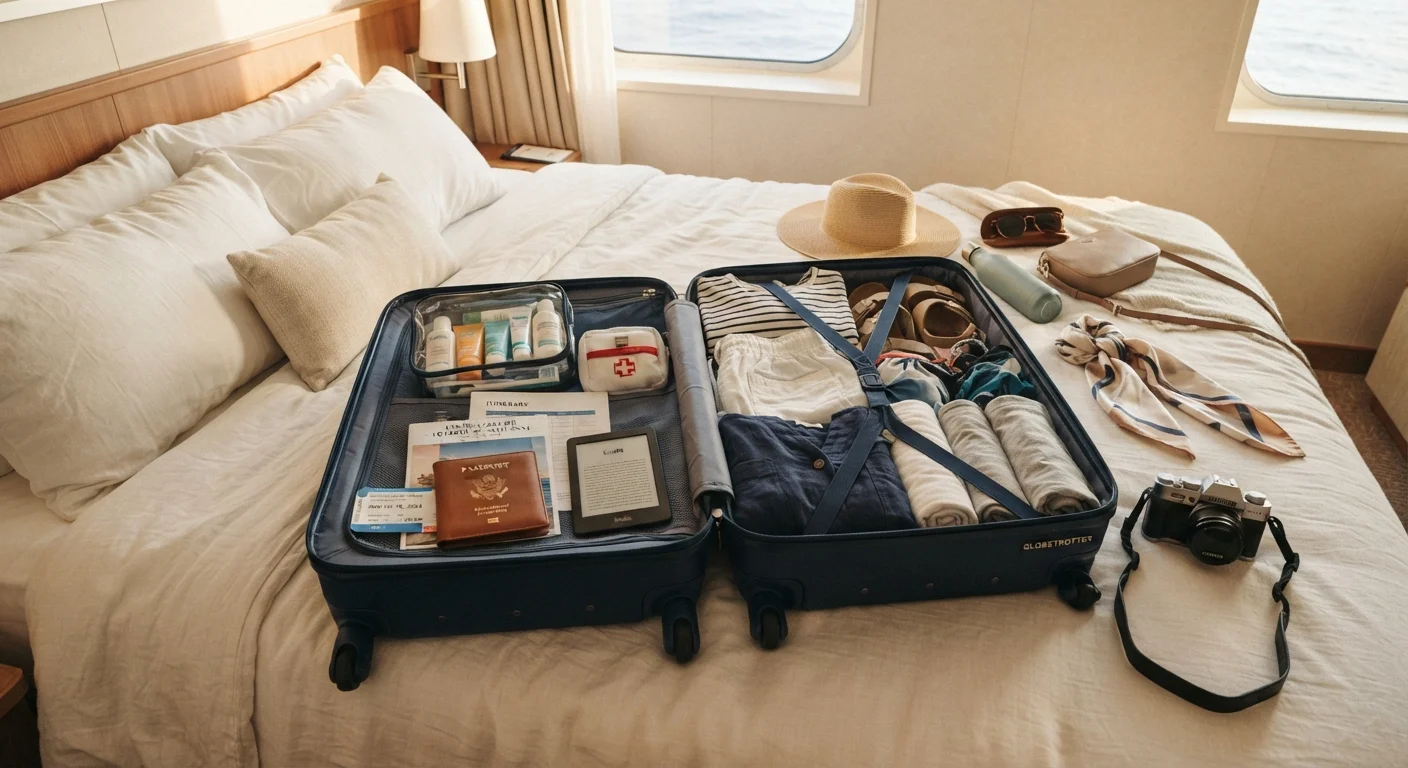
Why Cruise Packing Is Different
Packing for a cruise isn't the same as packing for a hotel trip. Your cabin will likely be smaller than a standard hotel room, storage space is limited, and once the ship departs, there's no running to a drugstore for forgotten items - or if there is, you'll pay a significant premium for the convenience.
Unlike a flight-only trip, a cruise also spans multiple environments in a single voyage: casual poolside mornings, formal dinner nights, and active port excursions may all appear on your itinerary within the same week. That variety demands thoughtful, versatile packing rather than just throwing in whatever fits.
For a broader look at pre-departure preparation, the Pre-Cruise Checklist covers what to confirm with your cruise line before you ever set foot on the gangway. And if you're also flying to your embarkation port, the pre-flight checklist is worth running through before you leave home.
Travel Documents
Clothing and Footwear
Toiletries and Health Items
Cabin Must-Haves
What to Leave Behind
Items to Leave Behind - and Why
Just as important as what you bring is what you don't. Cruise lines maintain strict prohibited items lists, and security at embarkation ports screens luggage thoroughly.
Common Prohibited Items on Cruise Ships
Most cruise lines prohibit steam irons, candles, incense, and personal heating devices due to fire risk in cabins. Drones are also widely banned without prior written approval, and some lines restrict outside alcohol beyond a very limited allowance. Always review your specific cruise line's prohibited items list before packing - policies vary between operators.
Beyond prohibited items, space discipline matters. Cabin closets are small, and a cluttered cabin makes for an uncomfortable voyage. A good rule: if you're unsure whether you'll use it, leave it at home. Souvenirs from ports will fill that space anyway.
For day-to-day life once you're sailing - activities, dining rhythms, and cabin etiquette - see the Onboard Life hub for what to expect after departure. For a deeper dive into cabin-specific packing decisions, this cabin packing reference is a practical companion to this checklist.
Packing Cubes
Compress and organise clothing categories within your suitcase, making it much easier to locate items in a compact cabin.
Waterproof Document Holder
Keeps passports, boarding passes, and insurance documents dry and together during embarkation and port days.
Portable Luggage Scale
Confirms your bag is within airline weight limits before departure - useful if flying to your embarkation port.
TSA-Approved Luggage Locks
Secures checked bags during transport to the embarkation port without preventing inspection.
A Note on Documents, Medications, and Safety
Your travel documents and any prescription medications should always travel in your carry-on bag - never in checked or portered luggage. If a bag is delayed or misdirected at embarkation, you need these items immediately accessible.
Never Check Your Documents or Medications
Luggage at embarkation ports is often portered directly to your cabin and can take several hours to arrive - or occasionally be mislaid entirely. Your passport, travel documents, cruise card, and all medications must travel with you in a carry-on bag at all times. Boarding cannot proceed without valid identification, and the ship will not wait.
If you're travelling with prescription drugs, review how to carry them properly. The guide to travelling with medications covers documentation and airport security rules that apply whether you're flying to your port or driving. For a comprehensive pre-departure safety review covering insurance, emergency contacts, and document copies, see the safety preparation checklist for new travelers.
This article provides general packing guidance for informational purposes only. Entry requirements, health regulations, and cruise line policies vary and may change. Always verify current rules with your cruise line and relevant government sources before travelling.