
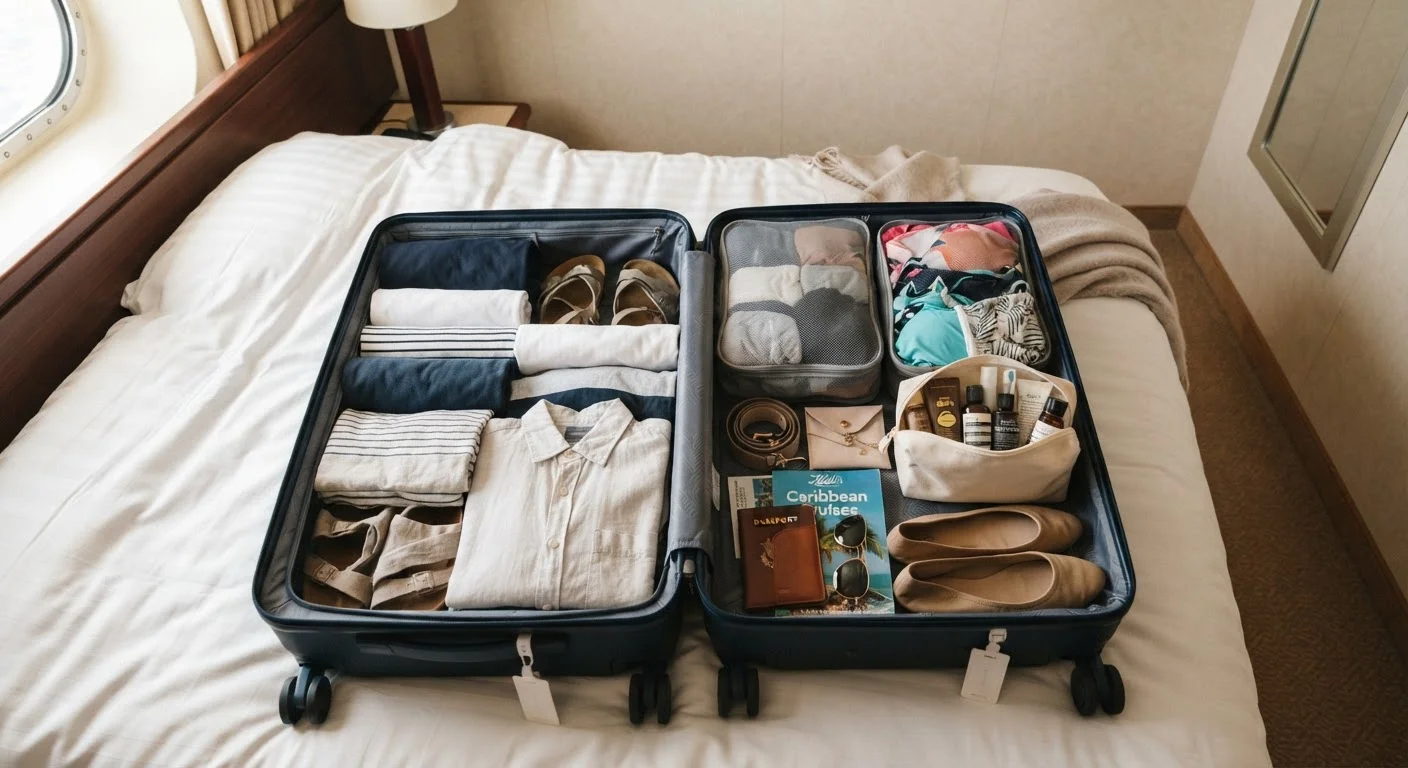
Why Cruise Cabin Packing Is Different
Hotel rooms have closets, dressers, and countertops. A cruise cabin - even a comfortable mid-range one - has none of that in abundance. Interior and ocean-view cabins on most ships average between 150 and 185 square feet, with storage engineered for efficiency rather than generosity. If you board with a 29-inch checked bag and a bulging carry-on, you will feel it every single day.
First-time cruisers often make two opposite mistakes: they overpack because they're anxious about being at sea without a nearby pharmacy or department store, or they underpack because they assume shipboard shops will cover everything. Neither extreme serves you well. The goal of this checklist is to help you land in the middle - bringing exactly what you'll use and leaving behind what the ship already provides or what simply won't fit.
If you're still deciding on the broader logistics of your trip, the complete walkthrough from booking to disembarkation covers embarkation-day context that pairs directly with this packing guide.
Packing Cubes
Compress and organize clothing by category so suitcase contents transfer cleanly to cabin shelving.
Over-Door Pocket Organizer
Creates instant storage on the bathroom door for toiletries, sunscreen, cables, and small daily items.
Hanging Toiletry Bag
Hooks on the bathroom towel bar to keep countertop space clear in a compact cruise bathroom.
Collapsible Tote Bag
Folds flat in your suitcase and serves as a port day bag, beach bag, or shopping carrier.
Universal Power Adapter
Ensures your devices charge on international itineraries where outlet types may differ from US standard.
The Cruise Cabin Packing Checklist
Work through each group below before you zip your bag. Items marked must are non-negotiable for a comfortable voyage. Should items are strongly recommended. Nice to have items are genuinely optional - only include them if you have the space.
Documents & Essentials
Clothing
Toiletries & Health
Cabin Comfort & Organization
What to Leave Behind
Prohibited Items Vary by Cruise Line
Each cruise line publishes its own prohibited items list, and the details matter. What's allowed on one ship may be confiscated at embarkation on another. Items commonly prohibited include candles, clothing irons, electric kettles, and certain power strips. Review your cruise line's specific policy before you pack - bringing a prohibited item means losing it at the gangway with no guarantee of return.
What to Leave Behind - and Why
Several common packing instincts work against you on a cruise. Full-size shampoo, conditioner, and body wash bottles take up disproportionate cabin counter space - most ships provide dispensers in the shower, and travel-size versions last a week-long voyage easily. Similarly, a week's worth of shoes for every outfit is the single fastest way to fill under-bed storage and still feel like you have nothing to wear.
Candles, travel irons, and extension cords with surge protectors are prohibited on most ships due to fire safety regulations - cruise lines enforce these rules at embarkation. Power strips without surge protectors are sometimes permitted, but verify with your specific line before packing one. Alcoholic beverages purchased ashore are typically held by the ship and returned at disembarkation rather than allowed in your cabin.
For a broader look at how baggage choices made before you even reach the port affect your trip, see what airline baggage rules actually mean for your trip - particularly relevant if you're flying to your embarkation port.
Never Pack Medications in Checked Luggage
Checked bags are sometimes delayed or misdirected, and they will not be accessible to you during embarkation or your first hours onboard. All prescription medications - and any over-the-counter items you depend on - must travel in your carry-on or personal bag. If your luggage doesn't arrive until evening, you need to have already taken care of yourself.
Making the Most of Limited Space
Once you've edited your bag down to essentials, a few organizational habits will make your cabin feel twice as livable. Packing cubes let you move clothing directly from suitcase to shelf without unfolding everything. An over-door shoe organizer - the kind with clear pockets - hangs on the bathroom door and immediately creates storage for sunscreen, medications, charging cables, and small accessories that would otherwise scatter across every surface.
Roll, don't fold, soft clothing items. It compresses volume and reduces wrinkles. Keep formal or structured garments flat on hangers as soon as you board to prevent creasing before dress-code evenings.
For everything that needs to be confirmed and organized before you arrive at the pier, the pre-cruise confirmation checklist covers documents, dining reservations, and port transfers - the administrative side of preparation that complements the physical packing work done here.