What Solo Cruising Actually Looks Like Day to Day
Cruising solo is a different proposition from, say, backpacking alone through Southeast Asia (see our honest look at solo travel myths for comparison). On a cruise ship, your accommodation, meals, and transportation between destinations are all handled - which removes a significant layer of logistical stress that first-time solo travelers often dread.
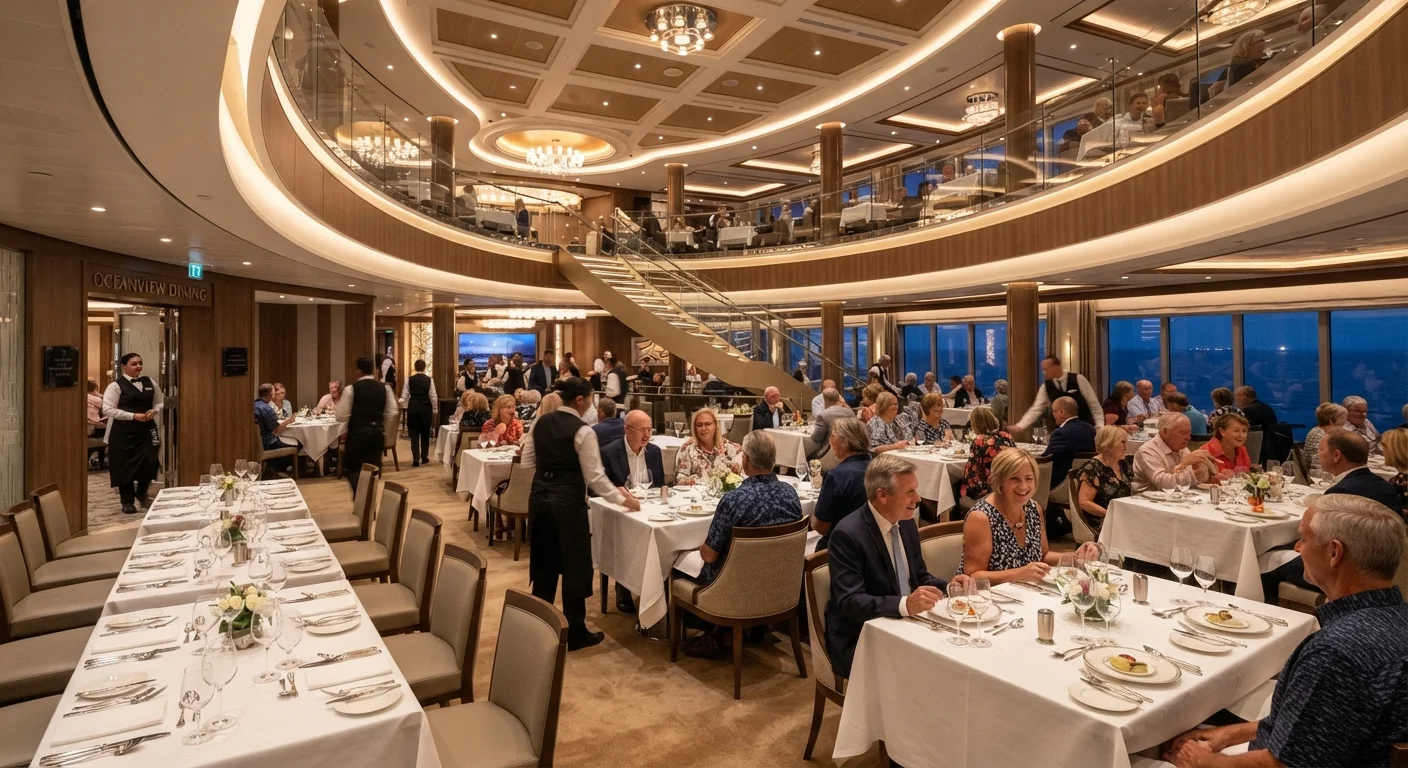
A typical day might start with breakfast at a shared dining venue, followed by a port stop where you join a shore excursion or explore independently, then return to the ship for dinner - either at a large communal table or a reserved spot in a specialty restaurant. The rhythm is predictable, and that predictability is genuinely reassuring when you're navigating unfamiliar territory alone.
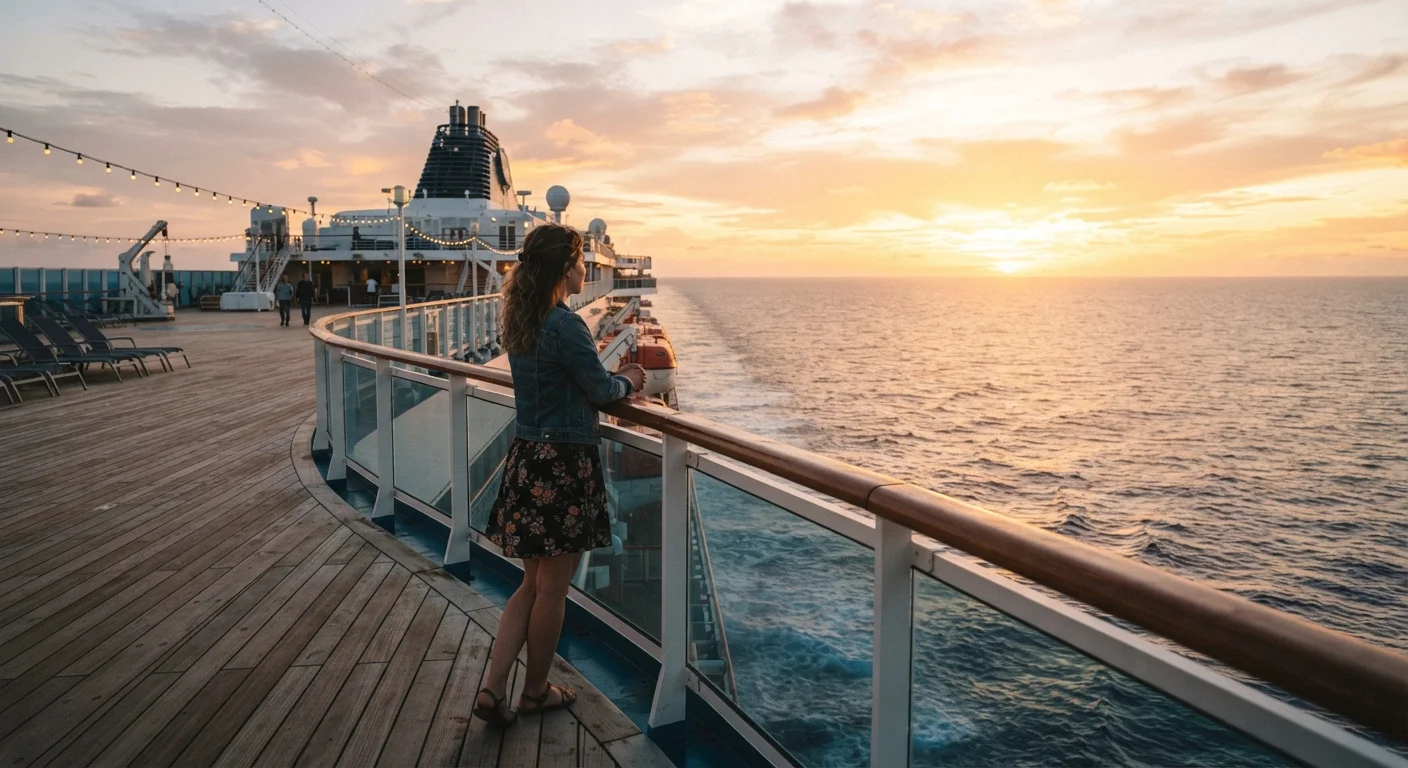
The ship itself functions as a home base. You always know where you'll sleep, what time the ship departs, and that your belongings are secure. For many solo travelers, this structure is the feature - not a limitation.
Solo Cruising vs. Other Forms of Solo Travel
If you're comparing solo cruising to fully independent solo travel - where you book flights, accommodation, and activities separately - the cruise format is generally lower in daily decision-making load. The trade-off is less spontaneity and, in some cases, higher per-person cost. For a broader look at how solo versus group travel compares across different trip types, see how party size affects destination choice.
The Social Reality: How Easy Is It to Meet People?
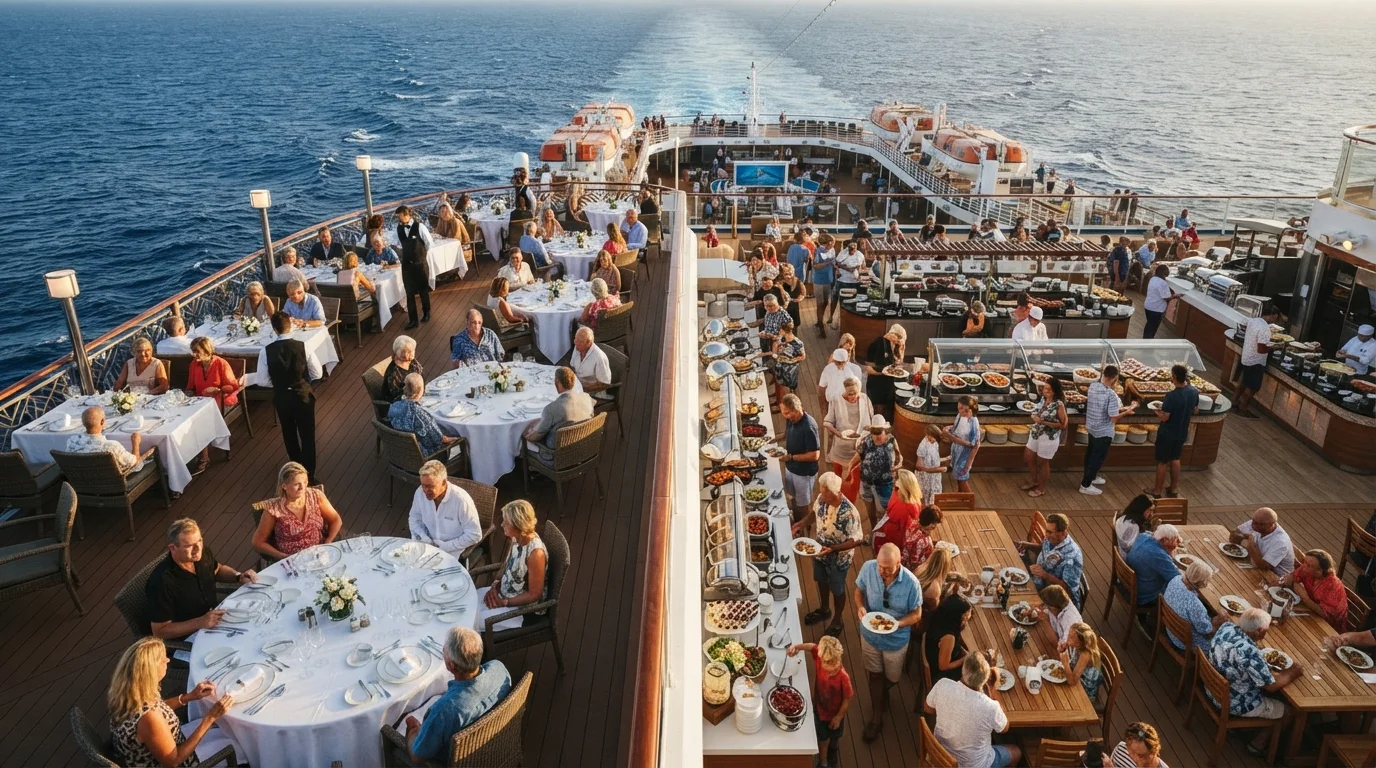
Cruise ships are, by design, unusually social environments. Shared dining tables, group excursions, trivia nights, cooking classes, and poolside events all create organic opportunities to interact with other passengers - without the pressure of having to engineer those moments yourself.
Many cruise lines operate dedicated solo traveler meetups, typically hosted by a crew member in the first day or two of the sailing. These gatherings are informal and low-pressure, and they serve a practical purpose: connecting solo passengers who may want company for meals or excursions throughout the voyage.
That said, the experience varies by ship type and itinerary. Larger resort-style ships tend to have more structured social programming, while smaller expedition vessels attract a different demographic and a quieter atmosphere. Understanding the ship's culture before you book matters - which is why reviewing core cruise concepts before committing to a sailing is worthwhile.
~25%
Share of cruise inquiries from solo travelers
Industry observers have noted a significant and sustained rise in solo traveler interest, with some estimates suggesting solo bookings represent roughly a quarter of new cruise inquiries in recent years.
50-100%
Typical single supplement range
Single supplements vary widely by cruise line and sailing, but a surcharge equivalent to half to the full per-person fare is a common benchmark travelers should plan around.
Solo Cabin Options and the Single Supplement Problem
The single supplement is the most discussed financial reality of solo cruising. Most cruise cabin pricing is based on double occupancy - two people sharing a room. When a solo traveler books that same cabin, many lines charge a "single supplement" to compensate for the revenue they'd otherwise collect from a second guest. This surcharge typically ranges from 50% to 100% of the per-person fare, which can make solo cruising substantially more expensive than it first appears.
However, the industry has shifted. A growing number of cruise lines now offer cabins designed and priced specifically for solo travelers - smaller in footprint but fully functional, and without the supplement penalty. These fill up quickly, so booking well in advance is advisable.
Some lines periodically waive or reduce the single supplement on select sailings, particularly to fill inventory. This is worth monitoring, though availability is unpredictable. For a broader look at cruise costs and what to expect when budgeting your first trip, see our complete first-cruise guide.
Complete schedule freedom, no compromise required
Solo travelers set their own pace - late dinners, early port departures, or a day spent entirely at the pool. There's no negotiating with travel companions.
Built-in social structure reduces isolation risk
Shared dining, group activities, and solo meetup events mean connection is available without being mandatory - a balance that's hard to find in other travel formats.
Logistics are handled, lowering solo travel anxiety
Accommodation, meals, and inter-port transportation are all pre-arranged, eliminating many of the planning burdens that make solo travel stressful for beginners.
Shore excursions offer structured independent exploration
Booking a ship-organized excursion at each port gives solo travelers a guided, time-managed way to see destinations without navigating local transport alone.
Safety environment is generally well-managed onboard
Ships are closed, monitored environments with security checks, 24-hour medical staff, and clearly defined emergency protocols - reassuring for first-time solo travelers.
Single supplement can dramatically increase total cost
Paying 50-100% extra for a cabin designed for two passengers is the defining financial disadvantage of solo cruising and should be factored into any budget from the outset.
Solo cabins are limited and book out early
Ships with purpose-built solo cabins typically offer far fewer of them than standard double cabins, meaning demand far outpaces supply on popular sailings.
Some onboard experiences assume pair or group dynamics
From certain dining formats to shore excursion pricing structures, parts of the cruise experience are still implicitly designed for couples or groups rather than individuals.
Social engagement requires some initiative
While the environment is social, solo travelers who are introverted or anxious about initiating conversation may find the early days of a sailing uncomfortable until they find their footing.
Choosing the Right Itinerary as a Solo Traveler
Not all itineraries suit solo travelers equally. Some port destinations are compact, walkable, and easy to explore independently - others require organized transport or guides to reach anything of interest. When planning solo, it's worth prioritizing ports where independent exploration is genuinely practical, rather than relying entirely on ship-organized excursions (which add cost).
The region you choose also shapes the social dynamic onboard. Caribbean itineraries tend to attract a broad mix of travelers including many families (for a sense of what family cruising looks like from a different angle, see how onboard life works for families), while repositioning cruises or longer voyages to destinations like Northern Europe or Alaska often attract more seasoned, independent-minded passengers who are comfortable with solo-style travel. Our overview of popular cruising regions can help you think through which destination suits your goals. If you're still weighing whether solo or group travel is right for your first trip overall, our safety comparison offers a useful framework.