
How Ships Organise Kids' Programming
Cruising with children is a fundamentally different experience from travelling solo - and modern cruise ships are deliberately engineered around that reality. Rather than treating families as an afterthought, mainstream cruise lines have built dedicated youth facilities that function almost like self-contained camps at sea.
At the heart of this is the youth program - a structured schedule of supervised activities run by trained staff in a dedicated space on the ship. These programs operate daily, covering sea days and (in modified form) port days. They run during morning, afternoon, and evening hours, giving families genuine flexibility in how they structure their time.
Programming is organised around the understanding that a five-year-old and a fourteen-year-old have almost nothing in common in terms of interests or developmental needs. That's why virtually every cruise line divides children into age-based groups with tailored activities for each. See what a typical day looks like aboard a cruise ship for a broader sense of how ship schedules flow for all passengers.
Youth program
A cruise ship's organized schedule of supervised activities for children, run by trained staff in a dedicated onboard facility, typically divided by age group.
Drop-off supervision
A childcare model where parents leave children in the care of ship staff at the kids' club and are free to spend time independently elsewhere on the ship.
Late-night sitting
Extended evening childcare offered by cruise ships - beyond the standard program hours - usually available for an hourly fee.
Fixed dining seating
A pre-assigned dinner time (early or late) in the main dining room that you select when booking, rather than dining at a flexible time of your choosing.
Sea day
A full day spent at sea with no port stop, when all onboard programming - including the kids' club - runs at its fullest schedule.
Age Groups and What Each One Gets
While exact groupings differ by cruise line, most programs follow a structure broadly like this:
- Infants and toddlers (roughly 6 months-3 years): Some lines offer nursery-style supervised spaces with age-appropriate toys and sensory activities. Availability here varies the most across lines - not all ships offer supervised care for this group.
- Little kids (3-5 years): Drop-off programs become available once a child is toilet-trained. Activities focus on play, arts and crafts, simple games, and story time.
- Early elementary (6-9 years): Programs become more structured, with themed activity days, basic cooking or science experiments, scavenger hunts, and group games.
- Tweens (10-12 years): Activities shift toward team challenges, low-key sports, and social events. This group often operates with slightly more independence within the kids' area.
- Teens (13-17 years): Dedicated teen lounges provide a social space separate from both younger kids and adults. Programming includes trivia nights, dance events, sports tournaments, and movie sessions. Teens typically have more freedom to roam the ship independently.
For entertainment that the whole family can enjoy together, onboard entertainment options - from Broadway-style shows to deck parties - are generally open to all ages.
Supervision Policies and Drop-Off Rules
One of the most reassuring aspects of cruise youth programs for new family cruisers is that drop-off supervision is the standard model from around age three onward. Parents sign their child in, receive information about how to be reached if needed, and are free to explore the ship independently.
Key policies parents should understand before they board:
- Sign-in/sign-out: Only designated adults listed on a child's registration can collect them. This is enforced consistently.
- Pager or app notification: Many cruise lines provide parents with a pager or ship-specific mobile app so staff can reach them instantly if needed.
- Late-night sitting: Evening programs often run until around 10 p.m. at no extra charge. After-hours babysitting - sometimes called "slumber party" programming or in-cabin sitting - is available for an hourly fee on most lines.
- Port days: Kids' clubs often operate on a reduced schedule when the ship is docked. Check the daily schedule the night before.
Register Early for Peace of Mind
Many cruise lines open youth program registration weeks before departure through their website or app. Completing this in advance - including listing authorized pickup adults and noting any allergies or special needs - means you can head straight to the kids' club on embarkation day rather than standing in line. It also gives staff time to prepare for your child's specific requirements.
Understanding these rules ahead of time prevents friction on boarding day and helps you plan your own schedule - including adults-only dining or excursions - with confidence.
Fitting Family Life Into the Ship's Schedule
The ship runs on a published daily schedule - delivered to your cabin each evening - and families benefit most when they read it in advance rather than improvising. A few structural points to know:
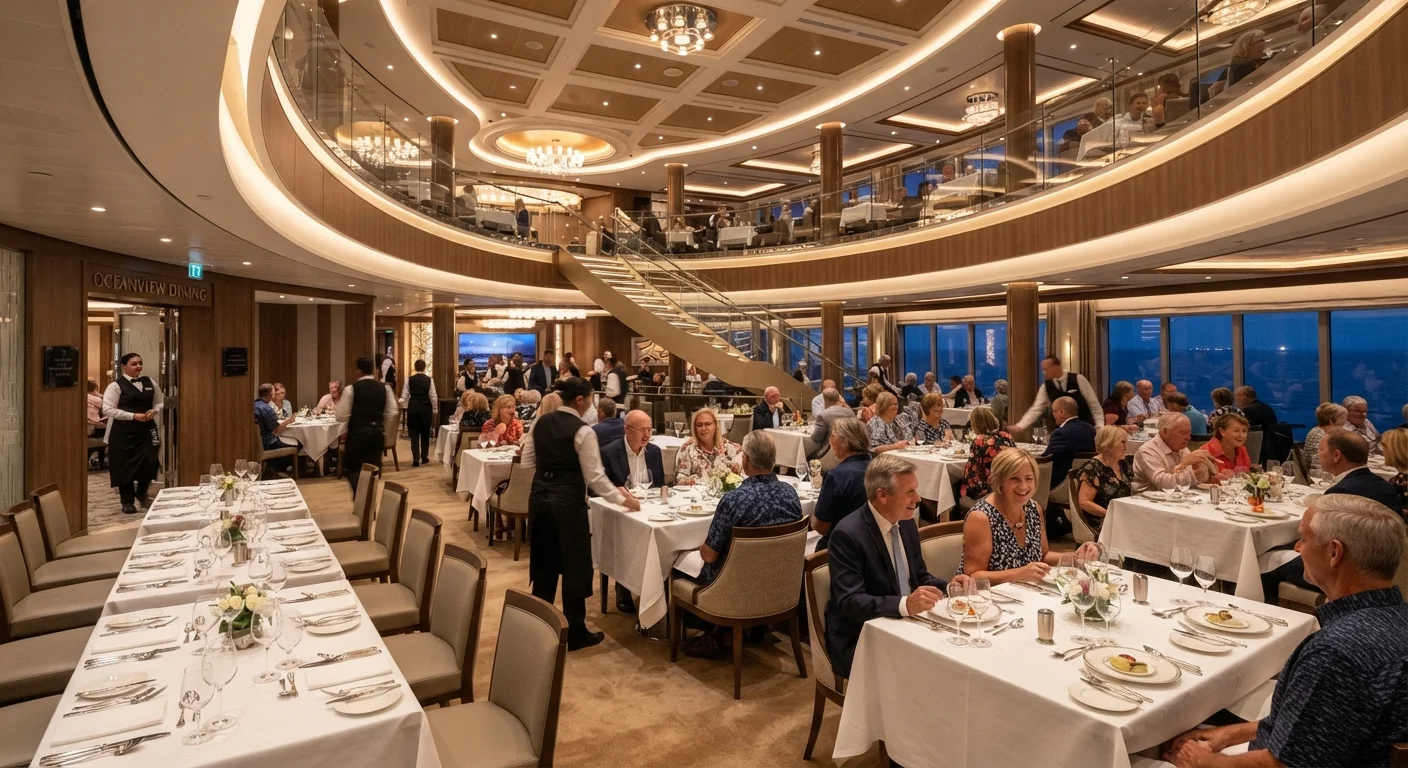
Mealtimes: Families with young children tend to do well with early fixed dining seatings (typically around 5:30-6:00 p.m.). This aligns with younger children's natural hunger schedule and leaves the evening free for kids' club drop-off. The buffet remains open across a long window and works well for unpredictable toddler schedules. For a fuller picture of how cruise dining is organised, see how onboard meal options are structured.
Sea days vs. port days: Sea days are when youth programming runs at full capacity and kids' clubs are most active. Port days thin out the programs - many families take children ashore, and staffing adjusts accordingly.
Pool and deck areas: Most ships designate certain pool areas as family zones. Expectations around noise, reserved seating, and shared spaces are part of the broader social environment onboard - cruise ship etiquette is worth reading before your first sailing.
Port-Day Schedules Change Without Much Notice
Kids' club hours on port days are shorter and sometimes suspended entirely if too few children are enrolled that day. Don't assume the same full-day schedule applies when the ship is docked. Check the nightly schedule sheet and have a backup plan - particularly if you've arranged an adults-only excursion that depends on the kids' club being open.
Practical Considerations Before You Board
A few logistics that matter more for families than for solo or couple travelers:
- Pre-register for youth programs: Most cruise lines allow - or require - families to register children for youth programs before embarkation, sometimes online in the weeks before sailing. This saves time on boarding day.
- Verify age minimums: If you're travelling with an infant, confirm the exact minimum age policy with your cruise line directly, as it can vary by itinerary (particularly for transatlantic or repositioning voyages).
- Pack for the kids' club: Sunscreen, a change of clothes, and any comfort items your child may need during a long program session are worth having labelled and ready.
- Understand what's included vs. extra: Standard daytime programming is generally covered by your fare. Specialty activities, in-cabin babysitting, and some craft supplies may carry surcharges. Ask your cruise line for a full breakdown before boarding.
Cruising with children takes some planning, but the infrastructure on family-oriented ships is genuinely robust. The goal is straightforward: give adults a real vacation while giving children their own version of one. When you understand how the systems work, both become a lot more achievable.
For broader trip-planning guidance, the Plan a Cruise hub covers everything from choosing an itinerary to understanding what to pack.
Cruise Line Youth Program Information Pages
Most cruise lines publish detailed descriptions of their kids' club age groups, hours, and policies on their official websites. Reviewing this before booking helps you match your family's needs to the right ship.
Cruise Basics Hub
A structured overview of the core concepts every first-time cruiser needs to understand - from how fares work to what's included in your ticket.