Why Ship Size Is the First Decision to Get Right
When most first-time cruisers begin planning, they focus on destination — the Caribbean, Mediterranean, Alaska. But experienced travelers will tell you that how you feel day-to-day on a ship matters just as much as where it goes. Ship size is the single biggest factor shaping that daily experience.
Size determines the number of fellow passengers you're sharing space with, what facilities are available, how easily you move around the ship, which ports you can visit, and the overall social atmosphere. Choosing a ship that doesn't match your preferences — even on a dream itinerary — can leave you underwhelmed. For broader context on how cruise styles differ beyond size, see how ocean, river, and expedition cruises compare.
7,600+
Maximum passenger capacity of the world's largest cruise ships
Several vessels launched in the 2020s can carry over 7,000 passengers at double occupancy, with crew counts exceeding 2,000.
~150
Typical passenger count on small expedition ships
Many expedition and boutique vessels carry between 100 and 300 guests, enabling access to remote and shallow-water destinations.
50+
Dining venues on some mega-ships
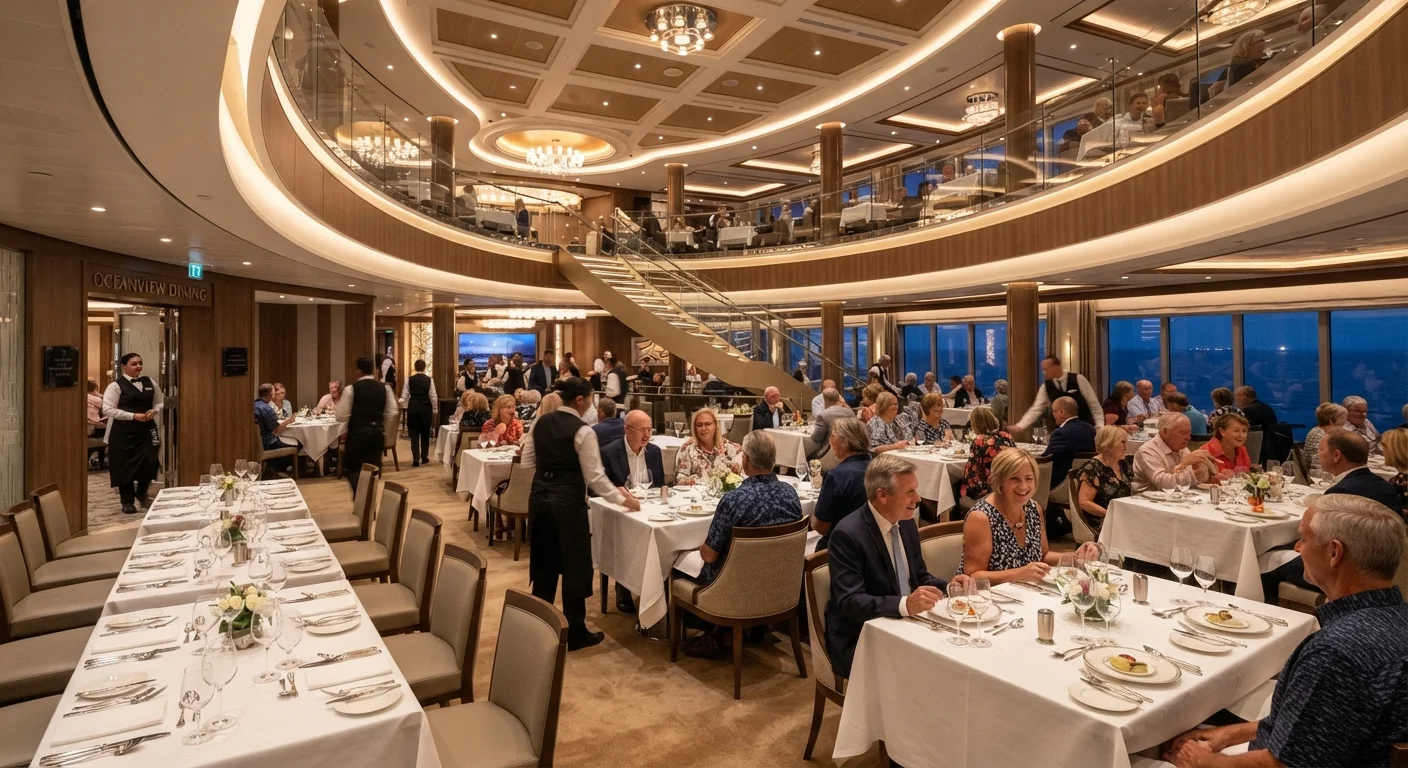
Modern mega-ships can feature more than 50 food and beverage outlets, ranging from complimentary buffets to ticketed specialty restaurants.
Small Ships: Intimate, Remote, and Destination-Focused
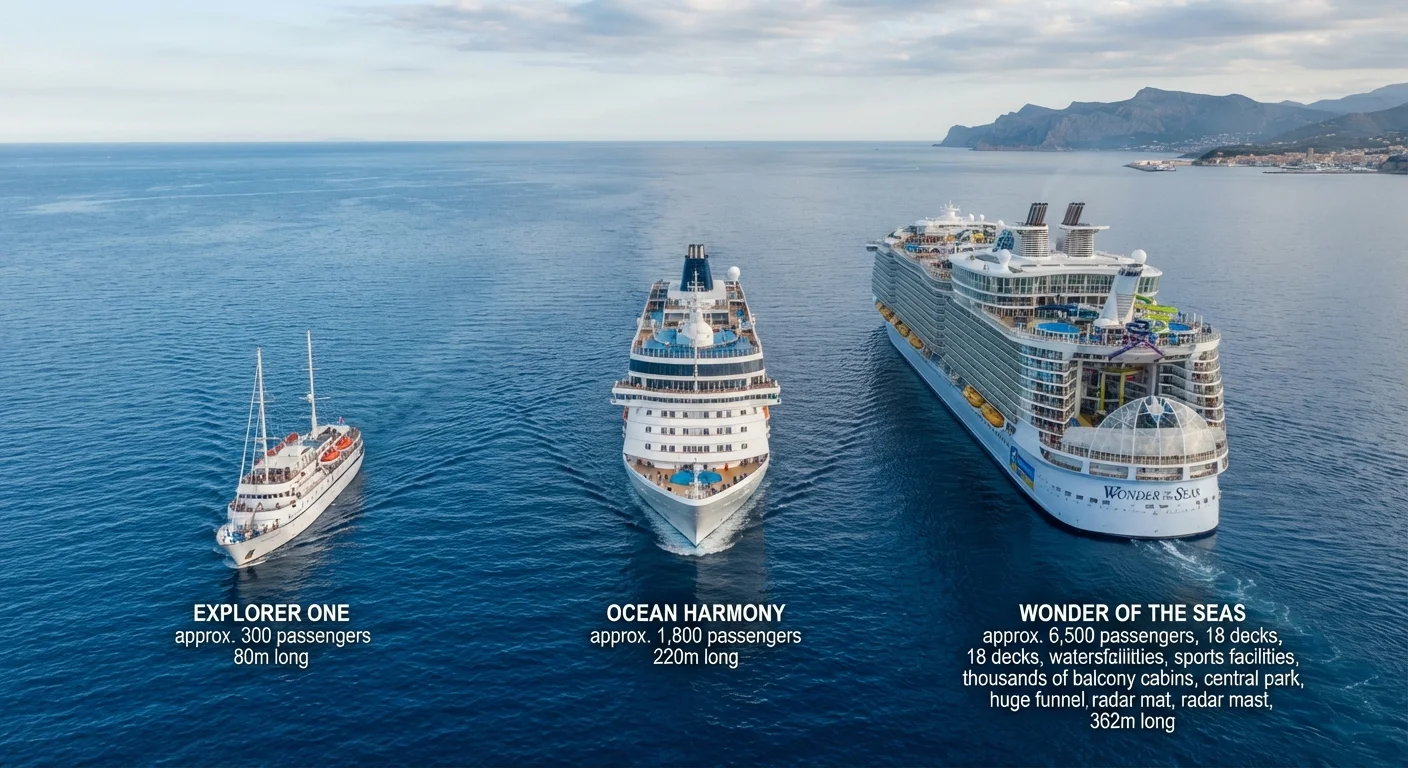
Small ships typically carry fewer than 500 passengers — and many boutique or expedition vessels carry under 200. The defining characteristic is intimacy. You'll likely recognize fellow guests within a couple of days, and the crew-to-passenger ratio is usually much higher than on larger ships.
The trade-off is amenities. You won't find multiple pools, sprawling entertainment complexes, or dozens of dining venues. What you gain is access: small ships can navigate narrow fjords, anchor in remote bays, and dock in historic harbor towns that larger vessels cannot reach. Expedition-style small ships often include enrichment programming — naturalists, historians, local guides — woven into the daily schedule.
Check the Space Ratio Before You Book
A ship's Space Ratio — Gross Tonnage divided by passenger capacity — gives you a useful sense of how roomy a ship will feel. A higher number means more volume per person. Many cruise lines publish this figure in their ship specifications. It's one of the most practical data points for comparing ships across size categories.
If your priority is where you go rather than what's onboard, a small ship is worth serious consideration.
Mid-Size Ships: The Balanced Middle Ground
Mid-size ships generally carry between 500 and 2,000 passengers. This is the category where balance is the selling point. You get a meaningful range of dining options, entertainment, and recreational facilities — without the overwhelming scale of a mega-ship.
Port flexibility is also better than on large ships. Many mid-size vessels can dock closer to city centers and visit a wider variety of destinations. The social atmosphere tends to feel relaxed rather than resort-like. For travelers who want comfortable amenities alongside genuine destination variety, this category is often an ideal starting point. Understanding cabin options matters here too — cabin types and what they actually offer is worth reading before you book.
Large and Mega-Ships: Onboard Life as the Main Event
Large ships carry roughly 2,000 to 4,000 passengers, while mega-ships — the most talked-about vessels in modern cruising — can accommodate 5,000 to over 7,000 guests. These floating resorts are engineered to keep passengers entertained without ever stepping ashore.
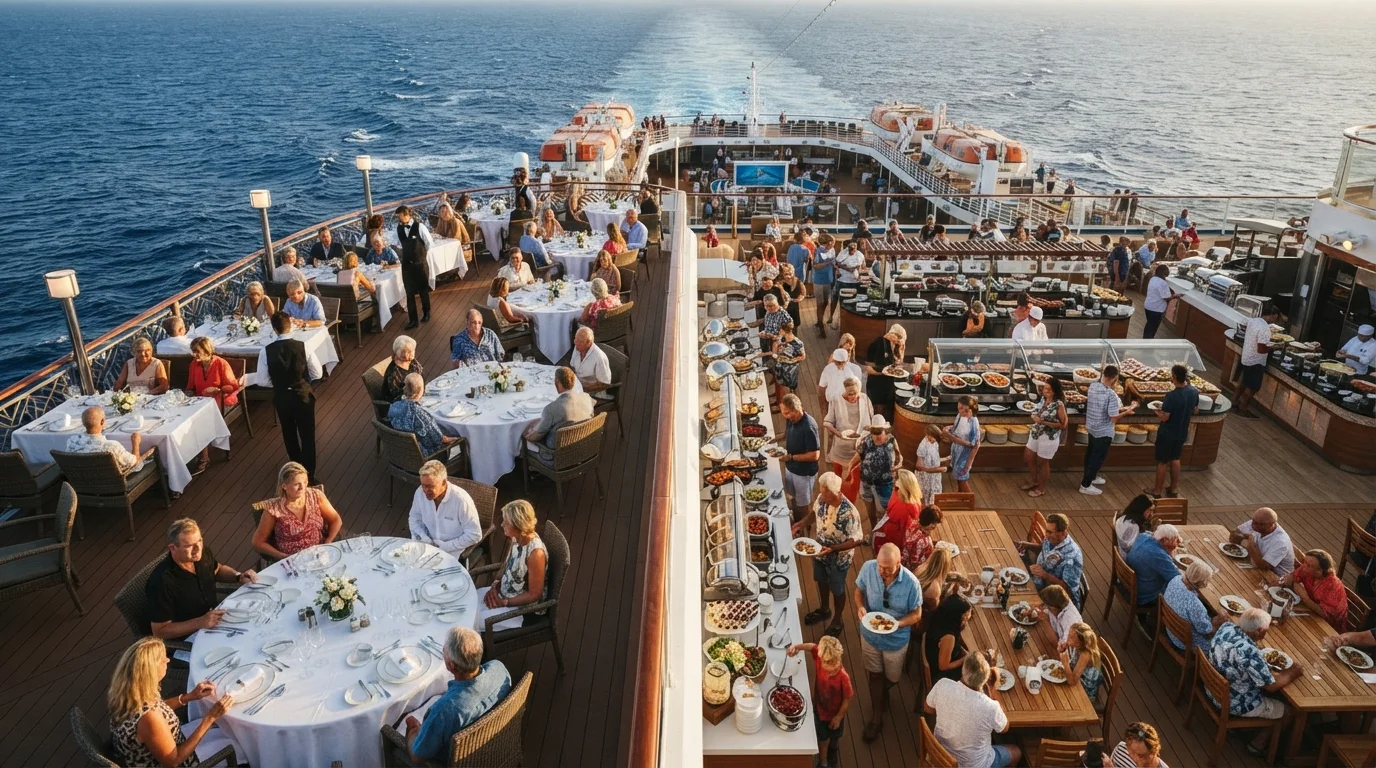
Expect multiple pools, water slides, ice rinks, go-kart tracks, Broadway-style shows, dozens of dining venues, and full spa and fitness facilities. Dining options alone can be staggering — how cruise ship dining is structured explains how to navigate the variety without feeling overwhelmed.
The limitations are real: mega-ships are restricted to large-capacity terminals, often positioned away from city centers. Shore time can feel rushed if the port is congested with multiple large ships. And for passengers who value quiet or solitude, peak hours on the pool deck can feel more like a theme park than a vacation.
“The biggest ships are essentially floating cities. Whether that's a dream or a nightmare depends entirely on what kind of traveler you are.”
— Cruises Explained Editorial Team, Cruise travel education specialists
Matching Ship Size to Your Travel Style
There is no objectively superior ship size — only the right fit for your priorities. Use these questions as a starting framework:
- Do you want the destination or the ship to be the focus? Small ships prioritize where you go; mega-ships prioritize what you do onboard.
- How important is solitude and quiet? Smaller passenger counts generally mean less noise and easier access to peaceful spaces.
- Do you travel with children or a large group? Mega-ships offer the widest range of activities to keep diverse groups engaged.
- Are there specific ports on your wish list? Check whether your target destinations can accommodate the ship size you're considering.
Step-by-step cruise planning guidance can help you apply these considerations to a real itinerary once you've identified your preferred ship size.
Port Access Can Change
Some ports periodically revise the ship sizes they accept, and popular destinations sometimes cap the number of large vessels allowed on a single day. Always verify port access details with your cruise provider before finalizing an itinerary, particularly for bucket-list destinations in sensitive environments.