What Each Dining System Actually Means
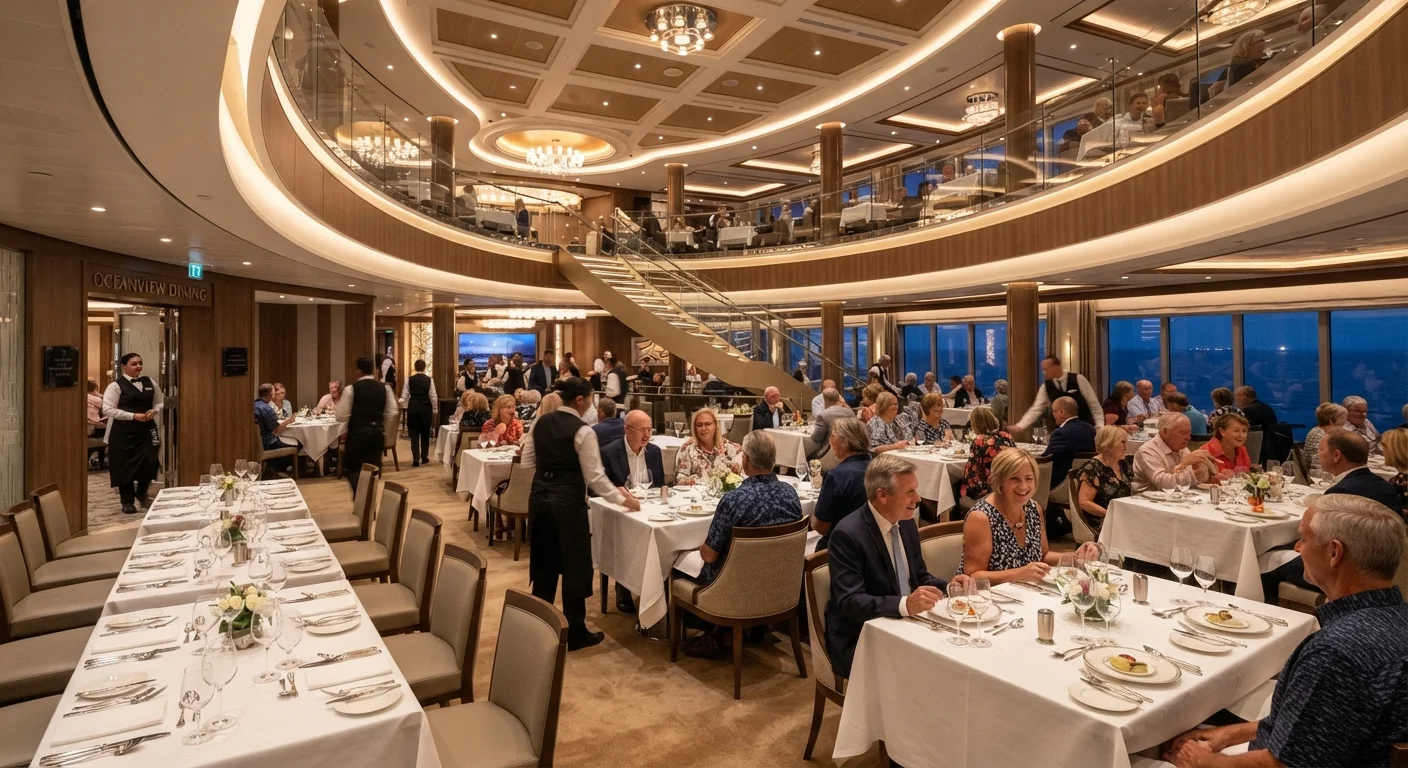
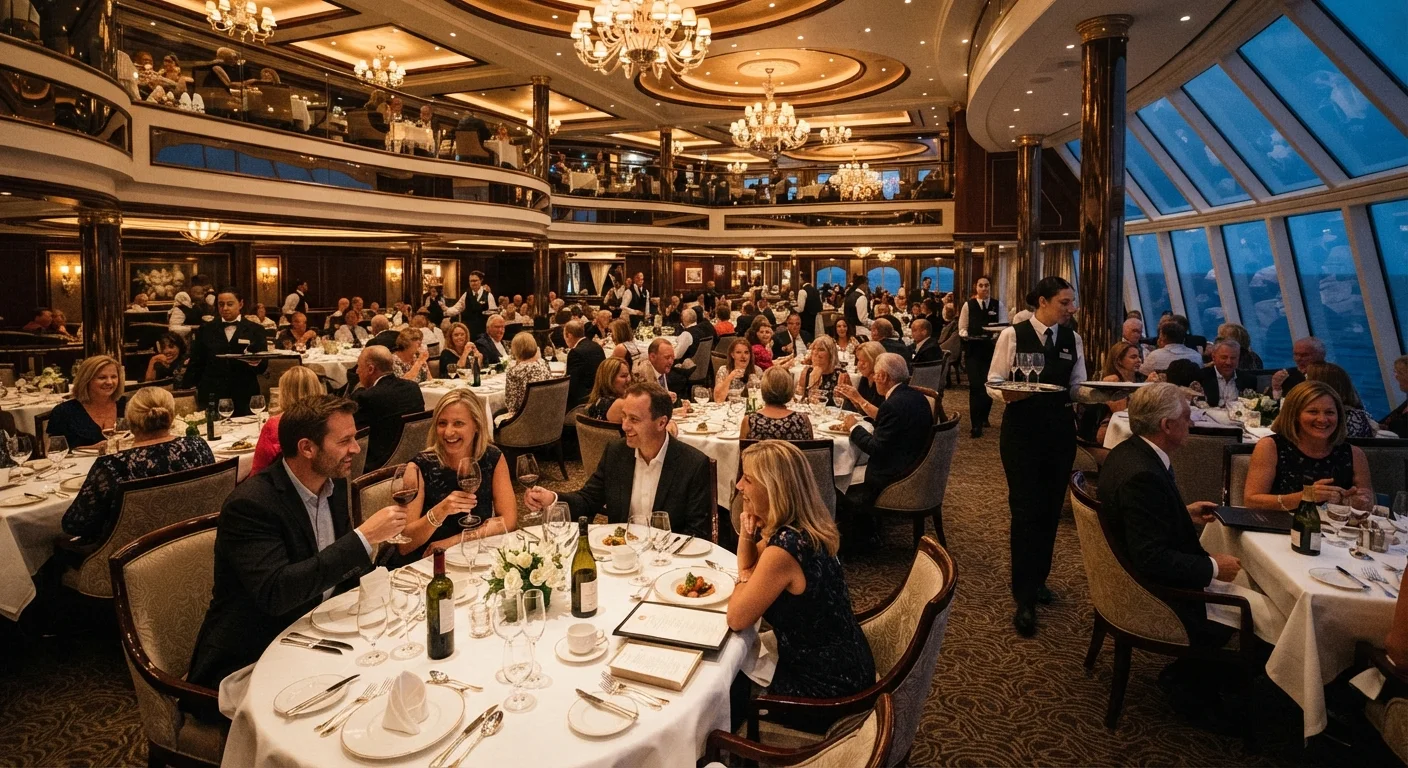
When cruise lines talk about dining, they're usually referring to arrangements in the main dining room — the large, multi-course restaurant included in your fare. How you access that dining room depends on which system your ship uses.
Assigned dining (sometimes called traditional dining or fixed sittings) means you're allocated a specific time — typically early sitting around 6:00 p.m. or late sitting around 8:30 p.m. — at a designated table. That same table and, usually, the same waiter are yours for the entire voyage.
Flexible dining (marketed under names like Anytime Dining or My Time Dining, depending on the cruise line) lets you arrive at the main dining room during a broader window — often 5:30 p.m. to 9:30 p.m. — and request a table as you go. Some lines allow advance reservations within that window; others operate purely on a walk-in basis.
For a fuller picture of how cruise dining is organised beyond the main dining room, see our guide to how cruise ship restaurants, sittings, and menus work.
| Criterion | Assigned Dining | Flexible Dining |
|---|---|---|
| Dinner time | Fixed (early or late sitting) | Variable within a window |
| Table assignment | Same table every night | Varies by availability |
| Waiter relationship | Same waiter learns preferences | Different staff each visit |
| Social continuity | High — same tablemates nightly | Low unless you coordinate |
| Port-day flexibility | Limited by fixed sitting time | High — dine when you return |
| Wait times | Rare — table guaranteed | Possible at peak hours |
| Best for families | Works if sitting time fits children | Generally more adaptable |
The Real Trade-Offs: Comfort vs. Control
The choice isn't simply about timing — it shapes your entire social and logistical experience onboard.
Assigned Dining: What You Gain and Give Up
The biggest advantage is certainty. You never wonder where you're eating or when. Your waiter learns your preferences — dietary restrictions, favourite bread, how you like your coffee — within a night or two. Many passengers who use assigned dining say their tablemates become highlights of the trip.
The trade-off is inflexibility. An early sitting can feel rushed if you've had a late afternoon in port; a late sitting can feel uncomfortably delayed for families with young children or early risers. You can't easily shift times mid-cruise if the sitting doesn't suit you.
Flexible Dining: What You Gain and Give Up
You control your evenings. Stayed longer at a port? No problem. Want to catch a show before dinner rather than after? Adjust accordingly. Flexible dining suits people whose days on a cruise vary significantly — which, thanks to port schedules, is more common than you might expect. For context on how port-heavy days differ from sea days, our article on how cruise itineraries are structured explains the rhythm of different sailing types.
The trade-off: popular dining times fill fast. Without reservations, you may wait at the entrance or be offered an earlier or later slot. The social continuity of assigned dining is also absent — unless you actively book the same table and request the same server each night, the experience can feel more transactional.
Specialty Restaurants Are a Separate Decision
Specialty dining venues — think steakhouses, sushi bars, or tasting-menu restaurants — operate outside the assigned or flexible dining system entirely. They typically charge an additional fee and require separate reservations, regardless of which main dining room arrangement you have. Booking them early (often available before departure through the cruise line's app or website) is advisable on popular sailings, as they have limited covers each night.
How to Choose — and What to Do If You're Unsure
Start with your travel style. Are your evenings generally structured or spontaneous at home? That instinct usually translates to sea. If you're nervous about cruise etiquette and social dynamics, cruise ship etiquette norms are worth reviewing — dining rooms have their own unwritten rules regardless of which system you use.
Check what your specific ship offers before booking. Not every vessel provides both options, and on ships that do, flexible dining may have limited capacity. Some cruise lines charge a premium for flexible dining on certain ship classes — confirm this with your cruise line or travel agent at inquiry stage, as policies vary and change.
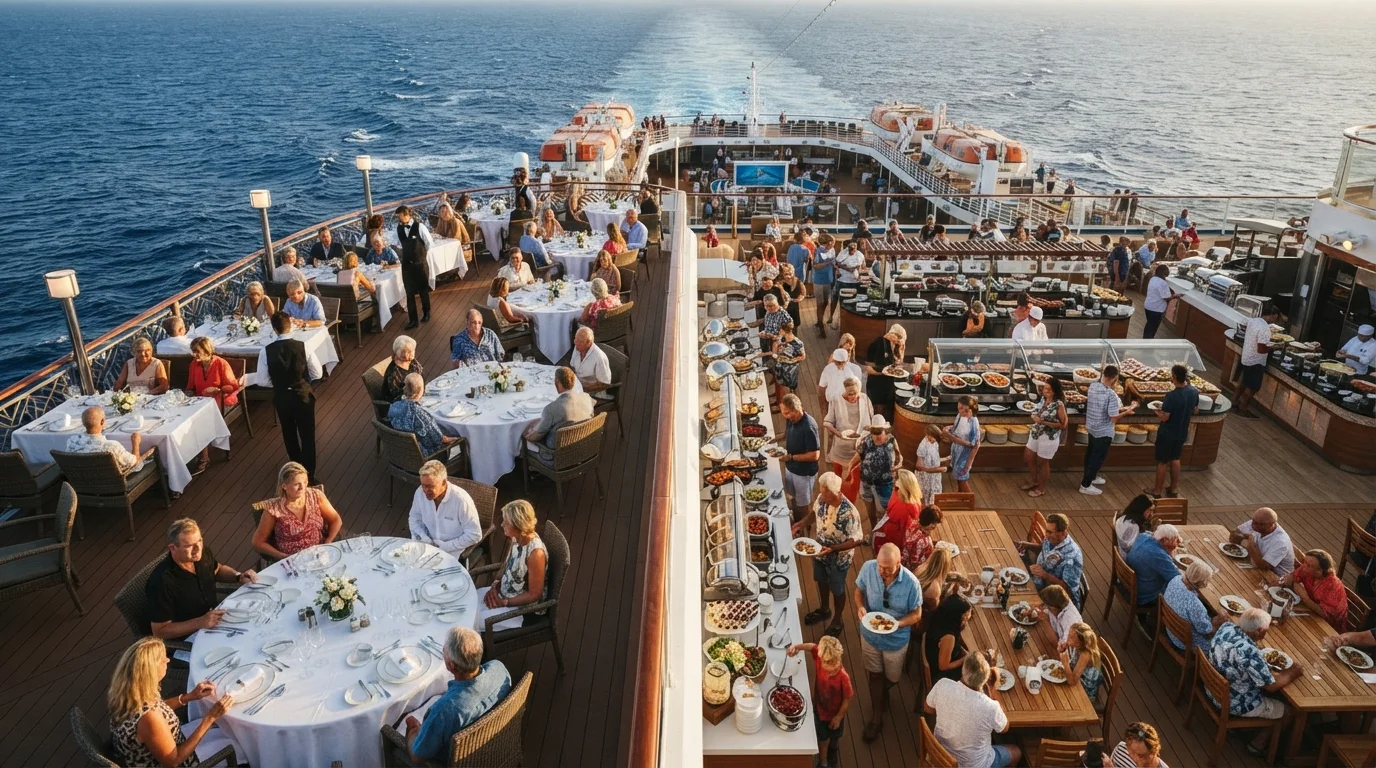
Remember: neither system restricts you from the buffet, room service, or specialty (paid) restaurants. The main dining room is one option among several. For a complete overview of meal options included in a typical fare, our broader guide to cruise dining options covers the full picture.
If you book flexible dining and find you prefer structure after a night or two, speak to the dining room manager — many ships can accommodate a change, especially earlier in the voyage.
2
Traditional fixed sittings on most ships
Most cruise lines offering assigned dining provide an early sitting (around 6:00 p.m.) and a late sitting (around 8:30 p.m.) in the main dining room.
4+ hrs
Typical flexible dining window each evening
Flexible dining windows commonly span from around 5:30 p.m. to 9:30 p.m., giving guests significant latitude over when they eat.